• Welcome to CFAR

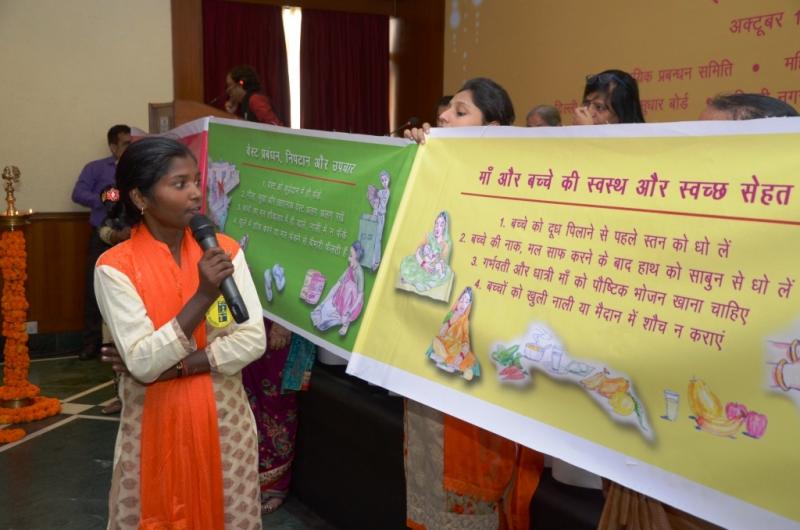
The District Magistrate (South, Delhi) felicitated CFAR for establishing six Self Help Groups for domestic workers and registering them under the National Urban Livelihood Mission. Proud moment as our Helpdesk & Single Window Forum members received certificate of appreciation from the Women and Child Development Department at the Khishori Mela. CFAR was recognized as the best NGO partner for empowering urban poor communities with health & nutrition services. On the occasion of the 14th National Voters' Day, the District Collector of Ajmer, in collaboration with the District Election Office Ajmer, felicitated CFAR. CFAR received recognition in the "Best NGO" category for its commendable efforts in motivating and facilitating diverse community groups to register themselves as voters of the nation.

VOICE FOR THE VOICELESS

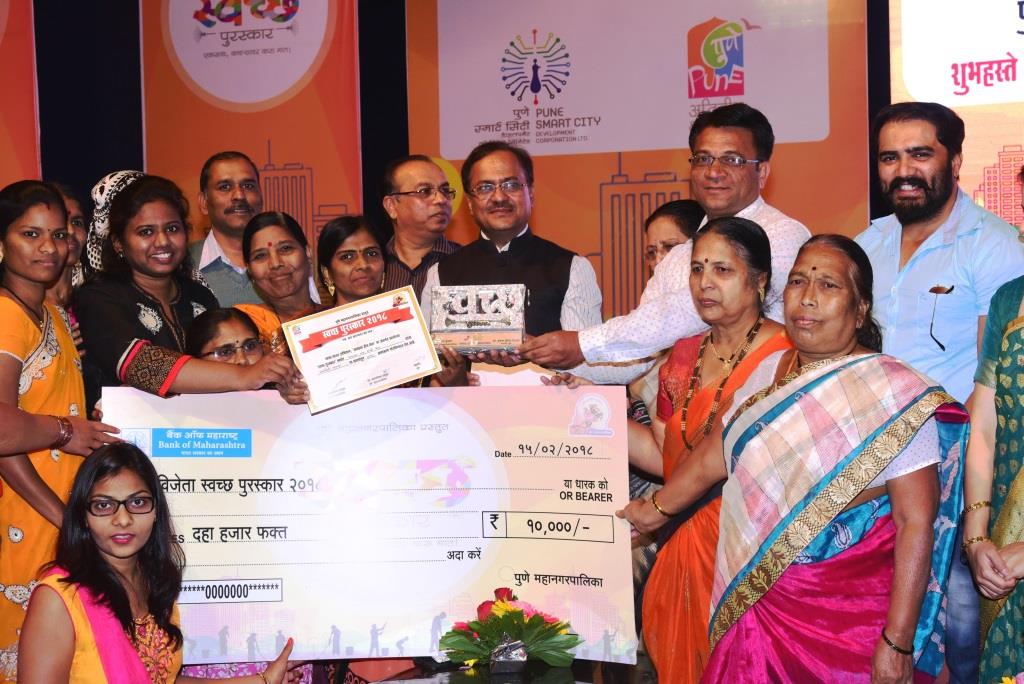
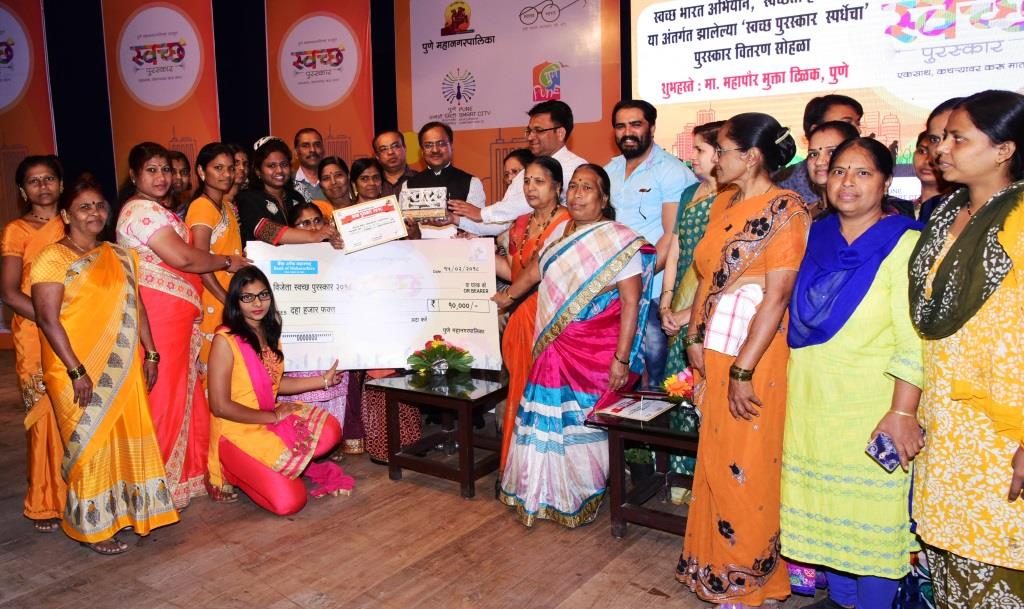
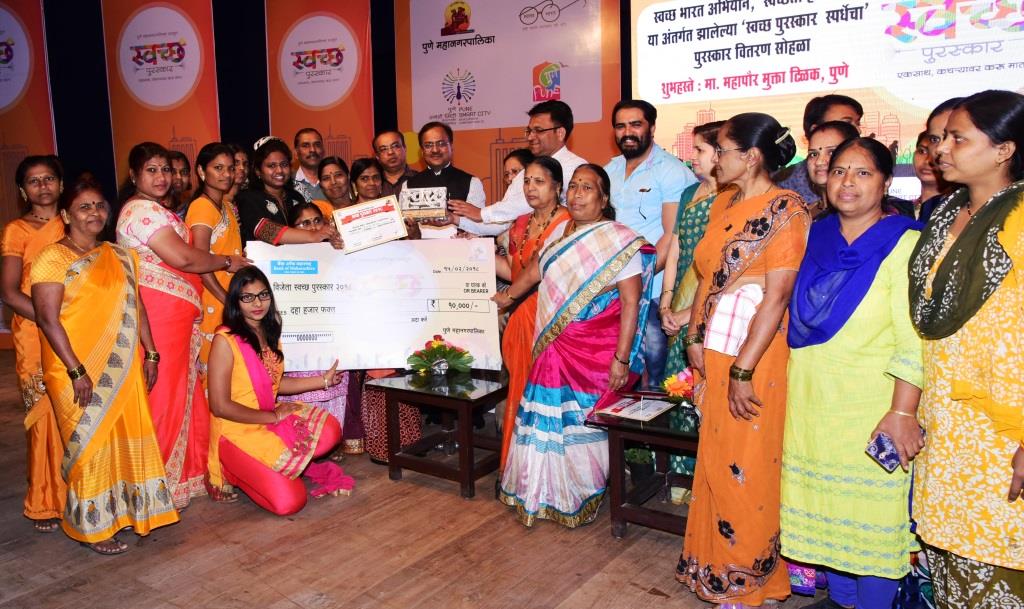
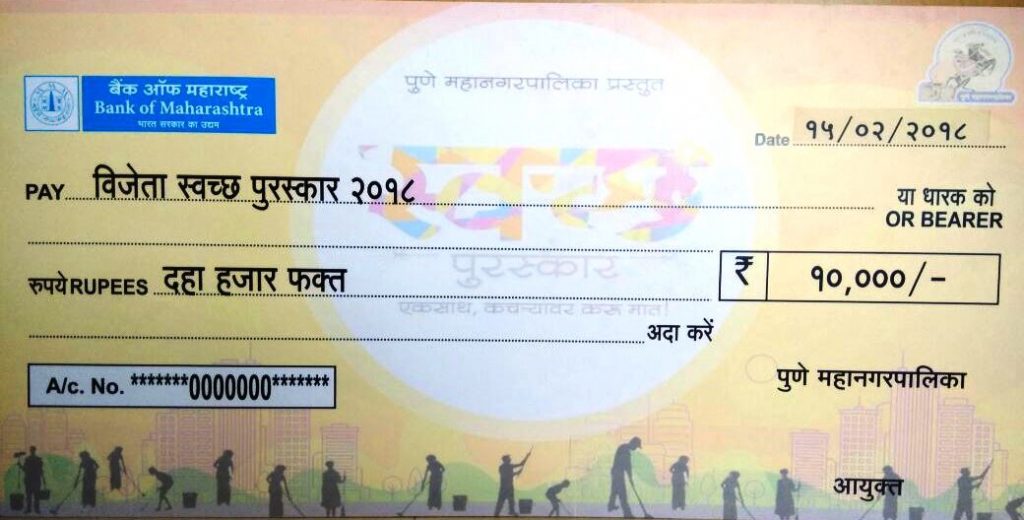
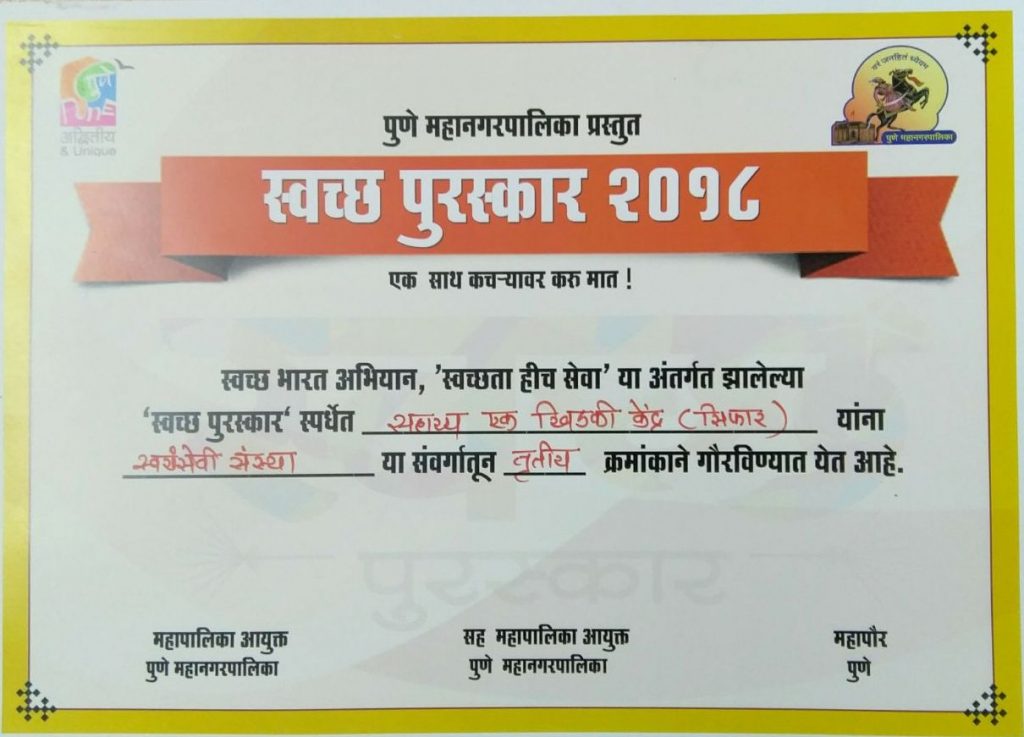
Swachh Award 2018- Pune

Early last week CFAR’s Pune team received the Swachh Award for 2018 for the outstanding work it has been doing through Community Management Committees to strengthen public and community toilets services, ensure clean drinking water and clean settlements. The award has been constituted by the Pune Municipal Corporation (PMC) to create public awareness on the various innovative initiatives that are being undertaken by stakeholders- private/public/NGOs/corporates – to improve the hygiene and sanitation status of the city.

The award, comprising of a trophy and cash prizes, was presented to  Community Messengers by the Mayor of Pune, Hon. Mukta Tilak, the Dy. Commissioner Mr. Suresh Jagtap, and Actor Mr. Sachin Gavali.

Aim of the Award

This prestigious award aims at not only triggering a positive and competitive spirit among stakeholders, across all the wards of the city to perform better and achieve `Swachh’ status, but also to encourage them to showcase best practices that have had an impact and are scalable and replicable. More importantly, such initiatives could be used to create knowledge sharing platforms for all stakeholders and build awareness among the citizens on various hygiene and sanitation practices.

The awards​ ​were  given on the basis of nomination/ self-nominations, received by the Department of Solid Waste Management (SWM) under various categories such as; efforts led by Individual Household, Housing Society, School / College, NGO, Public and Private Sectors. ​The parameters followed by the jury, comprising of sanitation sector experts,​ ​academicians, NGO representatives ​etc​., focused on whether creative solutions – either technical or social, were used to address issues of solid waste or sanitation, the number of people positively impacted by the intervention and the number of IEC activities that were  held.

CFAR’s award winning entry

In its application under the NGO category, the CFAR team provided details of its efforts and achievements in various settlements. For example, details were given of how:

  • In Visharatwadi 112 B, the community, after mapping the status of community-cum public toilets, held a dialogue with the officials of Department of Solid Waste Management, during which they presented evidence (through photographs) of the difficulties being faced by the   This direct exchange accelerated the response and by December 2017, the Department of Solid Waste Management replaced 10 broken seats of the community toilet during September and October 2016, repaired the water tank, restored internal water supply and repaired the toilet stalls.
  • The CMC also identified three dengue prone spots in the area with the active participation of the community initiated awareness drives in the settlements. This in turn prompted the Department of Public Health to fumigate all the settlements.
  • The issue of the Ghanta Gadi not being regular and the short time given to collection of waste was brought to the notice of the SWM Department resulting in an extension of the timings and assigned spot for the Ghantha Gadi.
  • Similarly, in Shramik Vasahat, the process of evidence collection and dialogue resulted in the Department of SWM removing the blockage in 6 toilet seats and cleaning of the premises. The wiring of 3 street lights in the basti was also repaired so now all the street lights in the basti are fully functional.
  • In Laxmi Nagar, the CMC in tandem with the SWM Department removed the blockage of 2 public toilet seats, replaced 2 water taps and restored the pipeline. Fifteen street lights were also repaired. Similarly, street lights were repaired in Ganesh Nagar and in Kamraj Nagar settlements.
KISHORI MELA


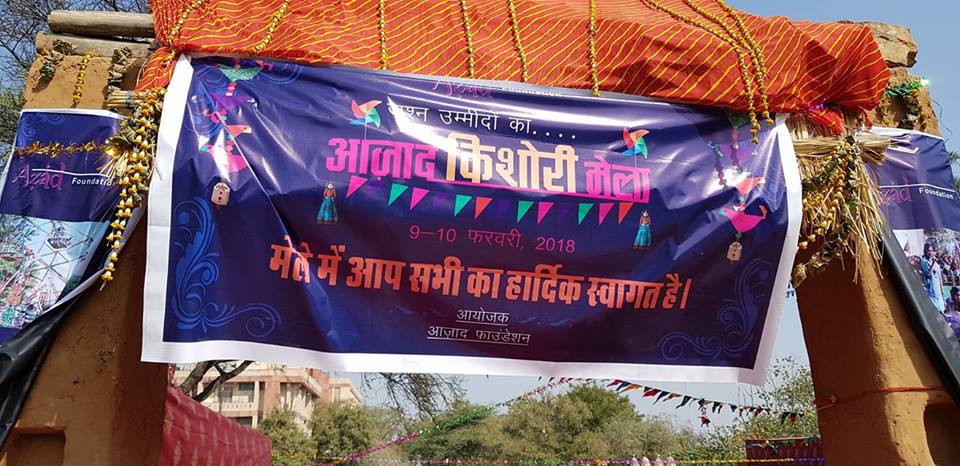
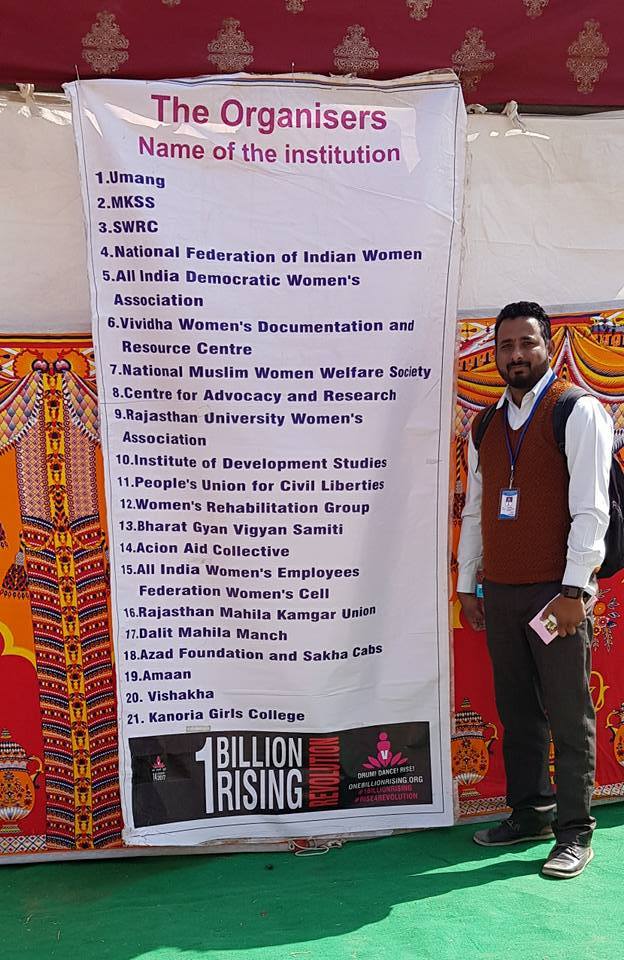
Community led initiatives in water, sanitation and hygiene (WSH) were on display at the CFAR stalls in the recently concluded two-day Kishori Mela at Shilpgram in Jaipur, Rajasthan. CFAR was among the 30 NGOs that participated in the Mela. More than 1500 adolescent girls from different schools of Jaipur were part of the crowds that came to the Mela which was a part of the One Billion Rising Campaign.

Held on 9-10 February, the Mela was aimed at creating and spreading awareness around menstrual hygiene, livelihood and educational opportunities and health issues among adolescent girls and boys. Although the Mela addressed serious issues, street plays, singing and dancing made for a festive mood at the venue. Lessons on self-defense and health camps formed part of the Mela.

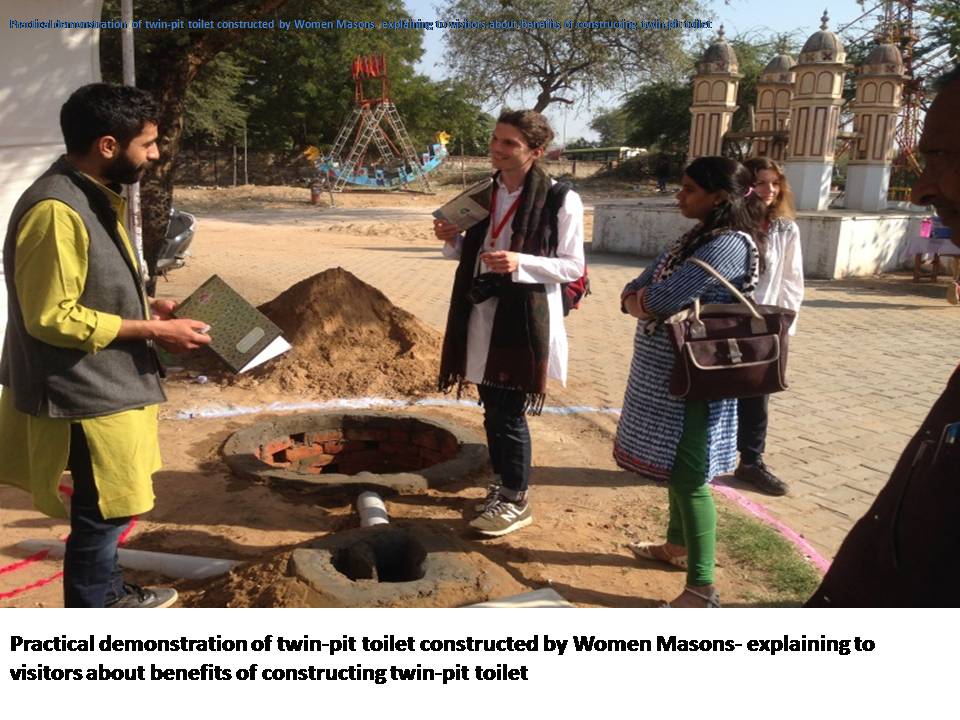
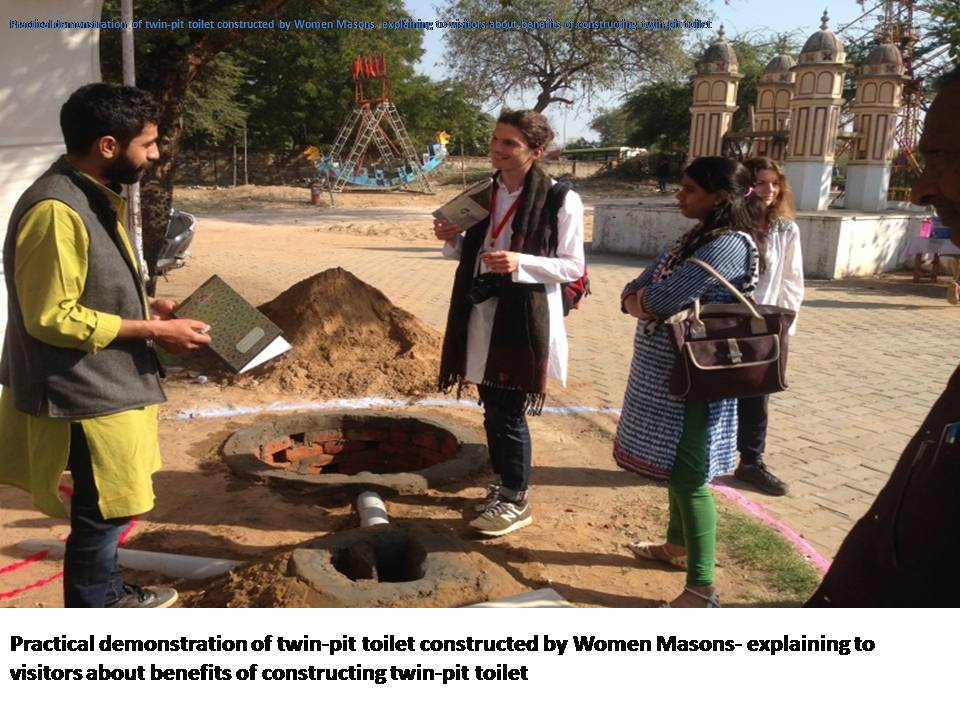
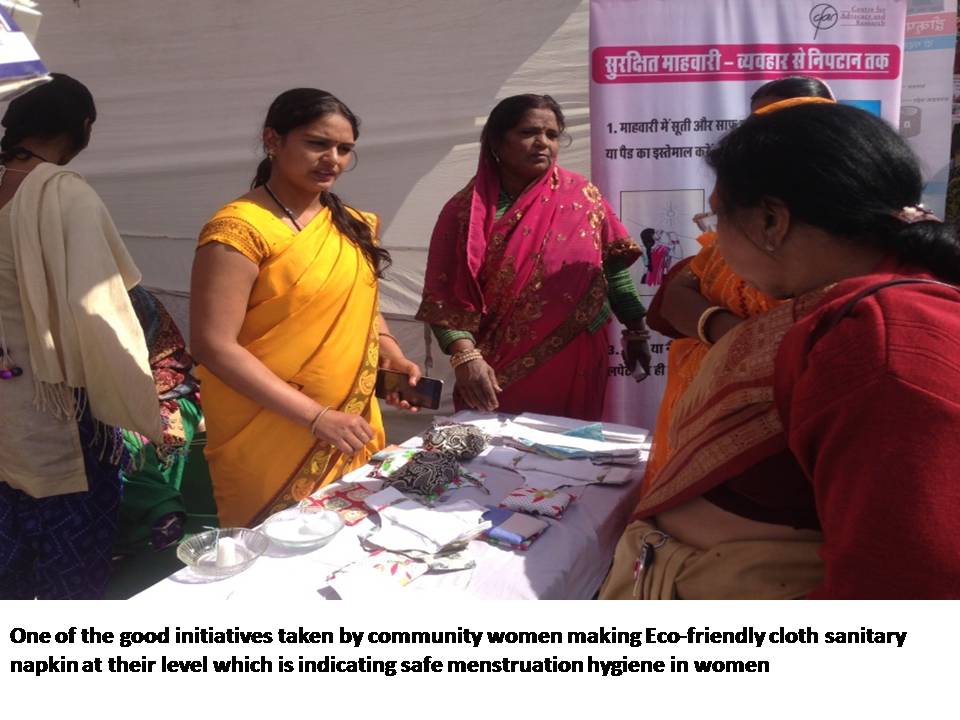
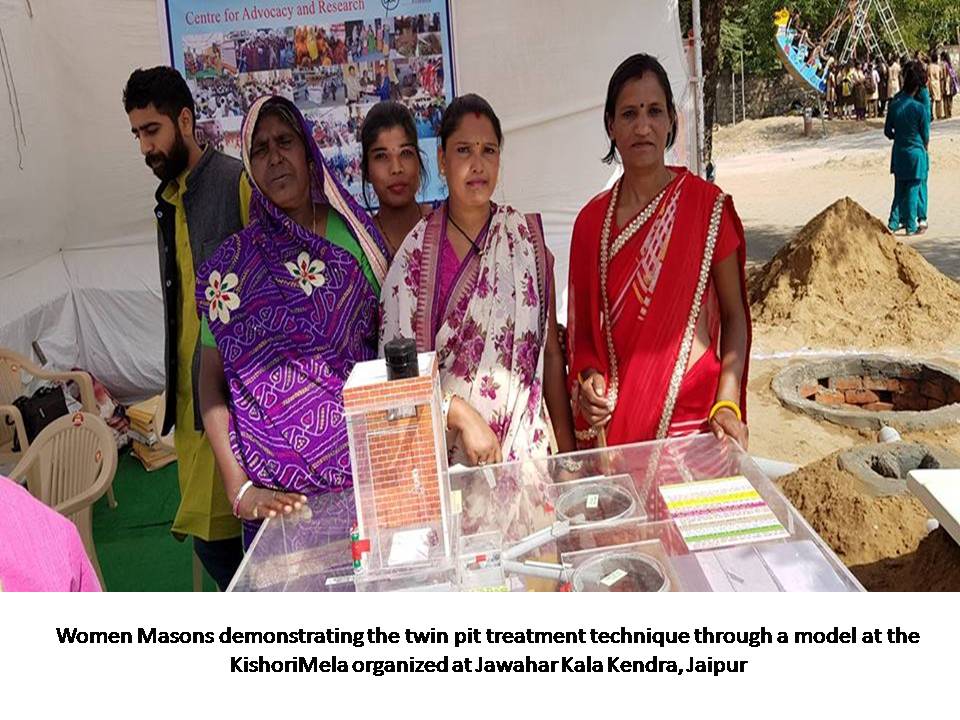
Visitors to the two CFAR stalls were given information on its many community-led initiatives such as the twin-pit toilet technique, conversion of insanitary toilet to sanitary toilets, solid waste management and waste segregation at source. Samples of eco-friendly, reusable cloth sanitary napkins as well as compost from waste were on display. These were in much demand among the visitors.

The twin-pit toilet technology and making manure from waste impressed many. Ms Kavita Mahavar, a resident of Jawahar Nagar basti felt that many people would want to adopt the twin-pit toilet technology as it was economical and doable. This was echoed by Mr Pradeep Joshi who said the technique would prove to be very useful in slum areas of Rajasthan.

Social activist, Dr. Meeta Singh and Ms Ginny Srivastava were of the opinion that making manure as a part of sanitation project was a good initiative and required to be scaled up. Besides, it was an easy process and any woman could make it at her own house.

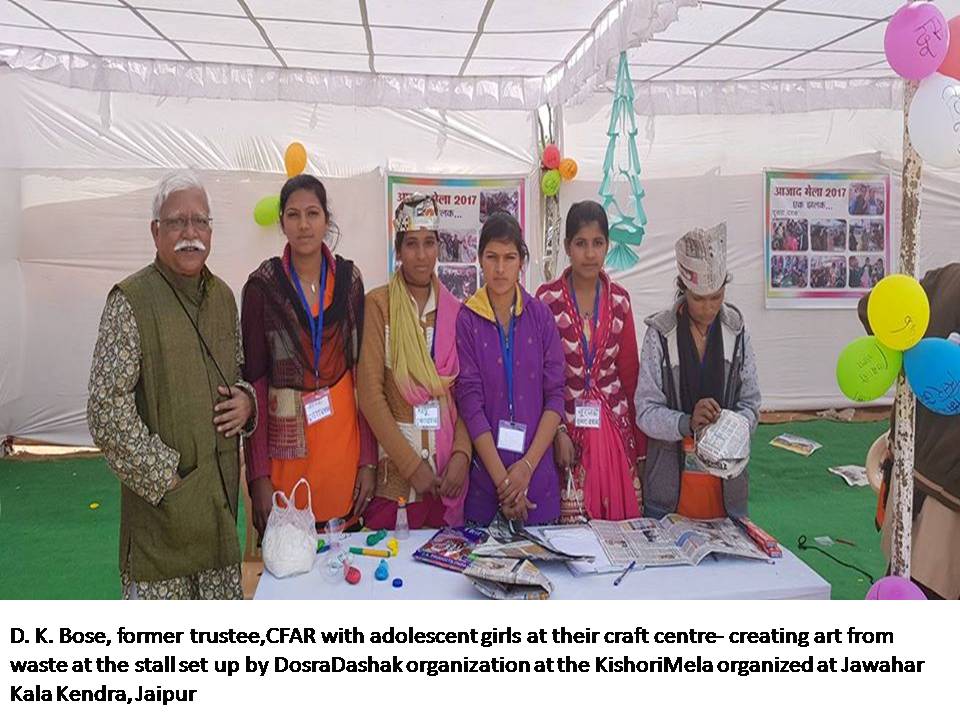
Mr. D. K. Bose, Trustee, CFAR found the Mela a good platform for showcasing the community initiatives of CFAR and the organisation could take part in it every year. He said it was encouraging to see the response to the products such as manure from household waste and cloth sanitary napkins. However, it was important to impress upon people the benefits of the cloth reusable sanitary pads against other menstrual absorbents available in the market.

Strengthening communities in inclusive governance through Prayas

Strengthening communities in inclusive governance through Prayas

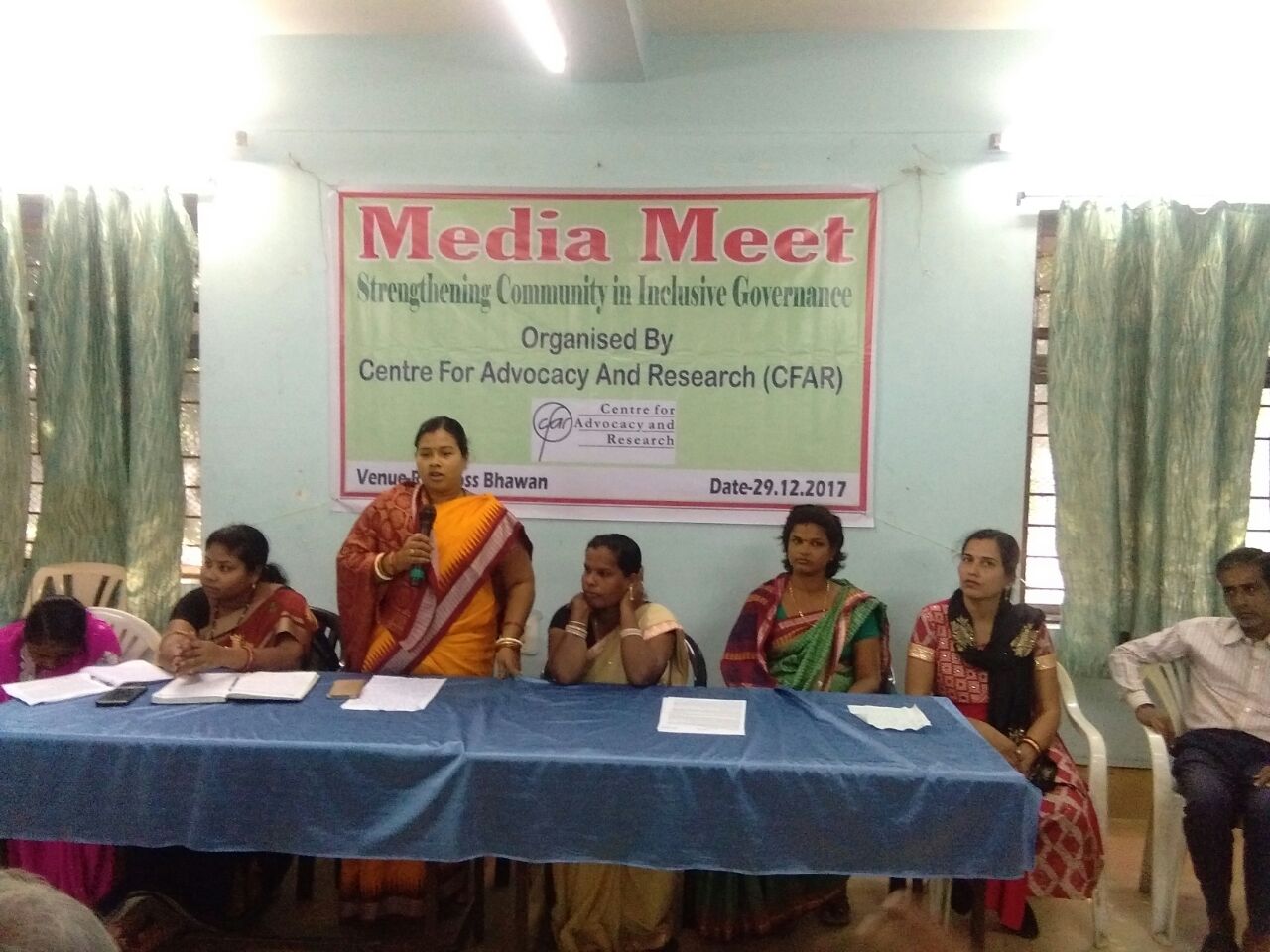
To mainstream marginalized communities, women and unorganized workers, ‘Prayas’ a Single Window structure, set up in Bhubaneshwar by CFAR in 2015 with support from Azim Premji Philanthropic Initiatives, has facilitated 6,021 community members to access entitlements such as the public distribution system, voter card, Aadhar registration, widow and old age pension, subsidy for constructing toilets andschemes for skill development.

To showcase the effort, CFAR organised a press meet,at Bhubaneshwar,with community leaders from 15 settlements where Prayas is being implemented. The meeting sought to highlight the successful establishment and functioning of the single window system in strengthening the community-government partnership. Media persons from leading news agencies of Odisha were apprised ofthe monitoring role played by community leaders in ensuring effective delivery of government schemes and programmes.

Ms. PujafulaPattanayak, State Project Manager, CFAR spoke on how Prayas had been able to ensure that the pro-poor package of government schemes and services reached the intended beneficiaries. Official directives, orders, circulars and letters of the municipal corporation and the various state departments were evidence of how many more people now had access to safe drinking water, clean toilets, lived in cleaner neighbourhoods and had access to health services.

Community members who were the main instruments in bringing about the change recalled their fight against corrupt practices in ration shops, anganwadi centres and pension offices.

“The ration shop owner would force us to buy potato or incense packets in return for subsidized rations,” said Ms Mamta Ojha of KelaSahi. The community members, empowered through Prayas, complained against the dealer in the Department of Food and Civil Supplies, following which the dealer’s licence was cancelled. In another instance, the community advocates got together to fight for those who were denied rations for lack of Aadhar card.

Ms. Pinki Nayak, a resident of Rickshaw Colony said social audit of anganwadi centres, such as in ward no. 52,had led to an increased awareness in the community regarding the quality and quantity of food that an anganwadi centre must provide to children and pregnant and lactating mothers.  Anganwadi workers too benefitted from the social audit as they were made aware of the important role they played in the effective delivery of the ICDS, said Ms Kabita Nayak, member, lunch committee of an AWC, showing a booklet, compiled and printed by CFAR that would help anganwadi workers and the community to monitor the quality of service provided by an anganwadi centre.

Recounting the community’s experience in accessing benefits under the Madhubabu Pension Yojna,Ms. BimalaSethy of JharanaSahi pointed to the gaps in the system. She said that a number of people had been unable to go for aadhar enrolment and thus, were refused pensions. Of the 108 people who had applied for pension, only 40 were sanctioned. The community leaders had approached the relevant departments and had persuaded officials to release pension for the very old. The community was now fighting for pension for single women who had been left out of the scheme.

Similarly, through its advocacy work, Prayashad helped rejuvenate the School Management Committees (SMC). According to Ms Ranjulata Nayak of HarijanSahi, the SMC members now seem to have woken up to their role in ensuring better environment in schools and quality education for children. Agreeing with her, Mr Sujoy Kumar Mishra, Chairman, SMC, Capital Government Primary School, Unit 6, said SMC members had been able to take up matters related to the school with the education department, thanks to the helping hand extended by CFAR. The members were pushing further to install a complaint box and a toll-free number that the children could use, to register complaints.

The project was also involved in creating open-defecation free wards, persuading people to use toilets, working with Swachh Bharat Abhiyan cell in the municipal corporation to not only release subsidy amounts for construction of toilets for individual households but also construction of shared toilets where the space was limited.  Mr Sameer Ranjan Dash, Project Coordinator, CFAR said the process of making a ward ODF required much handholding as it involved not only constructing of toilets and applying for subsidies but also pushing for a behaviour change. In several places, members of the Community Management Committees were actively involved in advocacy for creating ODF settlements, persuading people to construct and use toilets.

The remarkable part of the Prayasproject, it was pointed out, was that a number of women had emerged as leadersand were taking an active part in the decision-making processes for the development of their communities. JagrutiParishad, a community-based organisation, for instance, had 100 members (all women) working across 15 urban settlements in Bhubaneshwar, towards rights and entitlements of marginalised communities.

Skill Building and Livelihood Training: Enzyme Preparation

Skill Building and Livelihood Training: Enzyme Preparation

December 26, 2017

CFAR held a day-long training workshop on enzyme preparation, with the aim to introduce this as a source of livelihood for economically vulnerable wom
en. The workshop was held in partnership with Miecoft Consultants and Services which aims to buy the product from the network of people who are trained in the process.

Enzymes are processed out of easily availablebio-degradable waste and are widely used in antiseptics, cleansing agents and in agriculture. It is also an eco-friendly solution to recycle waste which otherwise would end up in rivers and streams.

The workshop was held in Delhi with 27 members of Community Management Committees (CMCs) from Janta Jeevan Camp, Kaortiya Camp, IG Camp Ashram and New Sanjay Camp. Facilitated by Malini Rajendra from Miecoft, the workshop aimed at:

  • Building an understanding of enzyme preparation and selling as a source of livelihood
  • Demonstrating the steps in enzyme preparation
  • Enable residents and Miecoft to track the end product
  • Strengthening Community forumsthrough allied services


Building an understanding of a source of livelihood in enzyme preparation

Ms Malini Rajendra explained that if one household produced 500 gm of vegetable waste, a substantial quantity of waste would be available in a settlement of say, 1000 households. Producing enzymes from this waste could then become a source of livelihood. The good part was that this additional source of income required low investment.

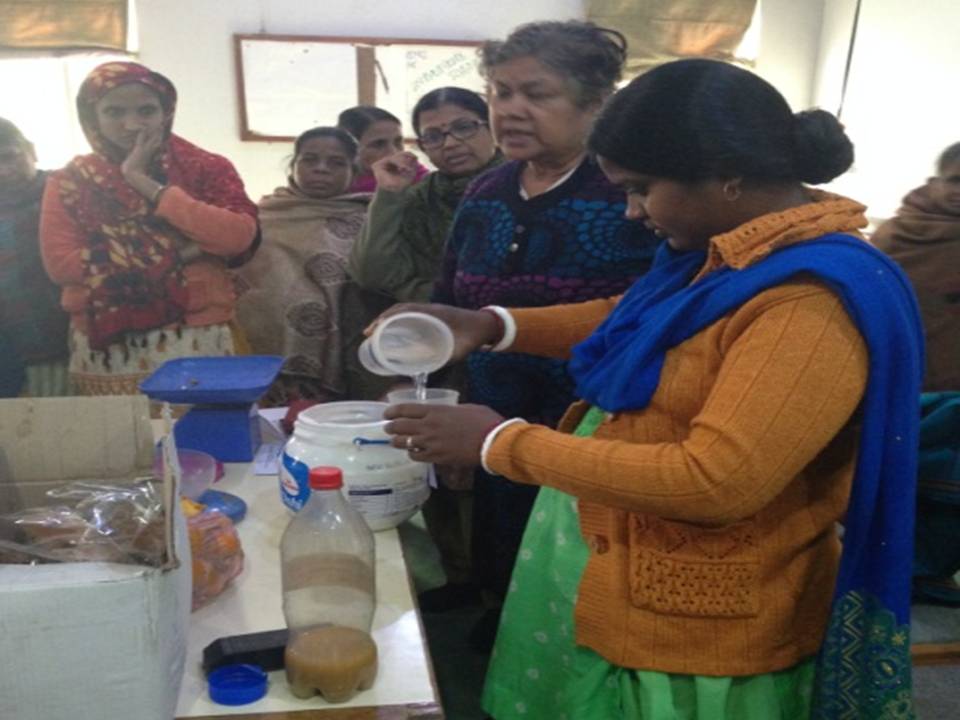
Demonstration of Process of Enzyme Preparation

The process of enzyme preparation was demonstrated at the workshop. They were also informed of precautions they were required to take. Written instructions were also handed out to the participants.

The same process was repeated for different fruit and vegetable peels with other participants in the workshop. Doubts related to specific vegetables and fruits were cleared. Ms Rajendra explained that although enzymes from potato and onion peel and egg shells were in great demand across the world, the process required was different from the one demonstrated at the workshop.

Children’s Day celebrations

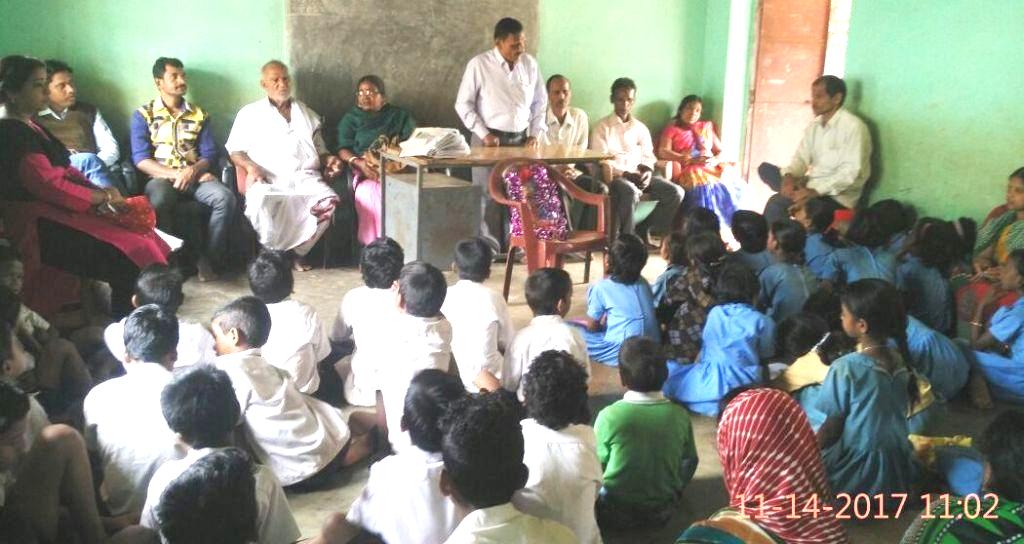
Following a notification from the Government of Odisha to government schools to observe Children’s Day on November 14, 2017, Parents Teacher Associations (PTAs) across the State conducted a variety of activities in their respective schools.

The celebrations commenced with students assembling to pay homage to the nation’s first Prime Minister, Pandit Jawaharlal Nehru. This was followed by a 15 minute telecast “Mana ra Katha” by the State’s Chief Minister, Shri. Navin Patnaik, in which he asked the children of the State to dream big, develop a scientific temperament, work hard to achieve goals and excel in various fields.

While doing so, the Chief Minister announced a number of measures for schools including a ‘My School’ campaign to connect children to their schools and childhood memories. In this context he mentioned that a corpus fund of Rs100 crore had been constituted and that the State would double the amount any alumnus gave as donation to his/her school.

Moreover, ten students from each block would be given language scholarships for scoring the highest marks in Odia, while the Chief Minister’s Merit Scholarship will be awarded every year to 40,000 meritorious students – 100 students from each block and Municipal Corporation, 50 from each municipality and 20 from each NAC.  Cash awards of Rs 5000/- each will also be given to students who excel in Class X Board examinations and parents and teachers of high scoring Class X students will also be felicitated.

The CFAR Team with support from school teachers, School Management Committees (SMC) and Parents Teachers Associations (PTAs) conducted debates and poetry and essay writing competitions in nine Government Schools – Sikharchandi Primary School, Nilachakra Nagar Project Primary School, Maitree Vihar Primary School, Ekamara Vihar Primary School Khandagiribari Primary School, Kolathia Primary School, Raghunath Nagar Primary School, Satya Nagar Primary School and Gandamunda Primary School. 

Social Audit exercise in Bhubaneswara

In 2013 Parliament had passed the National Food Security Act (NFSA) which ensured food and nutrition security of people as part of the life cycle approach. The Act provided a basket of entitlement for all age group be it children, women or men.

For children in the 3 to 14 years age group provision was made for free meals in Anganwadi Centers and schools under the Integrated Child Development Services (ICDS) and Mid Day Meal (MDM) scheme respectively. Section 28 of NFSA-13 also gave people the right to undertake Social Audits,  get information on the actual functioning of the programme and also  ensure transparency and accountability across all schemes covering NFSA-13.

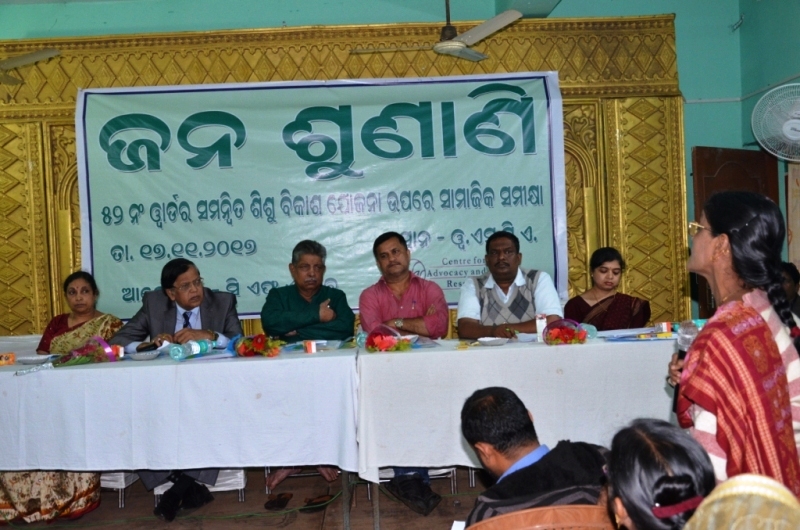
In this context CFAR Bhubaneswar, under the APPI project, conducted a Social Audit exercise from November 9 to 15 , 2017 in six settlements – Harijan Sahi, Ganganagar Palli, Ganganagar Palli A, Ganganagar Hostel Site, Bhimpur Sahi and Kela Sahi- under Ward no 52 with the support of  the Councilor. The aim of the exercise was  to increase transparency in the functioning of ICDS and to provide critical inputs for strengthening  service delivery and taking important decision related to the functioning of Anganwadi Centres.

We also conducted a Public Hearing on November 17, 2017 as a part of the Social Audit process, because it is an effective tool to identify public grievances and find solutions. Mr. Praffula Samal, Minister, WCD, Ms Chandarani Mohanty, Under Secretary, WCD, Mr. Ramakrushna Panda, National Secretary, AITUC, Mr Sridhar Behera, Councilor, Ward No 52 and Mr Hrudaya Ballabh Das, Retired Judge, took active part in the Hearing and gave their decisions after listening to 19 testimonies regarding the gaps in accessing benefits under ICDS through the 6 AWCs in the ward. Their report will be shared with the Commissioner to strengthen accountability of service providers.

The Minister WDC declared that he would like to capacitate the Janch Committee and Mother’s Committee in monitoring AWC and congratulated CFAR for conducting the Social Audit exercise. While doing so he also gave the assurance that all the gaps in the implementation of the ICDS programme would be addressed and sought CFAR’s support in conducting yet another Social Audit exercise after 3 months to see if any difference has been made post this Audit. The Panelists have meanwhile decided to form a state level committee to monitor the quality and quantity of the supplementary nutrition that was being provided and  assess whether the services being delivered were in keeping with the Act.


Knowledge Camp on FSSM in Kolkata

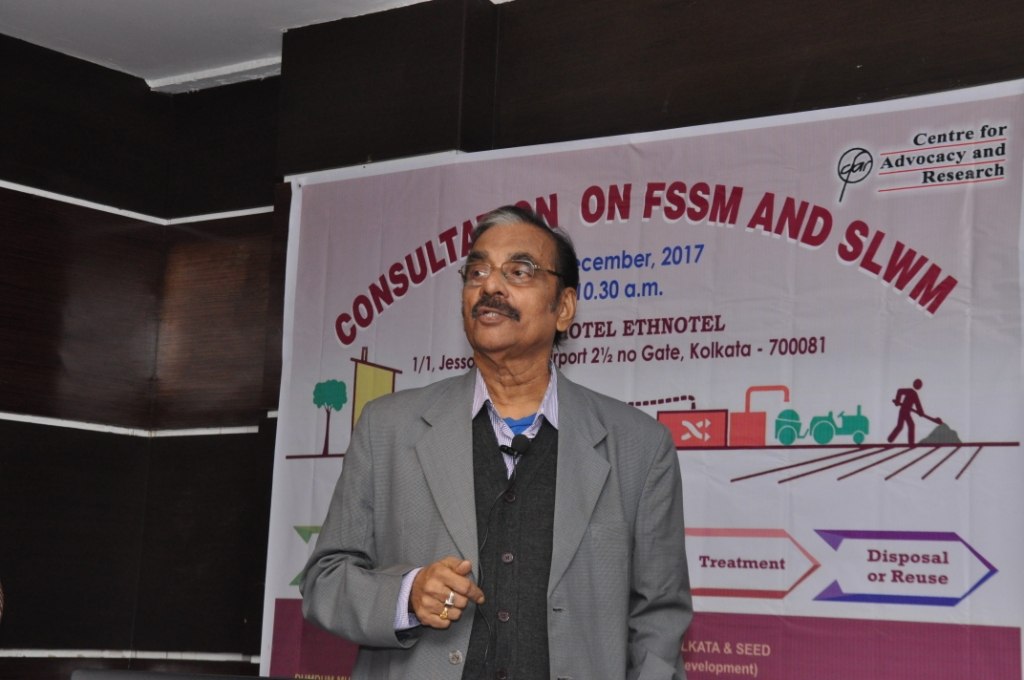
As part of ongoing efforts to increase awareness and sensitize urban communities to the importance of fecal sludge and septage management (FSSM), Centre of Advocacy and Research held a knowledge camp with local councilors, municipal officials and community members of four urban local bodies in Kolkata in December 2017. Consultations had been held earlier with Kolkata Municipal Development Authority (KMDA) regarding fecal sludge management in the four ULBs, viz. Dumdum, South Dumdum, North Dumdum and Baranagar that are located along the Ganges. This had resulted in a proposal and sanction for a Fecal Sludge Treatment Plant (FSTP).

The knowledge camp was primarily held to discuss the nitty-gritty of the sludge treatment plant and the importance of FSSM in the sanitation value chain. The key speaker at the camp, Dr. Arunabha Majumdar, Professor Emeritus, Jadavpur University explained the design of the integrated septage treatment facility as well as the concept of offsite and on-site excreta treatment and the available technology for constructing various kinds of toilets. Training of masons and monitoring during construction were also some of the prerequisites, he said. Mr. Tapabrata Bhowmik, Executive Engineer of KMDA, also addressed the gathering, describing the technology used in the proposed sludge treatment plant.

Improper discharge of faecal waste can lead to severe health problems in a community. This was underscored by Ms Sujaya Rathi, WSH expert (individual consultant) and NFSSM member. She also shared a documentary film on the successful implementation of the FSSM programme in Devanahalli and discussed the importance of community engagement in such projects.

The question-answer session threw up a number of doubts and suggestions. Mr Somnath Sarkar, CIC, North Dumdum Municipality pointed out that the amount sanctioned was not enough to build twin-pit latrines in the low-lying areas. It was suggested that subsidies could be tailored according to the type of land on which the toilets were to be constructed. Mr. K Sardar, Technical Advisor of Baranagar Municipality suggested that sanction for subsidies should be given only after the technical plan for toilet construction is approved, he said. 

Mr. Goutam Banerjee, Assistant Engineer of Dumdum Municipality said land was scarce and therefore experts needed to specify the size and capacity of the septic tanks built at the household level. He also pointed that the proposed integrated FSTP would cover only a limited area of the ULBs. So, what about the parts that will be excluded from the plan, he asked.

Some of the participants expressed unhappiness over the current state of affairs where insanitary toilets and improper waste disposal seemed to be the norm and the municipality had no power to take action against them. All decisions in this regard were made by the political authorities who did not want to antagonize their vote bank, Mr. K. Sardar said. Mr. Tarak Tiwari, also an official of Baranagar Municipality said orientation workshops should be organized exclusively for political representatives for them to realize the importance of the issue.

It was evident that the participants from the four ULBs realized and appreciated the need for engaging with the local community in implementing of projects like the FSSM. CFAR also took note of Mr. Sardar suggestion that a pool of 10-15 people, technically trained in FSSM should be created and used to disseminate knowledge among others in a wider geographical area.

Training of Masons on Fecal Sludge and Septage Management

Moving forward with CFAR’s efforts to bring sharper focus on Fecal Sludge and Septage Management (FSSM), a training camp was held for thirty masons at Jawahar Nagar and Jhalana Kunda in Jaipur, Rajasthan in December 2017. An integral part of sanitation, FSSM is about strengthening the containment, transportation, emptying, disposal and recycling of human waste. The day-long training, thus, emphasized on the components of the sanitation chain and the role of the participants in it.

The participants were informed on the technical options available for the construction of individual household latrines, with special emphasis on twin pit technology and septic tanks. A group work session was held on what fecal sludge comprised of and the current practices used by masons in the construction of sanitation facilities.

The current sanitation facilities that were being constructed and used were listed by the participants as:

  1. Single lined pit pour flush toilet
  2. Single unlined pit pour flush toilet
  3. Twin pit pour flush toilet
  4. Septic tank
  5. Toilet with no containment unit and direct discharge into drains

The current practices in FSSM, the importance of well-designed toilets, the impact of poor management of fecal sludge and common mistakes in construction of containment units were discussed at the training session.

A film on twin pit technology was shown to the participants for them to understand the process of construction of twin pit toilets. This was followed by a detailed discussion (with the help of illustrations) on the process of construction as well as the common mistakes made while constructing twin pit toilets.  The standard parameters and the dos and don’ts of constructing septic tanks were also discussed. The link between proper fecal sludge management and adherence to the standard parameters of construction of toilets was emphasized.

Here are some of the responses of the participating masons to questions regarding construction of toilet construction:

Ramdayal: “Maine simota gaon me 72 teen gaddhe wale shauchalaya banaye the jisme ek pit bathroom ke paani ke liye tha”. (I have built 72 toilets with three pits in Simota village of which one pit was for grey water that comes out of the bathroom)

Narayan: “Naale me khulne wale shauchalaya se kuchh fayada nahi hai kyunki mal bahar hi nikalta hain” (No purpose is served by using toilets that are directly connected to an open drain because the feces is discharged into the open environment)

Heeralal: “Agar mal khali karnewala truck bhi mal ko khule me fenkta hai to wo apne pass hi wapas aata hai or use to khuchh fayada bhi nahi hota hain” (If the fecal sludge is discharged in an open area it will serve no purpose).

Lalchand:Do gaddhon wale sauchalaya me 3.5 feet gahara hota hai jisme mal ka upchar hokar uski khad banti hai. Mere ghar par bhi yahi banaya hai or maine uska gaddha bhi change kar diya hain”(Pits in twin pit toilets are 3.5 feet deep in which feces gets treated and converted into manure. I have also constructed toilets with the same design and recently I also changed its pit).

 Narayan:Humari jimmedari sabse pahle hai, hum shouchalaya banate hain aur logo ko sahi takneek par guide kar sakte hain” (We have a responsibility because we are the ones who build toilets and we can guide households on the right toilet techniques)

Radha Mohan:Hum humare sathiyo ko bhi aaj jo training me seekha uski jaankari denge aur aage se yahi do gaddho wale sauchalaya ka nirman karenge” (We will further disseminate the information which we have learnt here and from now on we will insist on constructing twin pit toilets)

The workshop achieved a measure of success as it was able to fulfil its objectives of

  • training as many as 30 masons on FSSM and increased the knowledge of masons on available toilet techniques with information on designs and construction standards
  •  creating a well-trained peer group that would not only use the techniques discussed at the workshop for construction of toilets but also disseminate the technical information and motivate other masons and communities to adopt safe sanitation techniques in their localities.
  • creating greater awareness on FSSM and its ill effects on public health and natural resources.


Capacity Building Training on Fecal Sludge and Septage Management (FSSM)

Capacity Building Training on Fecal Sludge and Septage Management (FSSM) for Masons and Community Management Committee was organized in Delhi on December-1-2, 2017.

The workshop was a step towards developing and strengthening a unified community platform to bring together Masons and Community Management Committee members to discuss varied possibilities of implementing FSSM for achieving complete sanitation in a sustainable way. It is an attempt to link behavior change with the right technique of sanitation for a continued and sustained practice.

The main objective of this training was to help Masons and CMC members develop an understanding on FSSM by teaching them right techniques for construction of septic tanks.

These trained masons will become the front line leaders and agents of change and reach out to other for implementing the right techniques of FSSM

 “Though we were in this field for so many years, we were focusing more on the construction rather than the right techniques of construction and the purpose of those techniques, from now on we will ensure to de- sludge septic tanks every three years.” – Girdhari, Mason- Karotiya Camp

It’s our profession after all. It’s our job to inform the owners if they have no knowledge on the issue.” Ramcharan, Mason

“We will take forward the learning of the workshop to other CMC and male member in the settlements. I learnt and will ensure that the toilet should be constructed ten feet away from the water source. I now know that we cannot construct septic tank or twin pit in both rocky and wet lands”Mahabiri,CMC member

 “There are not toilets in our settlement, all were broken down by the government. The toilets that are there, are at large distances from the settlement, people finally go in open. Kids end up missing school, the waste from tank goes in drains. We need sewer that will solve our problem“- Kaushalya, Janta Mazdoor Colony

Way Forward:

  • Taking the knowledge of technical training to the community
  • Adopting soft techniques of reaching out to the community in ways easily understood by them so that the community can engage , be responsible and take accountability for themselves in ensuring FSSM
  • Help in converting insanitary toilets to sanitary toilets
  • Jointly working out solutions within the existing infrastructure which can be locally applied
  • Organize robust feasibility study of the area and decide on the appropriate techniques of area specific FSSM.
  • Continuous effort to reach out to Masons, to sensitize and train them the right techniques of construction. Along with this, DUSIB, MCD and the government agencies should recognize and certify trained masons to motivate and strengthen the ongoing effort to enhance FSSM process.


Celebrating the Spirit of ‘We Can Overcome’

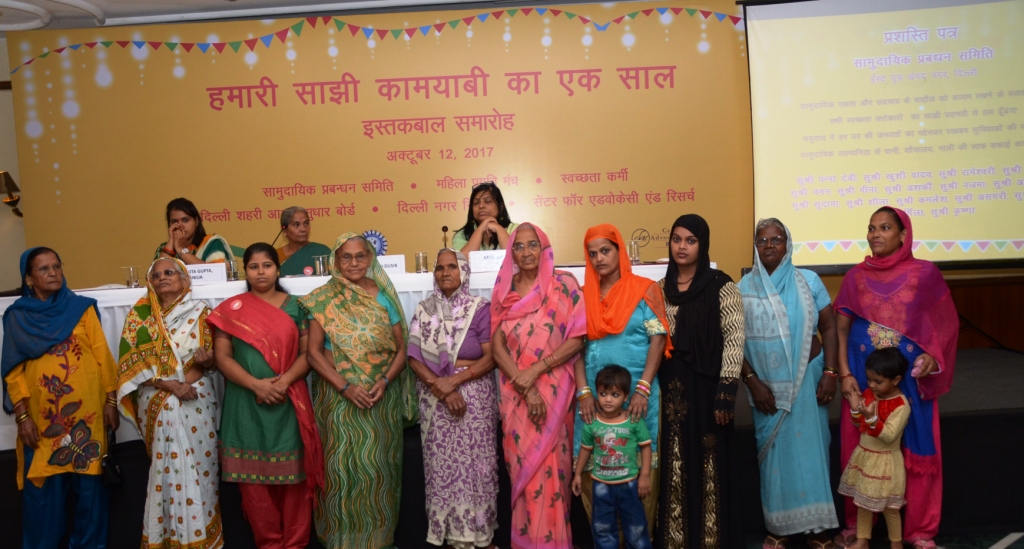
A celebratory event was organized today to observe and mark the year-long, collective effort made towards developing strong community engagement and involvement in 13 settlements, aspiring  to become ‘Adarsh Bastis’ with improved access to basic civic and sanitation services.

Organized by the Centre for Advocacy and Research and the Mahila Pragati Manch, senior officials of DUSIB, MCD and Civil Society leaders felicitated 381 representatives of the Community Management Committee (CMC), Peer Educators, Grassroots Communicators and Editorial Team of Wall Newspaper, Sanitation Workers, Caretakers, Male Groups from these Settlements of South, South-West, East and North-East Delhi. They were recognized for the tireless work they put in to improve access to quality sanitation facilities and services at a special event titled, Celebrating the Spirit of We Can Overcome.

“The contribution of the community under the leadership of the women in managing sanitation services is not only path-breaking and the settlements are not ready to be declared as model bastis but have the potential to be scaled up across the JJ clusters.” -Shri S.K. Mahajan, Chief Engineer, DUSIB

“We are willing to support the community management of these services in every possible way including budgetary and logistical support.”- Shri Atique Ahmed, Dy. Commissioner, EDMC- Shahadra (South)

Press Release

Also read report on Consultative Workshop on Transforming JJ Clusters into Adarsh Bastis

Subscribe To Newsletter

Pleace enter your email and get news updete for donation company.