Bridging the Urban Sanitation Gap in Small Towns of India
Small Towns CWIS Programme | Supported by Viega Foundation, Germany
CFAR is implementing a three-year (September 2025–August 2028) City-Wide Inclusive Sanitation (CWIS) initiative across four small towns — Chaksu and Dausa in Rajasthan, and Jatni and Khordha in Odisha — in partnership with the respective municipal bodies (Nagar Palika/Nagar Parishad/Municipality). The programme aims to strengthen sanitation governance, service delivery, and community-led monitoring so that 140,000 residents across 69 underserved wards can access safe, equitable, and climate-resilient sanitation services.
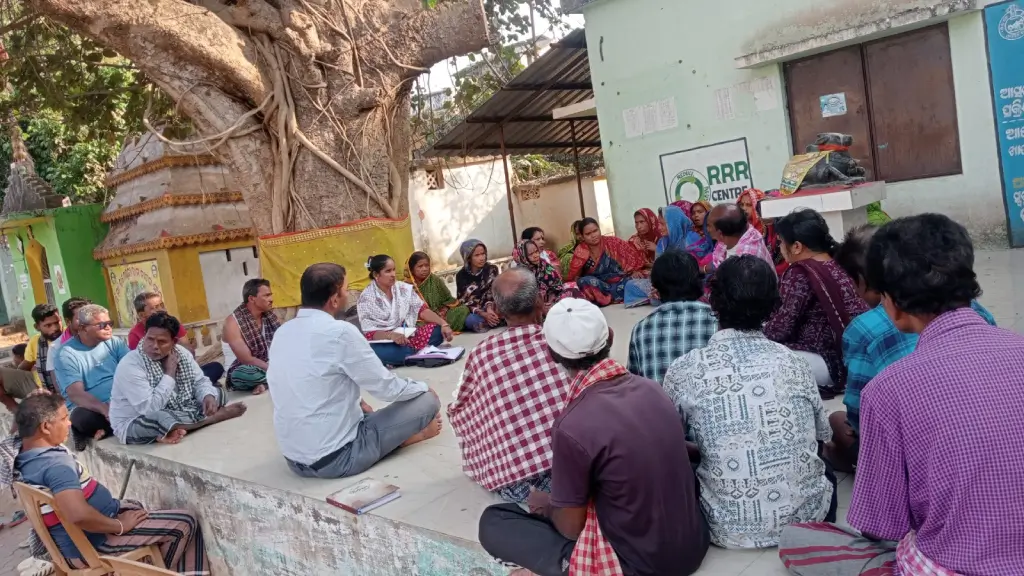
Since the baseline and diagnostic phase — including household surveys, FGDs, KIIs, and Shit Flow Diagram (SFD) assessments in all four towns — the programme has moved into community institution-building, microplanning, and capacity strengthening.
Key achievements so far:
- Reached 37,911 people across 8,961 households (52% women and girls) in 9 months
- Formed 90 Community Management Committees across 77 wards and 146 settlements (1,155 members), federated into Sanitation Sub-Committees, including Jatni’s first Ward Sanitation Committee (71% women)
- Published all four town SFD reports on SuSanA, with findings shared with municipal and state authorities (SBM-U, PHED/WATCO, H&UD Odisha, DLB Rajasthan)
- Secured formal CWIS partnership agreements with all four urban local bodies and the Odisha H&UD Department; Chaksu and Dausa positioned as state evidence sites under SBM-U Rajasthan
- Rolled out real-time monitoring tools — the Saniwall dashboard, an IVRS feedback system, and a concurrent MIS — now live across the four towns
- Enabled community-led affordable desludging in Dausa and Chaksu; a safe-pit case in Chaksu (Kapuri Devi, Ward 30) helped trigger a shift from unsafe honeycomb pits to sealed pits
Priority groups:
women and adolescent girls, elderly residents, persons with disabilities, transgender persons, sanitation workers, urban poor, migrant/tenant households, and caste-marginalised communities.