
Eggs are enhancing school attendance at Sanjay Gandhi Nagar Govt. School

Eggs are enhancing school attendance at Sanjay Gandhi Nagar Govt. School
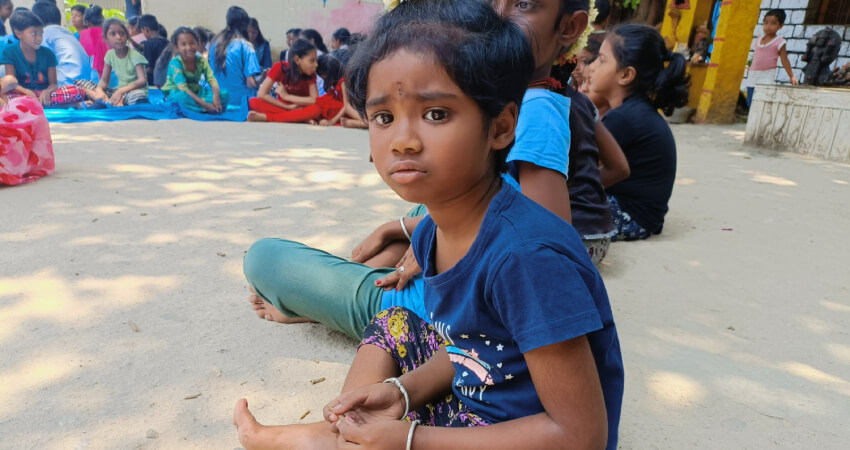
Sharanamma, a thirty-four-year-old resident of the Sanjay Gandhi Nagar settlement in northern Bengaluru, Karnataka, is overjoyed that her seven-year-old daughter, Sneha, who is studying in the first standard at the Government Higher Primary School, no longer misses school. Reason! Sneha receives nutritious meals regularly at the school, something Sharanamma has found difficult to provide at home. Eggs are now being served at the school as part of the mid-day meal programme.
Providing a nutrient-rich meal is not always possible for parents like Sharanamma from the marginalized communities living in the settlements of the city. “We try our best with the money we have. Sometimes, when we can afford it, we buy fruits, but daily eggs are expensive. One meal with an egg for each family member would cost us around Rs 100, which we cannot afford regularly. It’s good that children can get eggs at school,” she says.
“While I want my child to study a lot and grow up, a nutritious meal is important for a child to be able to study better,” she added.
There are other families too who are experiencing this change. Nagarathna, another parent, said her daughter Shilpa, studying in 6th standard, along with her brother’s children, now attend school regularly. Earlier, she often had to skip work to look after sick children. Now, with improved health due to better nutrition, she can continue her job without worry.
Serving eggs at school to transform lives of children
At a time when malnutrition continues to be a serious national concern and rising costs, and stagnant wages are making it difficult for parents like Sharanamma and Nagarathna to consistently provide a healthy diet to their children, the government decision to serve eggs is helping these families to combat malnutrition while simultaneously encouraging school attendance. This small but powerful change has begun to transform the lives of children at the Government Higher Primary School and their families living in Sanjay Gandhi Nagar.
Situated in a community where most families depend on daily wage labour and struggle to afford basic nutrition, the school had long faced high dropout rates and poor student health. Children from settlements like Sanjay Gandhi Nagar and Ashraya Nagar often missed school, sometimes accompanying their parents to construction sites because there was no one to care for them at home. Even though the school was included in the mid-day meal programme, the absence of a regular protein source like eggs meant that children were not motivated to attend daily, and malnutrition was widespread. This changed when eggs were introduced 6 days a week as part of the mid-day meal.
Improved school attendance
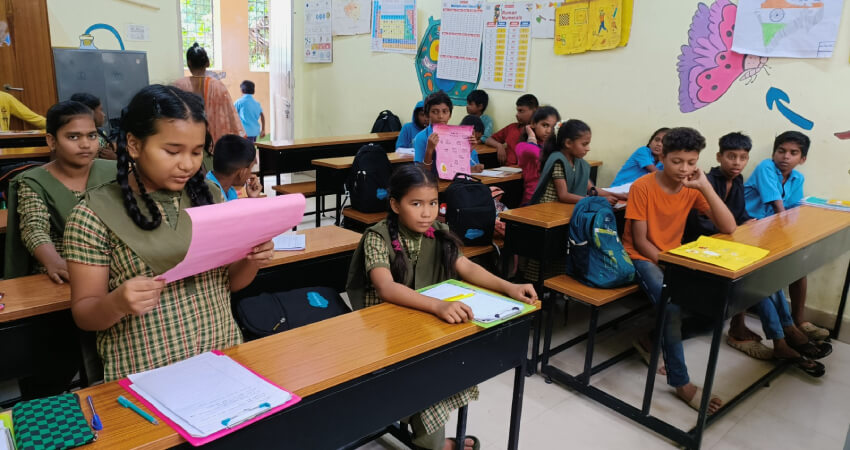
Children are not only attending school regularly now but are also more alert, active, and eager to participate in learning. The improvement is not just felt at home but officially recorded too. Today, the school is witnessing a daily attendance of 80 to 95 percent, and parents are noticing a real difference in their children’s health and enthusiasm for school. Families that once struggled with the constant burden of sickness and school absenteeism now have hope.
CFAR intervention
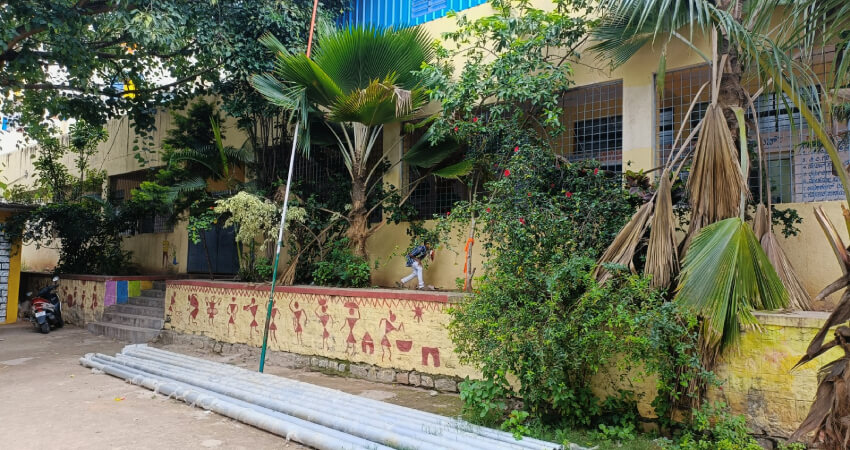
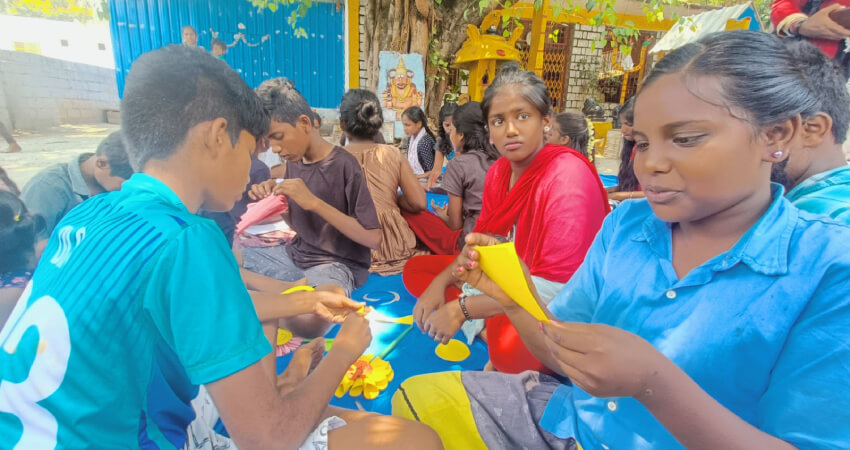
CFAR has been working in the Sanjay Gandhi Nagar settlement for the past three years under its social inclusion initiatives, with also a strong focus on improving education access and outcomes. Our Community Associates, in close collaboration with School Development and Monitoring Committee (SDMC) members and the school headmaster, have been identifying school dropouts, linking children to educational entitlements, and supporting families to prioritize education. Despite these efforts, challenges remained, especially related to children’s nutrition and regular school attendance. But the recent intervention of the Karnataka Government introducing a regular protein source like eggs under its mid-day meal program has added a crucial advantage, leading to this remarkable transformation.
Drop in anemia cases
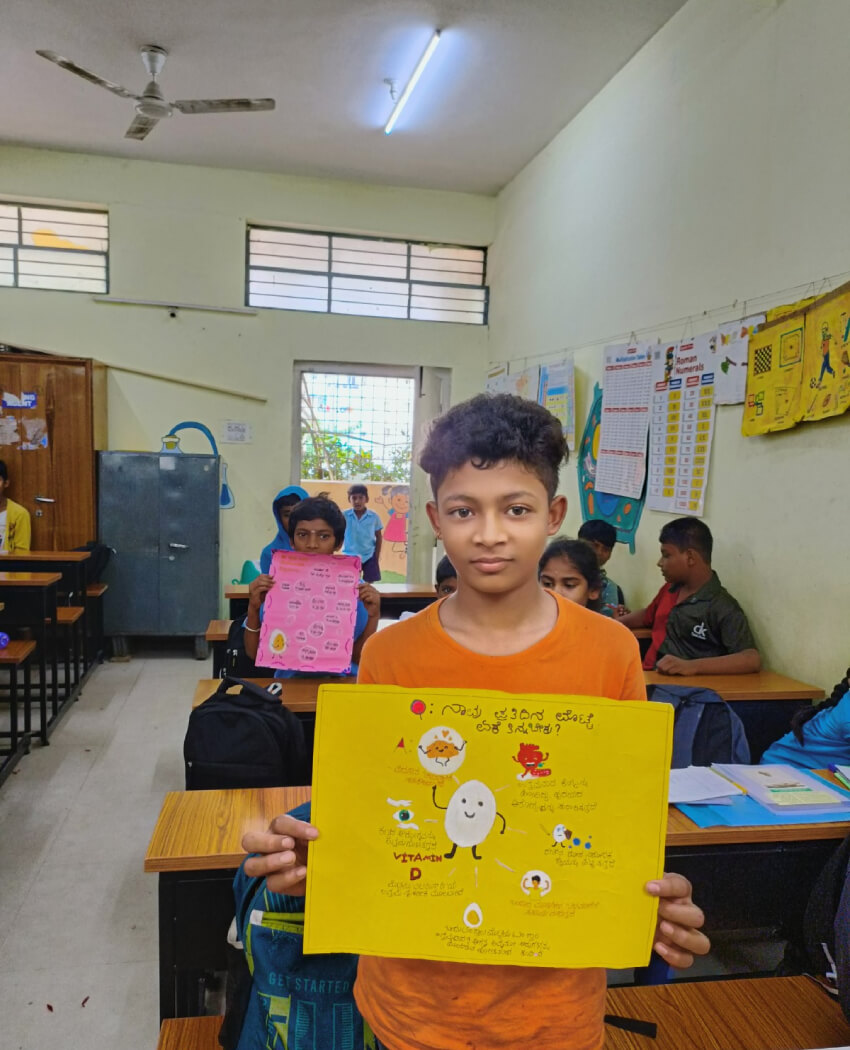
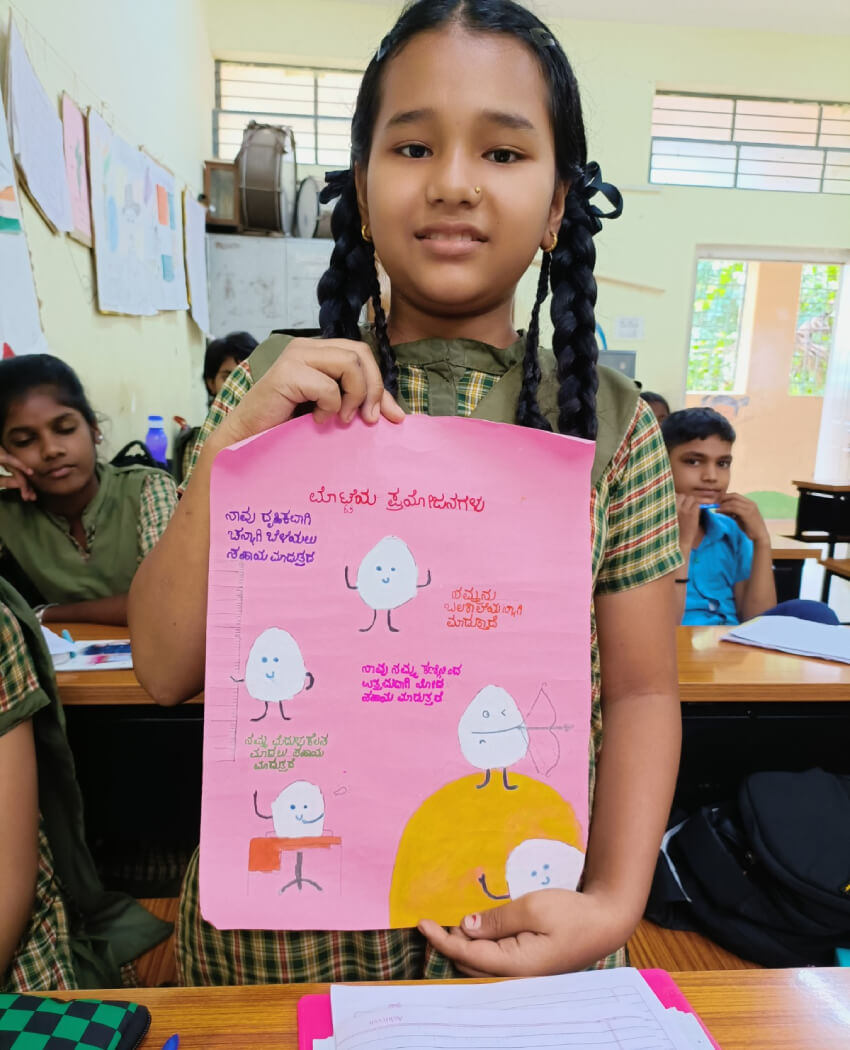
Shoba, an SDMC member and parent of three children studying at the same school, observed the fall in anemia cases among children after the intervention. “Earlier there were many cases of severe anemia, with children having hemoglobin levels as low as 7 to 8. “We used to organize pediatric check-ups and saw that children were coming in very weak. Now, after six months of receiving eggs daily, cases like Vaishali, who is 12 years old, have shown remarkable improvement, with hemoglobin levels rising to 10. Earlier, many children were falling severely sick, but now we see healthier, more active students,” says Shoba. “Eggs are an important source of protein and contain almost all essential vitamins, making them a crucial weapon in tackling children’s high levels of malnutrition,” Shoba further added.
Fostering social inclusion
This transformation is not only enhancing school attendance and child nutrition but also helps children to eat together and thus break some of the social norms around gender, caste and religion. According to Shoba the most significant aspect of the mid-day meal scheme is that children from different backgrounds are interacting, sharing meals, and sitting together, reducing class barriers and fostering social inclusion.
This remarkable story of the Government Higher Primary School in Sanjay Gandhi Nagar shows how a simple, thoughtful intervention providing an egg a day can change lives, boost education, and build healthier futures for children from the most marginalized communities.