Driving Towards Self-Reliance: Lakshmi’s Journey under the Pink E-Rickshaw Scheme
Driving Towards Self-Reliance: Lakshmi’s Journey under the Pink E-Rickshaw Scheme
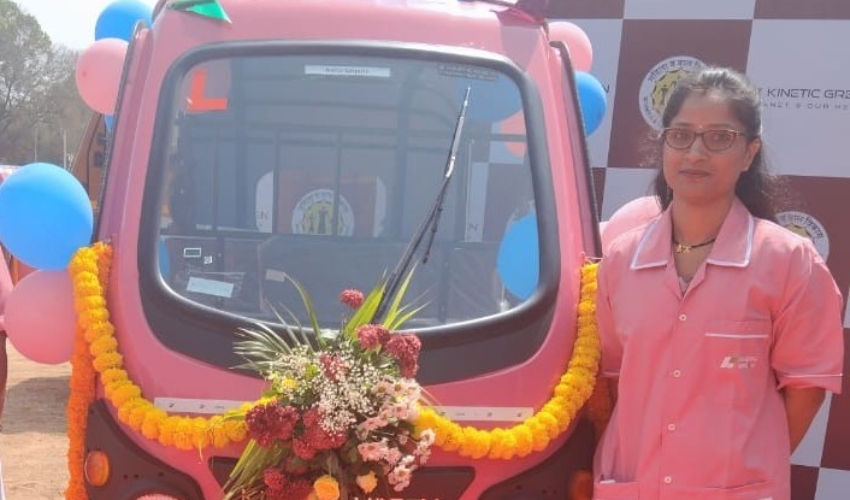
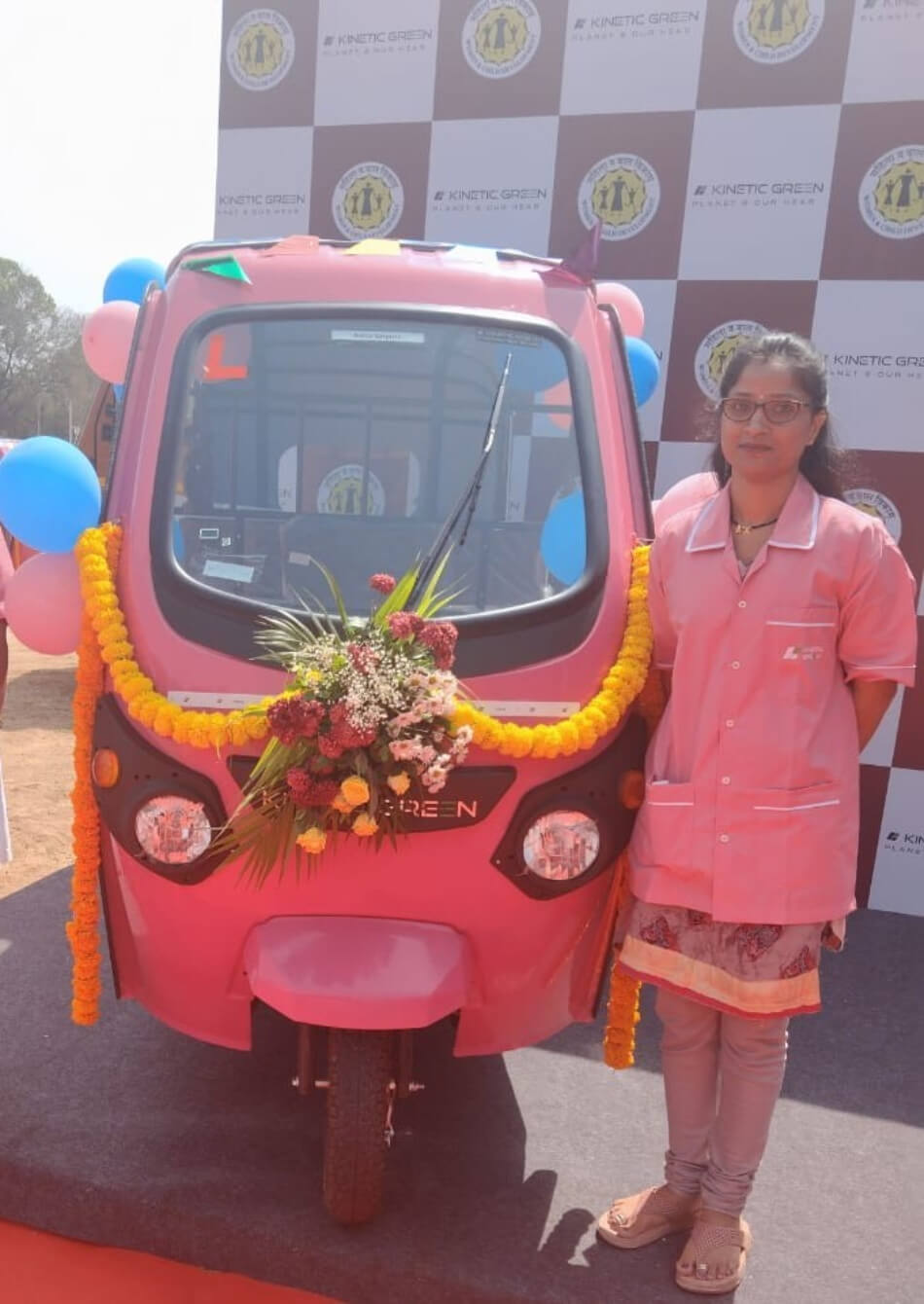
Every morning at 6 am, Lakshmi Digambar Tupdhar sets out in her bright pink e-rickshaw, navigating the bustling streets of Pune. For this 36-year-old mother from the Tadiwala Road slum, the daily drive is more than a routine—it symbolizes courage, independence, and transformation.
Breaking Barriers
Life in a marginalized community meant constant financial strain. Living with her husband and two daughters in one of Pune’s marginalized communities, she struggled to make ends meet. Their daily income barely covered basic needs, leaving little for education or healthcare. “I would lie awake at night, worried. My elder daughter needed tuition, and my younger one new shoes. But how could we afford that?,“ she recalls.
Turning Point
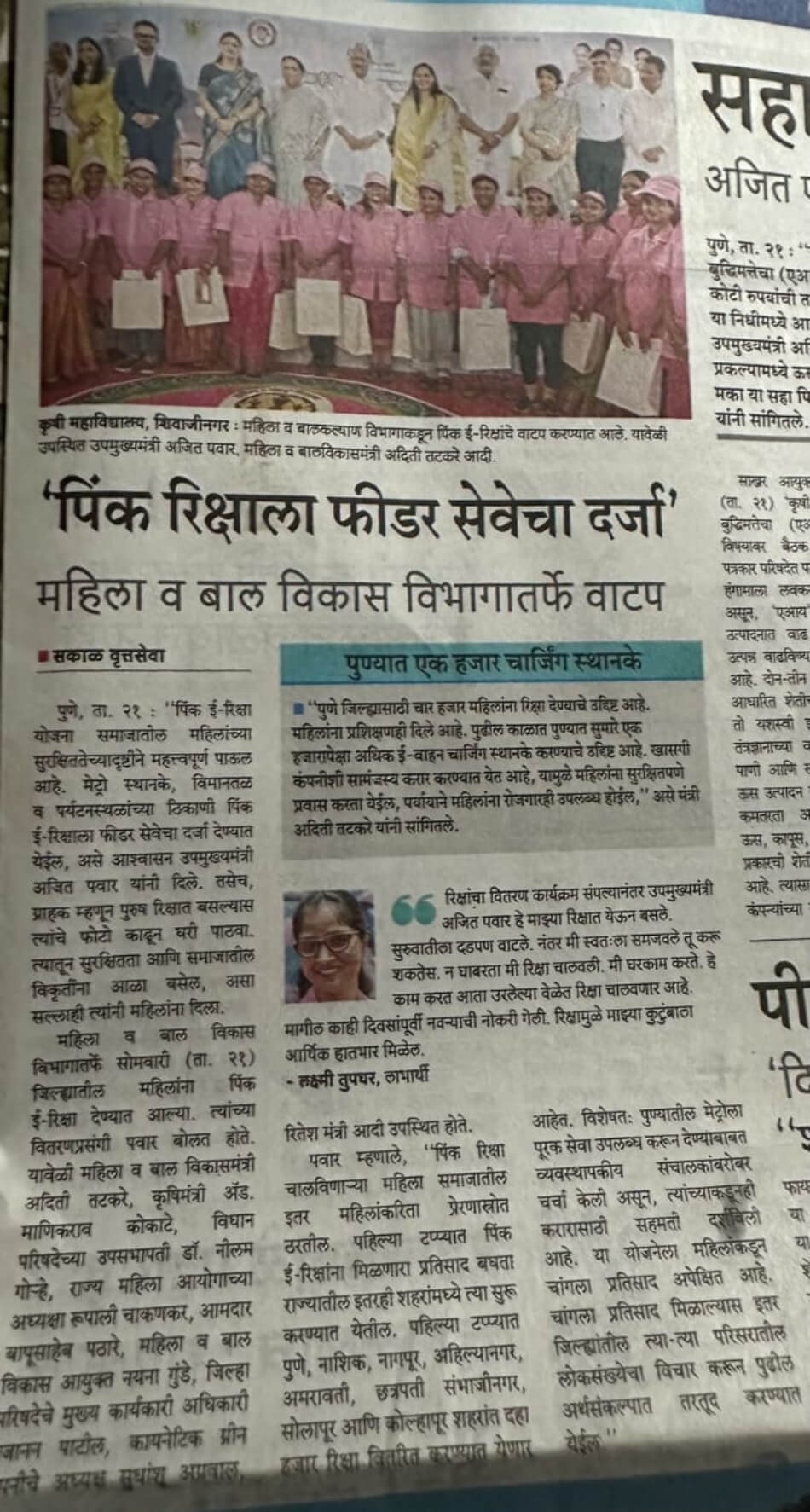
Her turning point came during a community meeting where officials from Maharashtra’s Women and Child Development Department introduced the Pink E-Rickshaw Scheme. The initiative offered women a pathway to ownership through a cost-sharing model: 10% personal contribution, 70% bank loan, and 20% government subsidy.
Initially hesitant due to social stigma, Lakshmi feared ridicule. But with consistent encouragement from Shilpa Kegale from the Pune Municipal Corporation and Vanita Gaikwad and Nisha Naidu of the Single Window Forum Members, set up by Centre for Advocacy and Research-to facilitate community to secure entitled schemes and services—she began to see the opportunity not just as a livelihood, but as a legacy for her daughters. “They told me don’t think about what people will say, think about what you want for your daughters,” she said.
A New Beginning
On August 12, 2024, Lakshmi received her e-rickshaw from Deputy Chief Minister Ajit Pawar. Holding the keys, she felt the weight of possibility. “When I held those keys, I started crying. It wasn’t just a vehicle, it was my chance to change everything,” she recalls.
The early days were challenging. Pune’s chaotic traffic tested her nerves, but support from passengers—especially women—boosted her confidence. Over time, she became a familiar and trusted presence on the roads, with many commuters preferring her rickshaw for the safety and dignity it offered.
From Fear to Freedom
Lakshmi’s income has improved but the real transformation is within. She no longer sees herself solely as a wife or mother, but as a woman who stands on her own feet. Her story has inspired three other women from Tadiwala Road to apply for the scheme, proving that visibility spurs possibility, as seeing is believing.
Young girls in her neighbourhood now look up to her. “When I drive through my neighbourhood, young girls watch me. I want them to know that women can also do anything if they have courage,” she said. Her elder daughter, dreaming of becoming an engineer, sees her mother’s journey as proof that ambition and resilience can rewrite destinies.
A Vehicle of Dignity
For Lakshmi, the Pink E-Rickshaw Scheme is more than a livelihood—it represents dignity, empowerment, and hope. Each ride she completes is a step toward a better future, not just for herself, but for the next generation. “I don’t want my daughters to live the kind of life I did. I dream of giving them a better future, and to fulfil that dream, I drive my rickshaw with pride every day,” says Lakshmi.