From Facing Barrier to Influencing Advancement
From Facing Barrier to Influencing Advancement
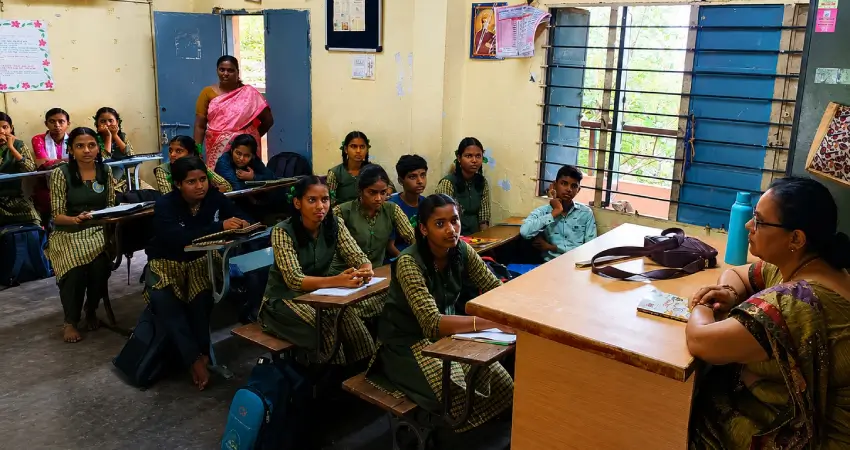
For years, Government School, Veerabhadra Nagar, in Bengaluru’s Vijayanagar Assembly Constituency was more than just a school. For hundreds of migrant families from North Karnataka who had settled nearby in search of work, it symbolised hope. Nearly 420 children studied here — most of them sons and daughters of construction workers, domestic workers, daily wage labourers, garment workers, and sanitation workers.
Like parents everywhere, these families wanted a better future for their children. Despite financial hardship, they made sure their children attended the school regularly and stayed focused on studies. Many of the children dreamt of becoming teachers, nurses, police officers, engineers, and government employees.
Yet one problem stood in their way: the school offered classes only up to Class 8. What appeared to be a small administrative gap was, in reality, the dividing line between continuing education and dropping out altogether.
A Gap That Quietly Pushed Children Out of School
Each year, around 45 students completed Class 8. To continue, they had to travel 6–8 kilometres to the nearest high school — a journey that cost families an additional ₹1,000–2,000 annually in bus fares, straining already tight household budgets. Parents worried especially about adolescent girls travelling far without reliable transport.
The impact was stark. When community facilitators from the Centre for Advocacy and Research (CFAR) began engaging with the community in 2022, they found nearly 68 adolescents had already dropped out or were at risk of dropping out— 35 of them girls, whose education was cut short by concerns over safety and distance. Several boys had started accompanying parents to construction sites or taking up informal work instead of continuing school.
One father, a construction labourer in Bengaluru for over a decade, explained: “We can somehow manage to educate our children till Class 8 because the school is nearby. But after that, many of us simply cannot afford the additional expenses. It is painful to watch our children stop studying when they want to continue.”
From Individual Concern to Collective Demand
As the community facilitators, working through the Janadhikara programme, spoke with students, parents, teachers, School Development and Monitoring Committee (SDMC) members, and local leaders, a clear pattern emerged: this was not a handful of isolated cases but a structural barrier affecting an entire generation — falling hardest on girls from the most vulnerable families.
For the community facilitators, the campaign was never just about two missing classrooms. It was about the belief that education, gender equity, and community voice go hand in hand — and that lasting change happens when families themselves organise, demand, and are heard.
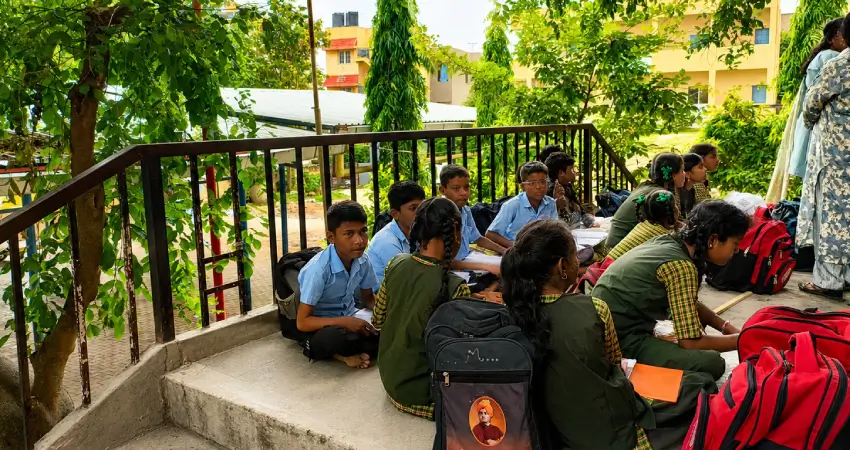
Led by the facilitators, parents, youth groups, and local leaders came together across occupational lines around one common cause: their children’s future. In June 2022, the community submitted its first formal representation to the Block Education Officer (BEO), South, requesting Classes 9 and 10. When officials asked for evidence of demand, parents mobilised quickly, gathering 185 signatures and submitting a detailed petition outlining the challenges children faced.
Four Years of Follow-Up, One Milestone Reached
What followed was a long process of sustained efforts. Over four years, community representatives held more than 12 meetings with school authorities, education officials, elected representatives, and community members. The local MLA endorsed the demand and recommended it to the Deputy Director of Public Instruction (DDPI), while continued engagement with district officials kept the proposal alive.
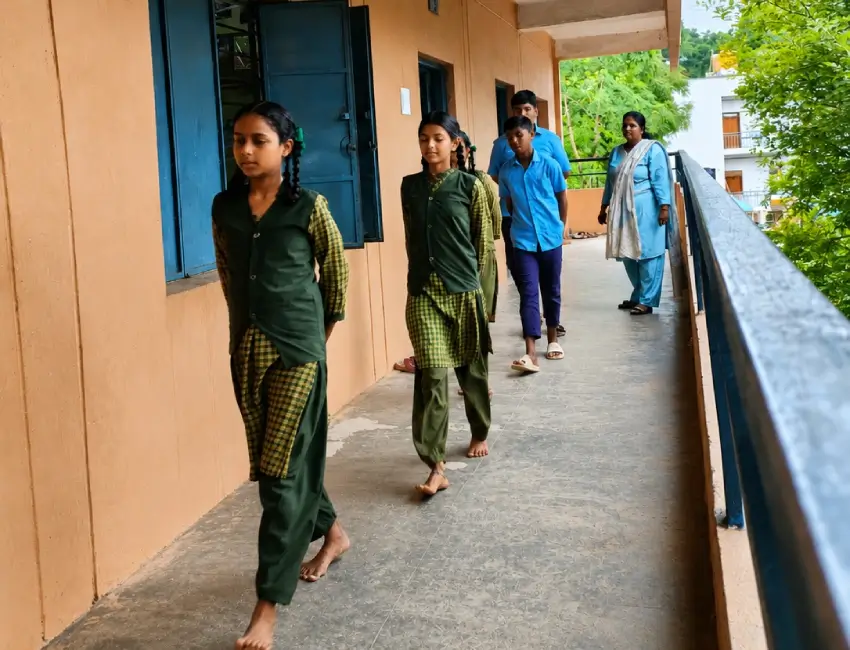
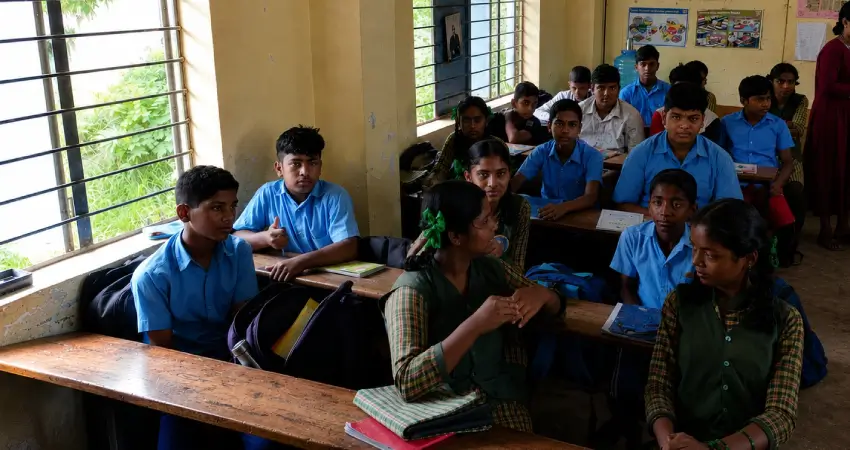
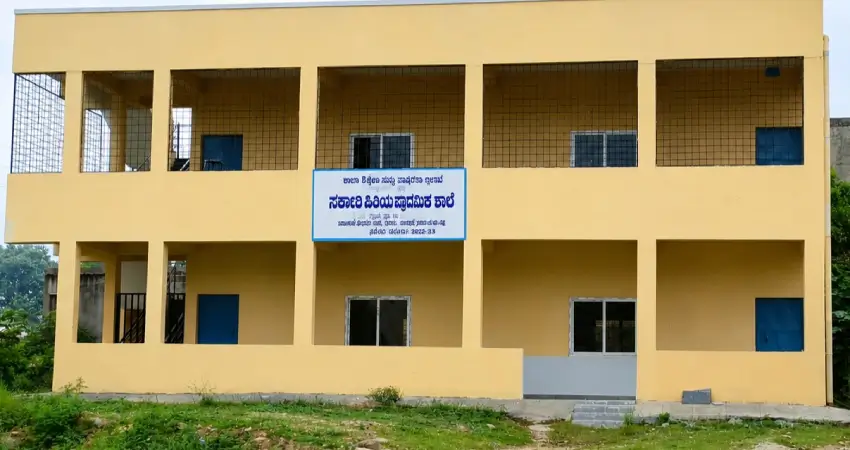
Through this process, parents who once felt powerless gained confidence in collective action — and students held onto hope that they would one day study close to home. In 2026, that hope was fulfilled when the Education Department sanctioned the introduction of Class 9 at Government School, Veerabhadra Nagar. This marked a major step toward restoring full secondary education, with the community continuing to advocate for the addition of Class 10. In its very first year, 39 students enrolled, no longer needing to travel long distances to continue their education.
A Change That Will Outlast This Batch of Students
The significance extends far beyond this year’s 39 students. Roughly 50 students are expected to benefit annually, with an estimated 250 children gaining from the new class over the next five years.
For families, it means lower costs, greater safety, and renewed confidence in keeping children in school. For adolescent girls, it offers a safer, more accessible path to completing education. And for the community, it is proof that organized and sustained campaigns can move public systems.
“Today, when students walk through the gates of Government School, Veerabhadra Nagar, they no longer see Class 8 as the end of their journey. They see it as another step toward a future filled with possibilities,” says Anjanappa, a parent from the community.
From Barrier to Example
What began as a story of educational barriers has become an example of what community-led efforts, supported by community facilitators, can achieve. The introduction of Class 9 is not just an administrative approval but a policy-level win that will benefit hundreds of children for years to come. Children who once saw Class 8 as the end of the road can now look ahead with confidence. Their dreams no longer have to stop where the school once did.