From Documents to Dreams: Enabling Every Child’s Education
From Documents to Dreams: Enabling Every Child’s Education
Every morning, children in Pune’s informal settlements watch others walk to school in crisp uniforms, carrying bags and dreams of the future. For them, however, the path to a classroom is far more complicated than simply enrolling in a nearby school. In the settlements of Yerwada and DP Road wards, families of construction workers, domestic workers, street vendors, sanitation workers, waste pickers, drivers, and daily wage earners struggle to survive on fragile and uncertain incomes. Though municipal and government schools exist nearby, invisible barriers continue to keep many children out of classrooms.
When Missing Papers Block the Classroom
It often begins with a birth certificate that was never issued because the child was born at home or in an unregistered facility. Without it, Aadhaar enrolment becomes difficult. Without Aadhaar, schools cannot complete admissions or register children on the SARAL portal. Parents, unfamiliar with procedures, are left unsure of where to begin. As a result, a willing child and a ready school remain separated by missing documents and endless paperwork. What appears to be a simple admission process on paper, becomes a long and uncertain journey before a child can finally take their place in a classroom.
Interrupted Journeys of Migrant Families
Children from migrant and nomadic families often miss school altogether, their education repeatedly interrupted by frequent relocations in search of livelihood. Families migrating from Karnataka, Madhya Pradesh, and Rajasthan may move several times a year, leaving children without continuity. While schooling offers routine, belonging, and aspirations, those who enter late often struggle to catch up — facing challenges with continuity, language, and peer adjustment.
Field experience also shows that education cannot be separated from the social and economic realities of childhood. In many households, children contribute directly to survival — vending, caring for siblings, or taking on domestic work. Adolescent girls, in particular, face gender expectations that restrict study time. Families living in insecure urban environments contend with overcrowding, safety concerns, unstable housing, and social marginalization, all of which affect attendance and participation.
Experience of Community Mobilisers
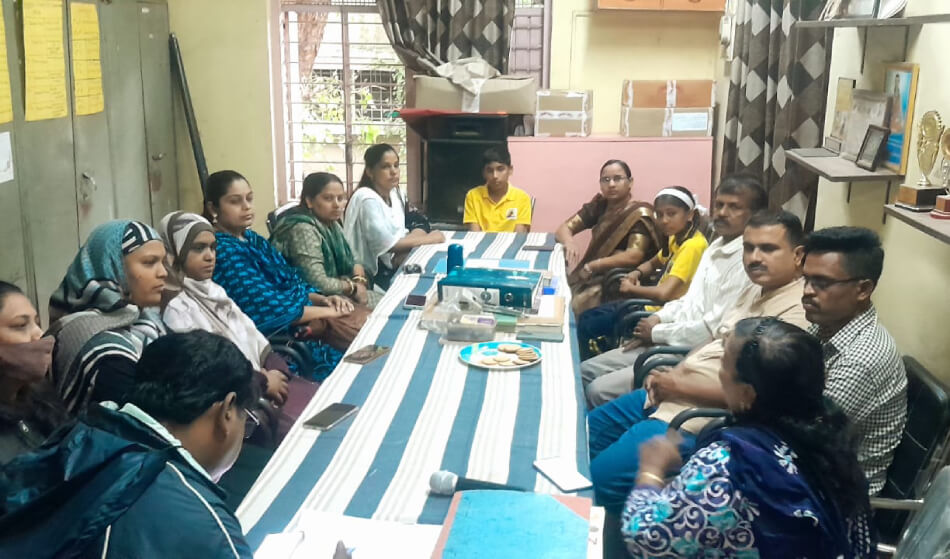
The experience of Nita Tai, a community mobiliser associated with the Centre for Advocacy and Research, shows the value of sustained handholding. Working closely with urban settlements and migrant communities in Pune, Nita has seen firsthand that barriers often extend far beyond documentation. “Families engaged in traditional itinerant occupations such as selling limbu mirchi (lemon chilli talismans), street vending, scrap collection, or seasonal labor require consistent support to navigate the education system,” she explains.
In Pune’s informal settlements, it is the efforts of community mobilisers like Nita Tai that help bridge these gaps. They identify children who are out of school, facilitate documentation, build relationships with schools, and accompany families through complex processes. Importantly, their field experience highlights the need for a deliberate transition pathway — one that moves children not just from “not enrolled” to “enrolled,” but from exclusion to participation, from participation to learning, and ultimately from learning to aspiration.
From Outreach to Action
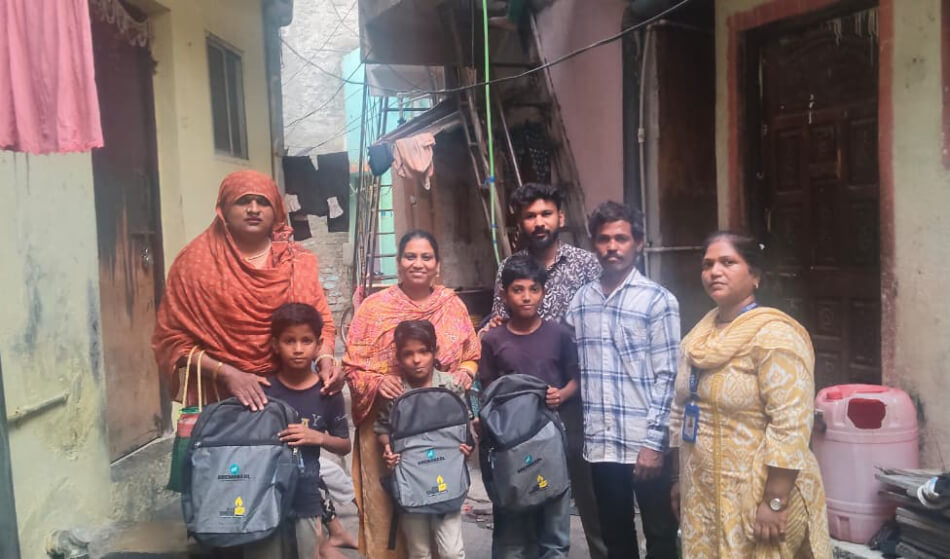
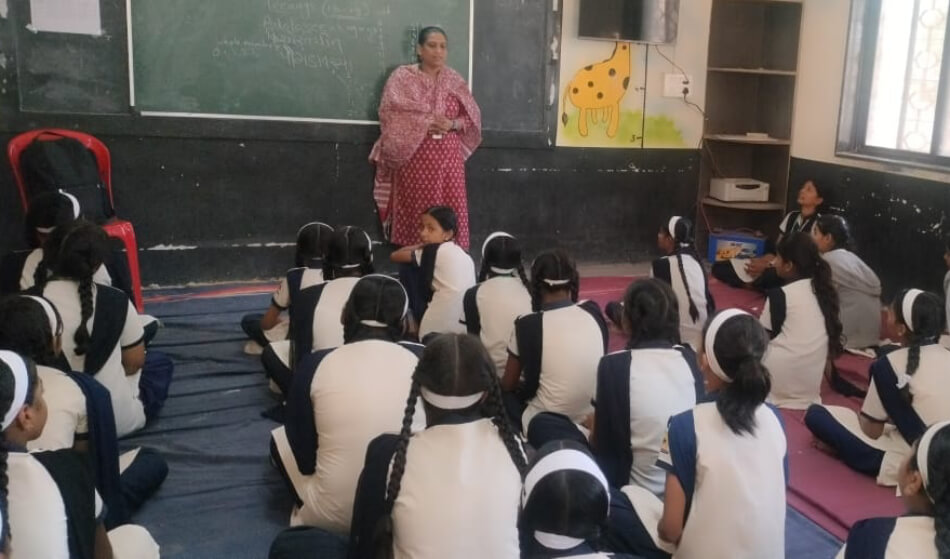
Once children are identified, mobilizers guide families through admissions, documentation, and timelines. They coordinate with principals, teachers, officials, and civic authorities. Each child’s journey is tracked individually until requirements are completed. The following numbers tell the story:
- 323 children were identified this academic year across the project areas who required support to access formal education.
- 198 children successfully admitted, documents verified, SARAL registrations completed, now attending school regularly.
- 125 children attend classes but admissions are pending due to missing documents.
This is further reinforced by the testimonies of the community members. “My son, Aryan, was seven years old but had never been to school. He was born at home, so we never received a birth certificate. Without it, we couldn’t get an Aadhaar card, and every time we approached a school, we were told to return with the required documents. I had almost accepted that he would miss his chance to study. But today, when I see Aryan leave for school in his uniform with a school bag on his shoulder, I feel very delighted, ” said Aryan’s father.
Building Responsive Systems
The biggest barrier to education is not the absence of schools but the gap between vulnerable families and the systems meant to serve them. Government and municipal officials, together with community mobilisers, can play a vital role in making these systems more responsive. Teachers can help identify learning gaps and create welcoming classrooms, administrators can ease documentation hurdles, and education officers can use field evidence to strengthen outreach and transition mechanisms. When these strengths converge, educational inclusion becomes systemic — no longer dependent on whether one family happens to find the right helper, but embedded in how the system itself responds.
Ultimately, the measure of inclusion is not simply how many children gain admission. It is whether they are able to enter, remain, learn, participate, grow, and imagine futures beyond the circumstances they were born into. Because every child deserves more than a seat in a classroom. Every child deserves the chance to learn, to dream, and to build a future of their own.