The Centre for Advocacy and Research (CFAR) is a non-profit organization, founded in January 1998 is committed to advancing the welfare of the poor and improving the quality of life of vulnerable and marginalized groups.
The Mission Statement – Voice for the Voiceless – is translated into collaborative action between various social sector departments and the community to deliver and secure welfare schemes aimed at improving the quality of life of unorganized workers, vulnerable women, widows, the elderly and persons with disabilities, among others.
Our platforms include Single Window and Help-desks which connect people – especially the most marginalized including persons with disabilities, widows and others – to social benefits and entitlements which they are unable to access due to lack of awareness, lack of documents and other reasons.

To cite one example, we found the Waghari community in Pune to be living in extremely distressed conditions. When the Department of Food and Civil Supplies learned about the challenges, they were facing in accessing ration, with the support of the Single Window team they sanctioned ration cards for 35 households on a priority basis. Such examples abound across the states of Odisha, Maharashtra, Karnataka and Rajasthan, to name a few.
In states like Rajasthan, child marriage is a major challenge for all stakeholders working for the rights of girls. In 2012-13, supported by Department of Women and Child Development, we succeeded in preventing 28 child marriages in Jaipur. Later, we addressed issues like falling child sex ratio across the key districts which had reported a drastic fall in child sex ratio over the years.
Core Areas of Work
Water, Sanitation and Hygiene
As part of the Central government flagship programme, Swachh Bharat Mission (SBM), CFAR enhanced community participation at many levels to not only end open defecation but also to leverage the programme to improve access to safe sanitation. This was done across cities.
Of the many breakthroughs we achieved, one worth recounting is the story of Jhalana Kunda, one of the 238 slums in Jaipur which made history of sorts by not only adopting the twin-pit toilet technique even before the SBM declared it as an ideal low-cost toilet model, but also by becoming open-defecation free. Within four years, 1,020 households have constructed twin-pit toilets, and for 30 households who could not construct these due to lack of space, a community toilet has been built. So impressed was the Department of Local Bodies (DLB) that it declared Jhalana Kunda as a learning site in August 2015 for the engineers and administrators of urban local bodies tasked with strengthening low-cost sanitation and strengthening community engagement in ending open defecation.


Communication Support on Priority Issues: Bihar and Uttar Pradesh
We provide technical support to the Governments of Uttar Pradesh and Bihar, the National Health Mission, the Technical Support Unit (TSU) in Uttar Pradesh, and Piramal in Bihar to strengthen health communication for awareness generation on RMNCHA+N and National Disease Control Programmes, including COVID-19 response, across 113 districts in both states.
We support the documentation of key achievements, best practices, and community-led initiatives under RMNCHA+N. This includes identifying and documenting inspiring stories of change, profiling community champions and frontline health workers, and developing knowledge products that showcase programme impact and learning.
As part of this effort, we build the capacities of IEC nodal officers at district and block levels by strengthening their skills in strategic health communication, behaviour change communication (BCC), and the effective use of communication tools and platforms to promote public awareness and community engagement.
Social Protection
CFAR’s work on social protection focuses on enabling marginalized urban communities to access their entitlements while strengthening their voice and agency within the system. Implemented across cities such as Ajmer, Bhubaneswar, Bengaluru, Delhi, Kolkata, and Pune, the programme reached over 320,303 beneficiaries, addressing gaps in access to food security, health services, and social welfare schemes.
At the core of CFAR’s approach is community leadership and institution-building—mobilizing community groups, strengthening helpdesks, and enabling frontline engagement with government systems. This has shifted social protection from a service-delivery model to a rights-based approach, where communities not only access schemes but also actively participate in decision-making processes. By combining grassroots data, sustained advocacy, and system collaboration, CFAR continues to ensure that the most excluded populations are able to claim their rights with dignity and confidence.
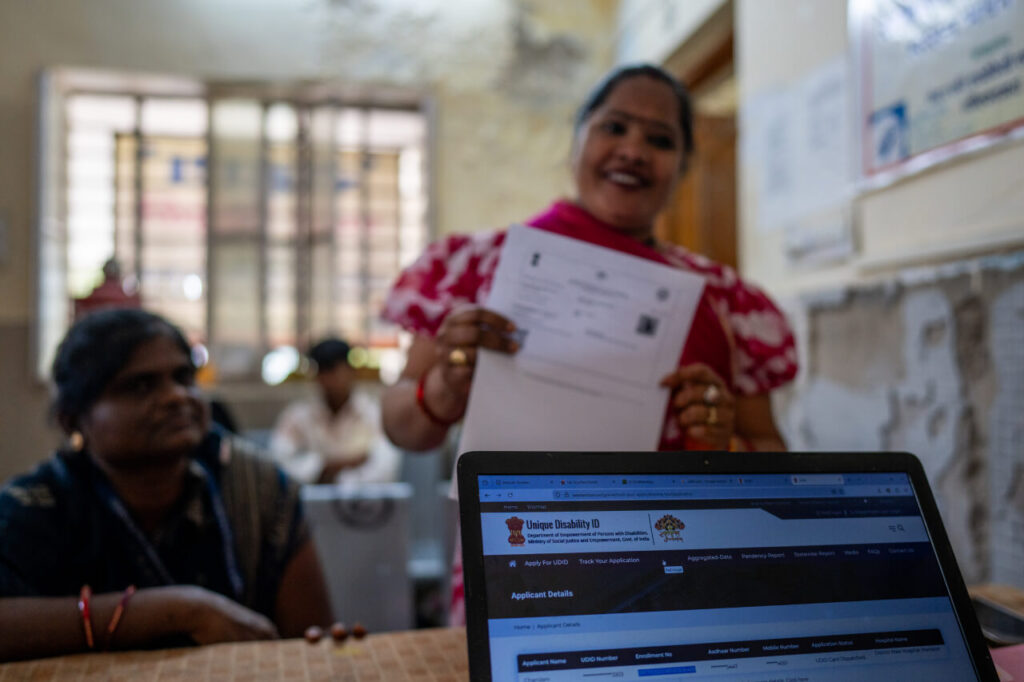
In Bengaluru, we joined hands with the Bruhat Bengaluru Mahanagara Palike (BBMP) and are working on the frontlines of the health care system to facilitate testing and treatment while we raise awareness through plays and other vehicles to encourage adherence to COVID precautions and prevent transmission of the virus.
We continue to respond to emerging social development challenges of the urban poor, and retain our focus on welfare of the most vulnerable groups.
In 27 cities of 13 States, 3, 96,270 cooked food packets, 1,76,381 dry ration kits, 19176 supplementary nutrition kits for pregnant women and children, 21,301 sanitary pads, and 22,325 hygiene kits were distributed; additionally, 19,803 workers were linked to cash COVID assistance and 6,489 urban poor to social welfare scheme
Our Reach