Worker Solidarity Enabling Service
Worker Solidarity Enabling Service
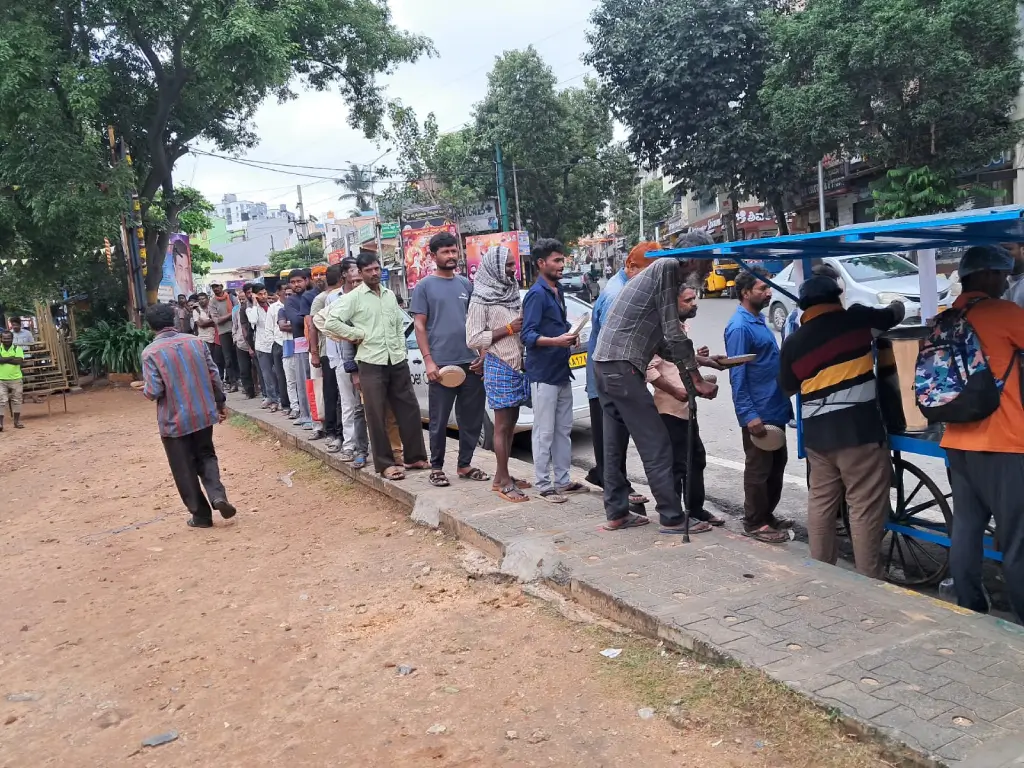
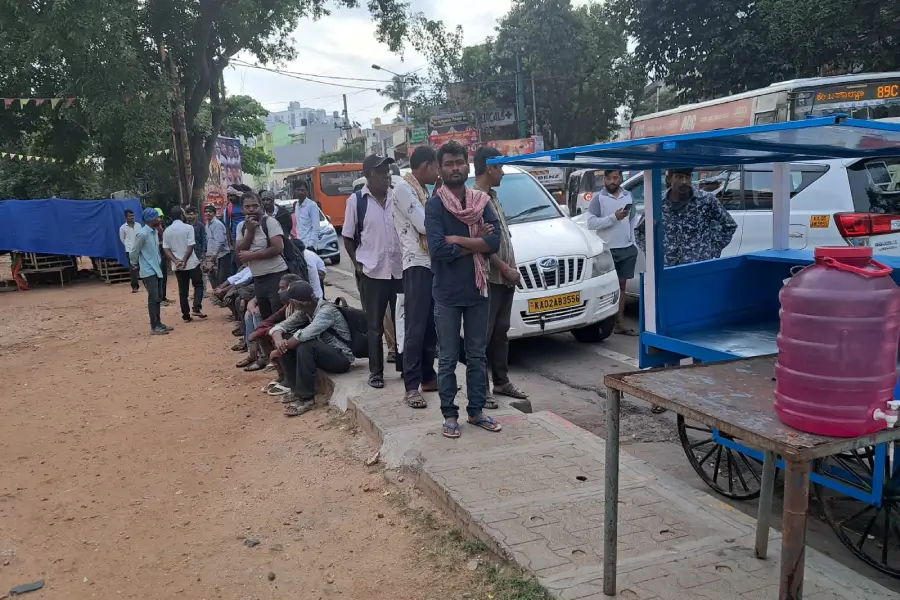
What began as a modest effort at the APMC Yard gate in Bengaluru has now grown into a city-wide movement. In August, Daksha Samuha Sanghatane, a community-based organization and Centre for Advocacy and Research (CFAR), launched a second breakfast cart at Kurubarahalli Circle, building on the success of its first cart introduced in July. The goal: to ensure no worker starts their day hungry.
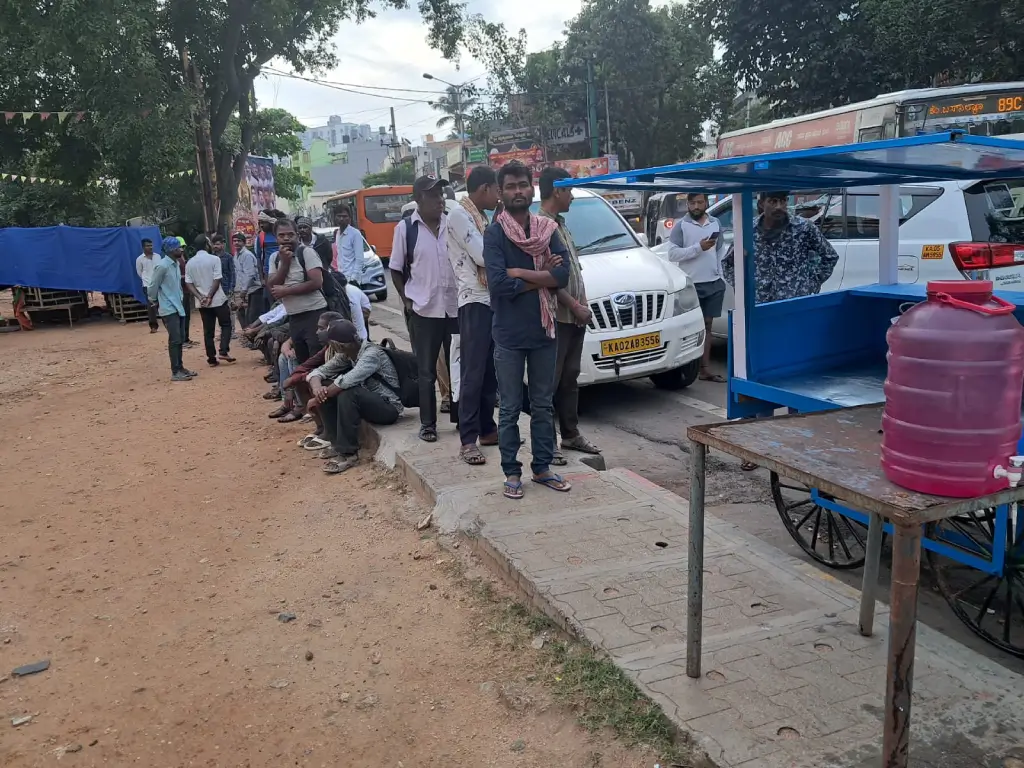
A Morning Ritual Rooted in Care
By 6:30 AM each day as the city begins to stir, Kurubarahalli Circle buzzes with activity. Construction workers, garment workers, pourakarmikas (PKs), and others gather in search of work. Their day begins with long hours of physical labour—lifting, carrying, sweeping, and stitching—yet most of them start on an empty stomach. Some leave home at dawn with no time to prepare food, while others cannot afford to eat until much later. Without food, they face hours of intense physical labor, often resorting to spending ₹40–₹50 at roadside eateries later in the day.
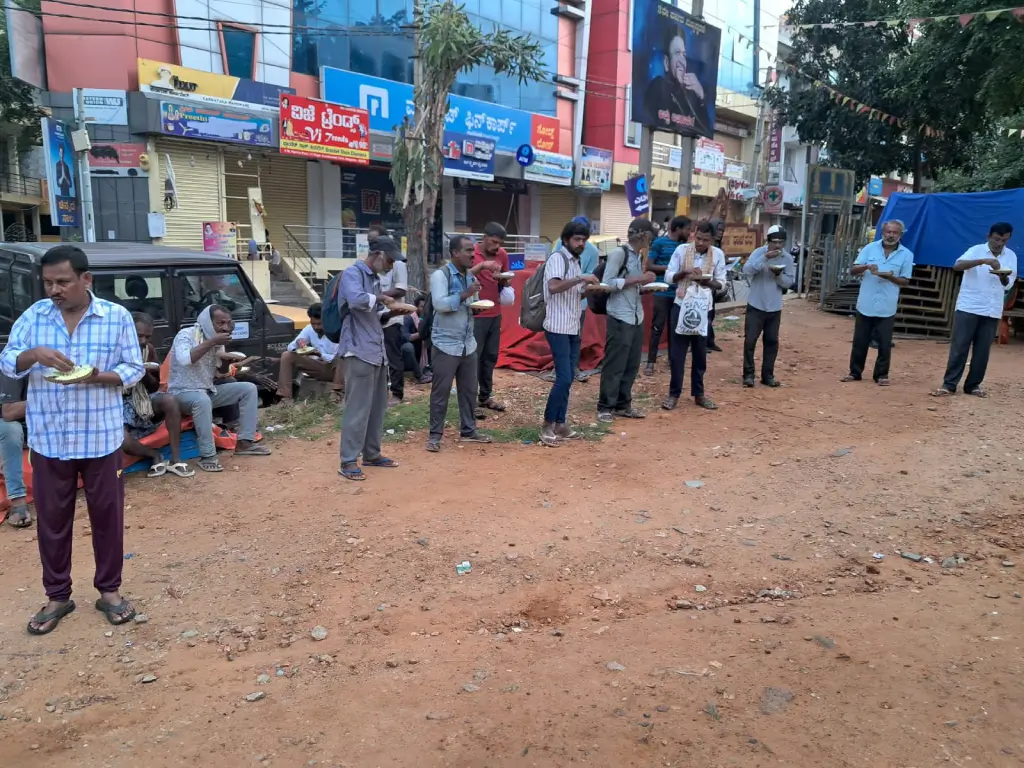
The breakfast cart changes that. Serving over 150 workers each morning, it offers fresh, hot, hygienically prepared meals. More than just food, it affirms dignity—workers receive nourishment as a rightful start to their day.
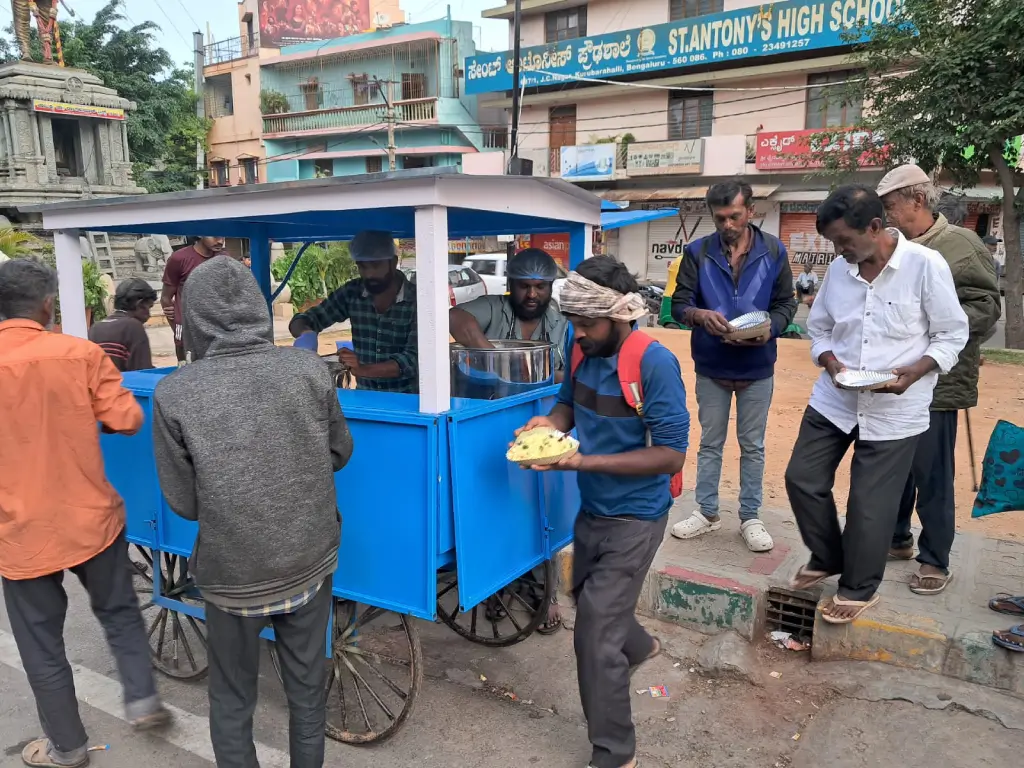

Overwhelming Response from Workers
The first cart at APMC Yard proved the power of community-led action, serving hundreds daily and inspiring expansion to Kurubarahalli Circle—home to some of Bengaluru’s most marginalized communities. The response has been overwhelming, with growing support from workers and local residents.
“Earlier, I would come here at 6:30 AM and work till 9 without food. By then, I was already tired because none of the hotels would be open at that time. Spending Rs. 50 on breakfast every day was a burden,” says Kavitha, 34, a garments worker. “Now, I can eat properly in the morning and also save money. At the end of the month, it makes a big difference.” For workers like her, saving Rs. 1,200 a month means paying school fees, buying household groceries, or managing medical expenses.
For Narasimha, a construction worker who has spent over a decade at this junction, the initiative is not just about saving money—it’s about empowerment being able to priortize the essential needs. “This food helps me save at least Rs. 40 a day. That money goes towards my children’s school books. For us, even a small saving matters,” he says with quiet pride.
The rotating weekly menu includes vegetable palav, chitranna, rava idli, bisi bele bath, dosa, and on Saturdays, 300 idlis with 150 vadas. Every item is cooked fresh, served hot, and completely free.

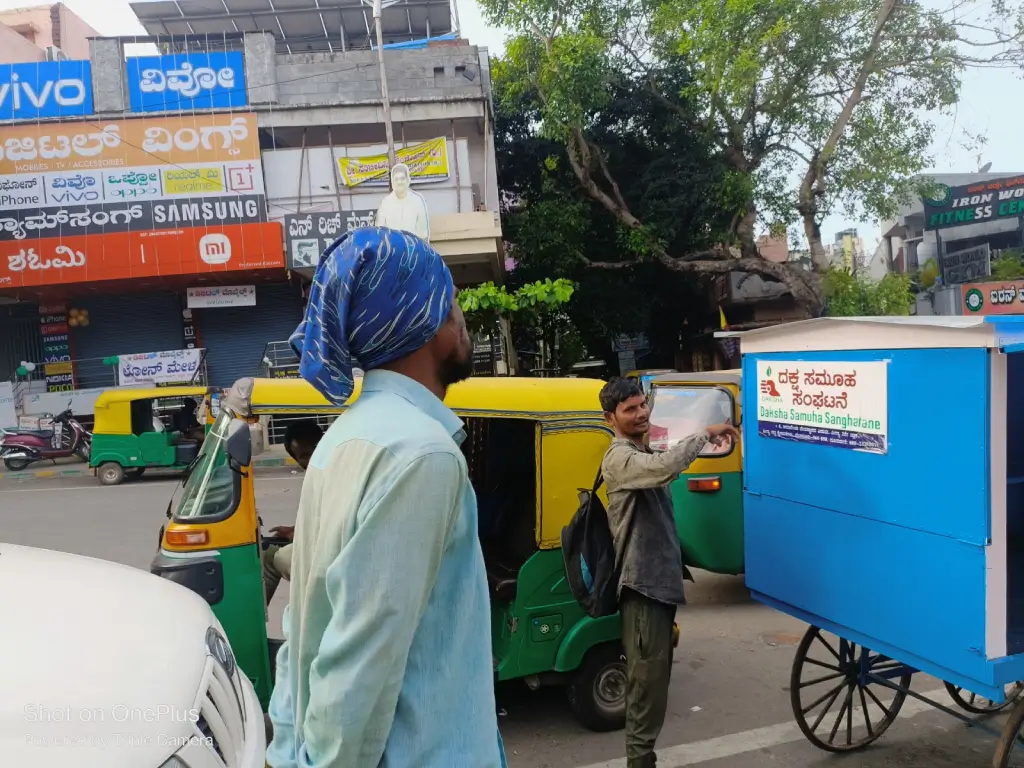
Driven by Volunteerism
Anand Raj, who manages the breakfast cart, arrives by 6:15 AM every day to get things ready. “By the time I open the vessels, there is already a crowd waiting,” he says. “Most of them come regularly now. They know we will not miss a single day.” Supporting him is Babu Rao, a long-time volunteer who helps maintain order and ensures everyone is served. Rao eats only after all others have been fed, a quiet reminder that this initiative belongs to the community.
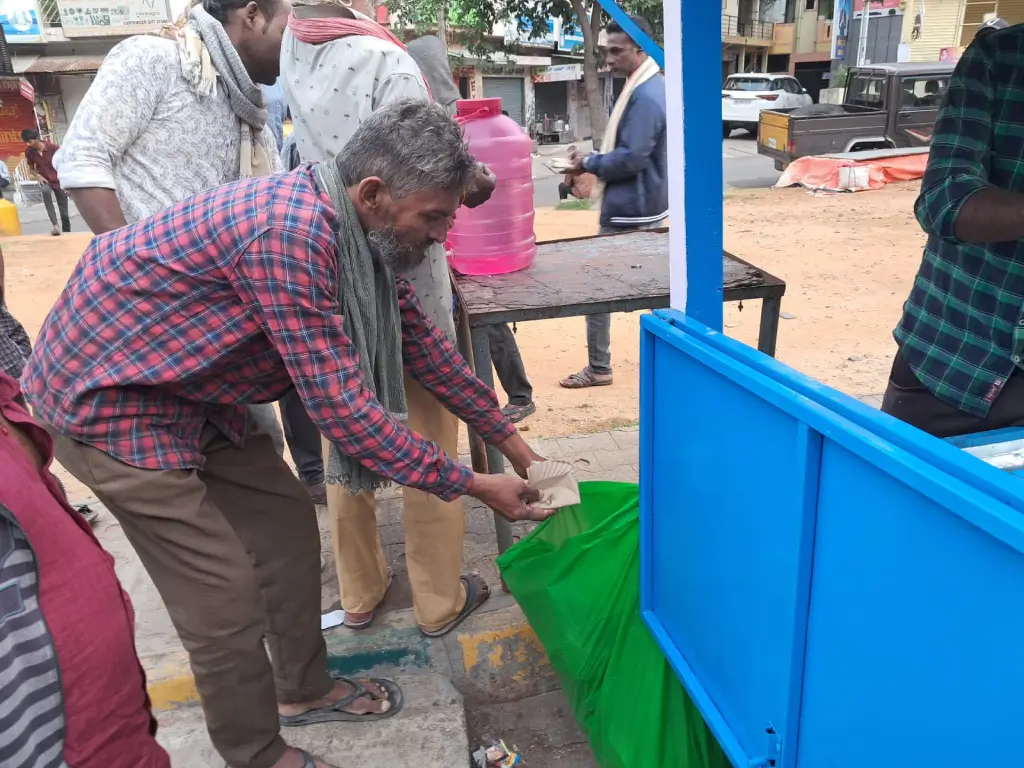
Cleanliness and hygiene are strictly maintained. “We clean the cart and vessels thoroughly before serving. We also request workers to keep the space clean,” says Anand Raj. “Over time, they’ve started taking care of it themselves. This is their space too.” This shared responsibility shows that when people take ownership, dignity and discipline naturally follow.
A Model Solidarity
What makes this effort unique is its community-driven model. It is founded on solidarity. Community members participate in running the cart, helping workers save ₹40–₹50 daily while building a culture of collectivization. It is about ownership, not dependence; claiming rights, not receiving favors.
The Kurubarahalli cart is part of CFAR’s broader mission to strengthen Bengaluru’s urban poor settlements—from healthcare access to social security—through community-created solutions grounded in dignity and rights.
For the workers, this cart is the long overdue relief from hunger, strength to work without exhaustion, and the comfort of knowing that someone has seen their struggle and acted upon it. Lakshmamma, 52, a pourakarmika who sweeps nearby roads, puts it simply: “We feel respected.”
Since its launch, the cart has served thousands of meals. Demand is growing, and plans are underway to expand capacity and variety. The vision remains clear: no worker at Kurubarahalli Circle should begin their day hungry.
Each plate served is more than a meal—it’s a quiet act of justice. It reminds us that meaningful change doesn’t always require grand gestures; it simply needs to listen, respond, and endure. At Kurubarahalli Circle, the breakfast cart stands as a powerful symbol of community-led care, proving that when people come together, no one has to be left behind.