• Welcome to CFAR

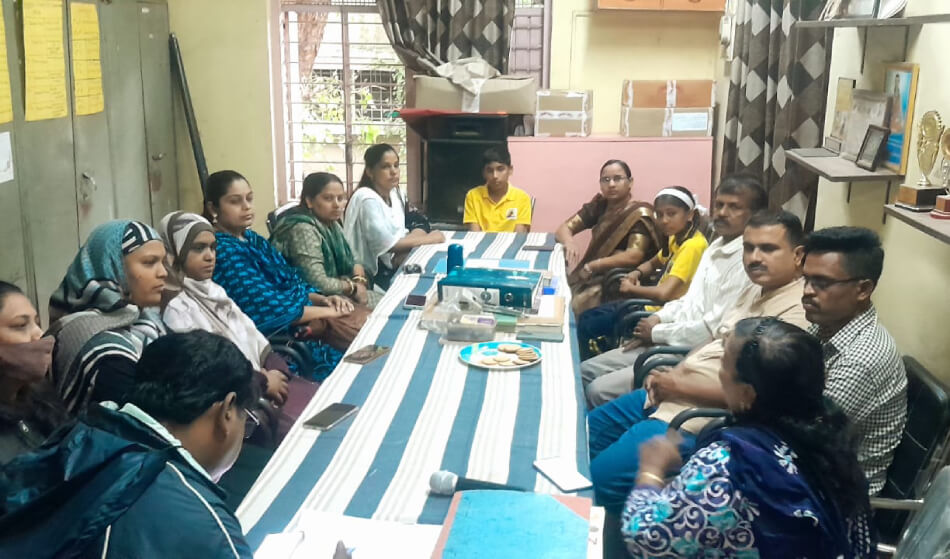
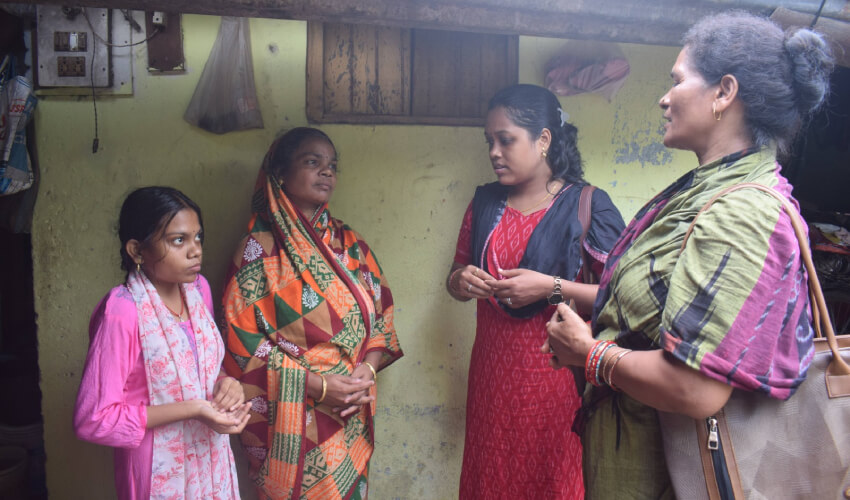
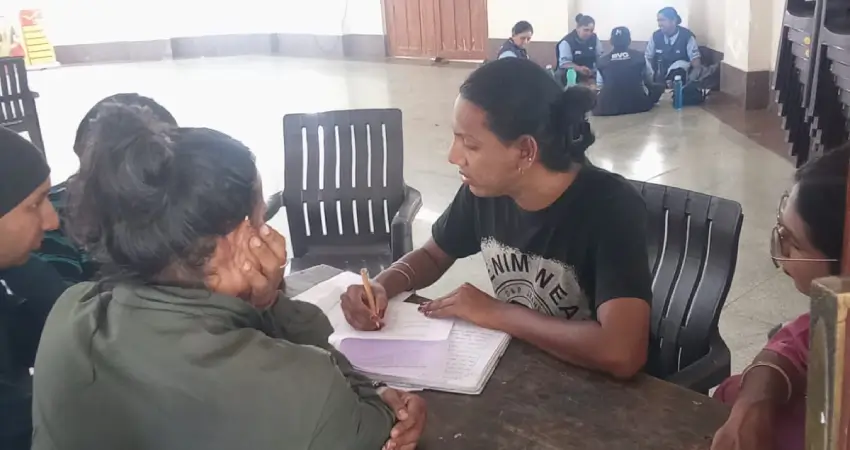
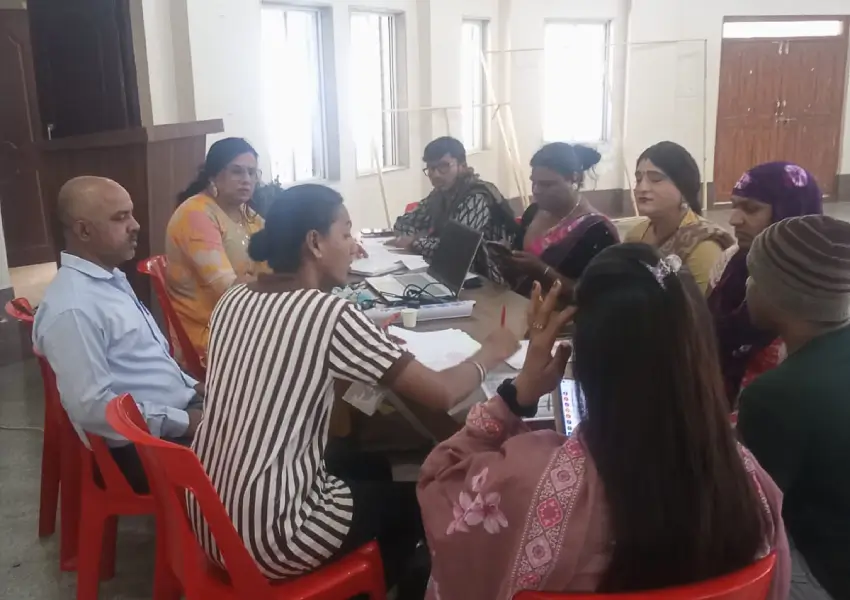
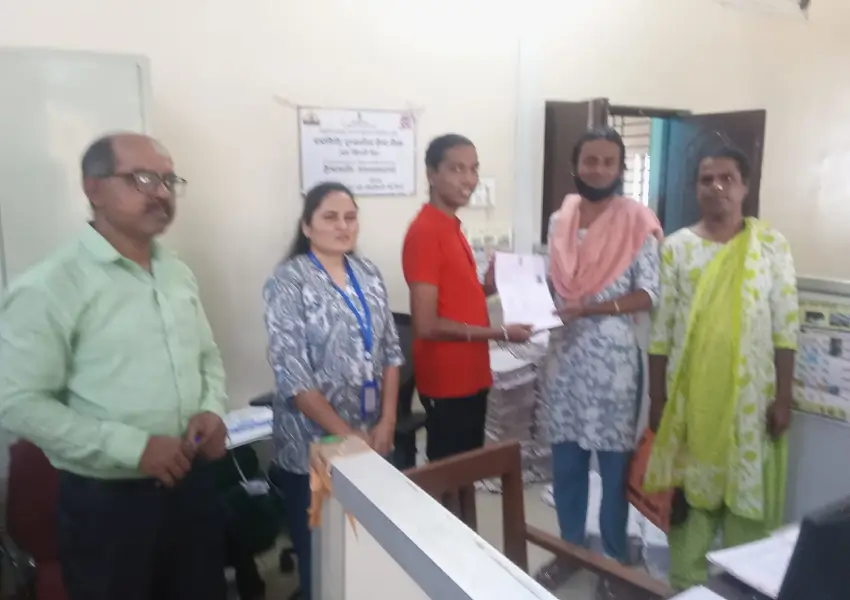
The District Magistrate (South, Delhi) felicitated CFAR for establishing six Self Help Groups for domestic workers and registering them under the National Urban Livelihood Mission. Proud moment as our Helpdesk & Single Window Forum members received certificate of appreciation from the Women and Child Development Department at the Khishori Mela. CFAR was recognized as the best NGO partner for empowering urban poor communities with health & nutrition services. On the occasion of the 14th National Voters' Day, the District Collector of Ajmer, in collaboration with the District Election Office Ajmer, felicitated CFAR. CFAR received recognition in the "Best NGO" category for its commendable efforts in motivating and facilitating diverse community groups to register themselves as voters of the nation.

VOICE FOR THE VOICELESS

More Than a Name: Arya’s Journey to Recognition and Dignity

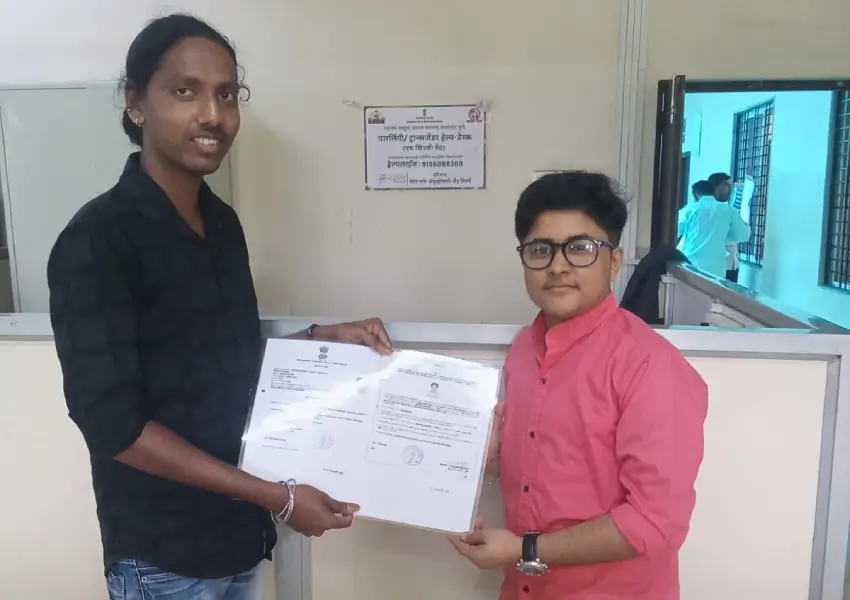
For most people, an identity card is just another card tucked away in a wallet. For Arya Narayan Jadhav of Satara, Maharashtra, it symbolized something far deeper —the right to be seen, accepted and recognized for who she truly is.

Born as Ajit Narayan Jadhav and assigned male gender at birth, Arya grew up carrying an identity that never aligned with her own. As she grew older, she understood herself as a woman. Accepting this reality was not the difficult part; the real challenge lay in living it openly in a society where acceptance was uncertain. Each day brought new questions, silent judgments and situations that challenged her dignity. Yet she remained resolute in her determination to live authentically.
Like many young people, Arya dreamed of independence through education. She believed that living authentically and pursuing her ambitions should not be mutually exclusive. However, before she could chase her dreams, she had to fight for something most people take for granted —the right to have her identity reflected truthfully in official records.

The Struggle Nobody Sees

For Arya, the routine activities became sources of anxiety every day. One of the most difficult struggles was something most people rarely think twice about – using a public washroom. With few gender-inclusive public toilets available, Arya constantly found herself in an unsafe and uncomfortable situation. The men’s washroom denied her identity, while the women’s washroom often invited questioning looks, fear of confrontation, and uncertainty. Each outing demanded careful planning, yet safety and acceptance were never guaranteed.

The lack of identity documents that matched her appearance and gender identity compounded these challenges. At banks, government offices, hospitals, airports, and other public places, every verification of her Aadhaar card became ordeal. Each mismatch between her lived reality and official records became another reminder of the barriers she faced. For Arya, this was more than an issue of documentation. It was about dignity, safety, and the right to pursue the future she envisioned without being held back by documents that denied her truth.

A Dream Waiting on a Document

Arya had long aspired to pursue an MBA at a university abroad. She believed that higher education would open doors to a career where she could live independently and contribute to the society. But as she began reviewing admission requirements, one obstacle became impossible to ignore. Every application, identity check, and passport-related process demanded government-issued documents that accurately reflected her name and gender. Without those corrections, her dream of studying overseas seemed increasingly out of reach.

Refusing to let bureaucracy dictate her future, Arya took a decisive step in mid‑2024: she began the process of updating her Aadhaar card, determined to align her official identity with her authentic self.

A Simple Change That Wasn’t Simple

What began as a seemingly routine administrative task soon unfolded into a prolonged ordeal. Her first stop was a nearby Common Service Centre (CSC), where she hoped to complete the updates. However, the staff were unfamiliar with the procedure for changing both name and gender for a transgender applicant. She visited multiple times, receiving different advice on each occasion, but without any progress.

Each visit ended with more confusion than clarity. Some officials asked for additional documents, while others were unsure whether both changes could be processed together. Weeks turned into months, and every unsuccessful attempt left Arya wondering whether the system had a place for someone like her.

Finding the Right Support

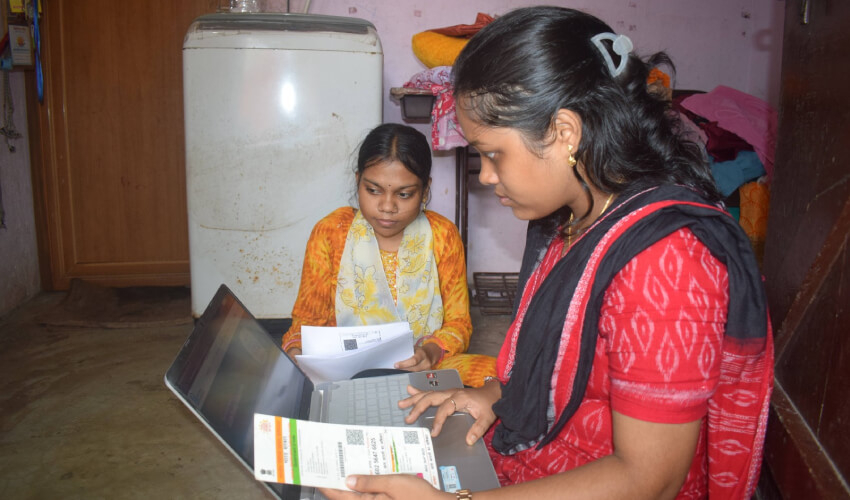
Searching for answers, Arya approached the Social Welfare Department (Samaj Kalyan Vibhag) in Satara. While the officials understood her concern, they advised her to seek assistance from the Help-desks set up in slums by the Centre for Advocacy and Research (CFAR), an organization working with marginalized urban communities to ensure their access to the services and social development programmes as their rightful entitlements.  Recognizing the complexities involved, the team from the Help Desk guided Arya through the process with clarity and patience. The Help Desk serves as a single-window support center since August 2024, assisting members of the transgender community in accessing government welfare schemes, medical services, and essential identity documentation.

After reaching the Help Desk, Arya received the guidance she had been searching for. The team explained that attempting to update both her name and gender simultaneously in the Aadhaar system often led to technical errors or application rejections. Instead, they advised a phased approach—first updating her name and, once that change was successfully reflected, submitting a separate request to update the gender marker.

Two Years of Persistence

Although the revised process sounded simple, it required repeated visits to government offices and CSC centres, submission of supporting documents, continuous follow-up, and immense patience. Administrative delays, technical hurdles, and limited awareness among service providers prolonged the process.  At times, Arya wondered if she would ever hold an identity document that truly reflected who she was. However, with steady support from the Help Desk and her own persistence, Arya kept pushing forward.

Triumph of Identity

After more than two years of perseverance, Arya finally received the news she had been waiting for. In July 2026, her Aadhaar card was successfully updated with her new name, Arya Narayan Jadhav, and her correct gender identity.  For Arya, the updated Aadhaar card was more than a document. It was proof that persistence, when met with the right support, can overcome systemic barriers. It was a declaration of dignity, a recognition of her truth, and a step toward the independent future she had always envisioned.

From Facing Barrier to Influencing Advancement

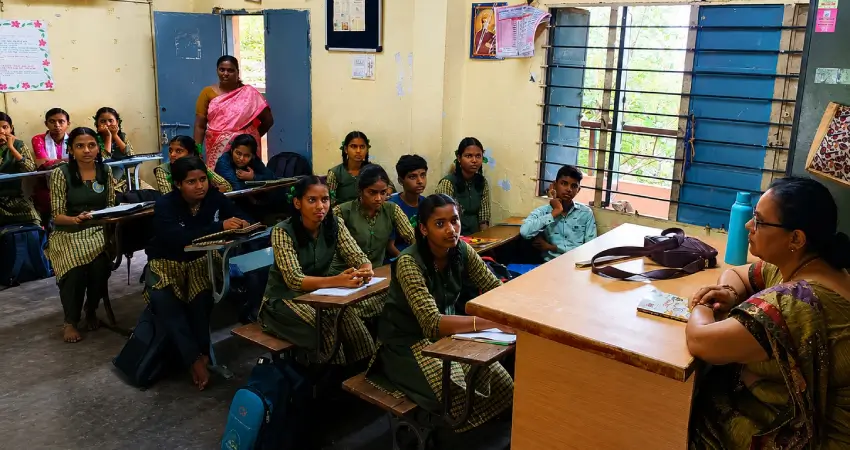
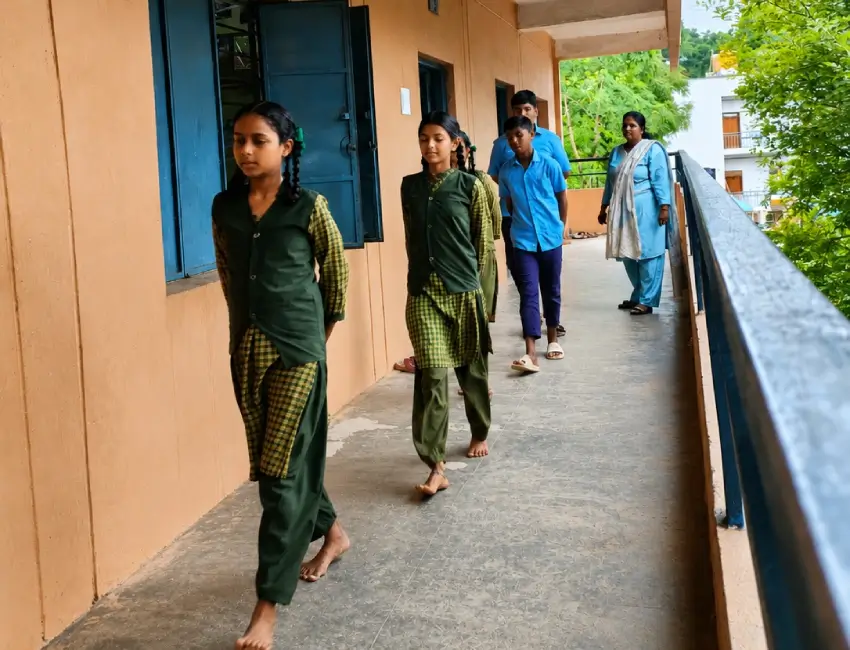
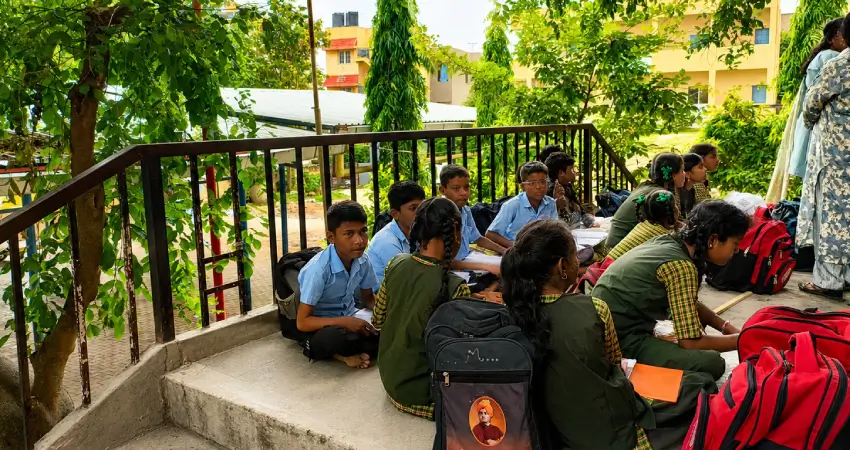
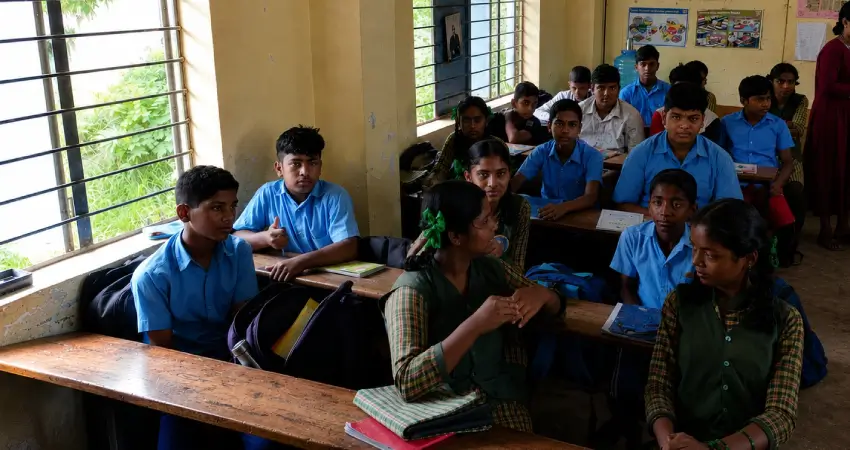
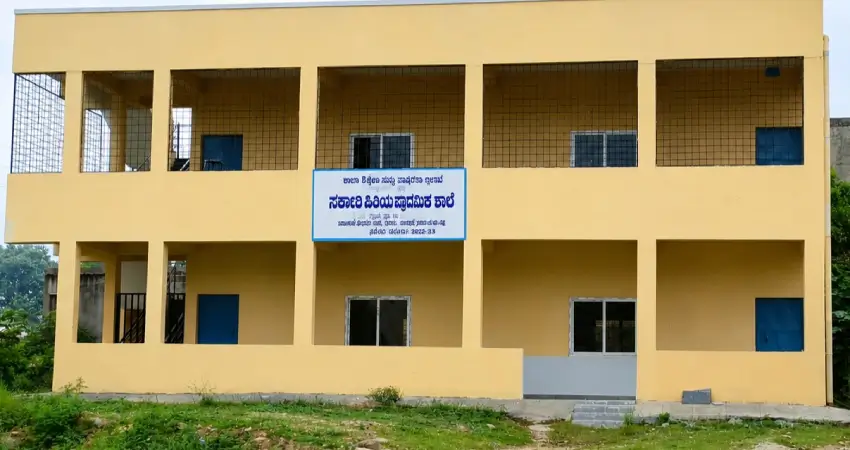
For years, Government School, Veerabhadra Nagar, in Bengaluru’s Vijayanagar Assembly Constituency was more than just a school. For hundreds of migrant families from North Karnataka who had settled nearby in search of work, it symbolised hope. Nearly 420 children studied here — most of them sons and daughters of construction workers, domestic workers, daily wage labourers, garment workers, and sanitation workers.

Like parents everywhere, these families wanted a better future for their children. Despite financial hardship, they made sure their children attended the school regularly and stayed focused on studies. Many of the children dreamt of becoming teachers, nurses, police officers, engineers, and government employees.

Yet one problem stood in their way: the school offered classes only up to Class 8. What appeared to be a small administrative gap was, in reality, the dividing line between continuing education and dropping out altogether.

A Gap That Quietly Pushed Children Out of School

Each year, around 45 students completed Class 8. To continue, they had to travel 6–8 kilometres to the nearest high school — a journey that cost families an additional ₹1,000–2,000 annually in bus fares, straining already tight household budgets. Parents worried especially about adolescent girls travelling far without reliable transport.

The impact was stark. When community facilitators from the Centre for Advocacy and Research (CFAR) began engaging with the community in 2022, they found nearly 68 adolescents had already dropped out or were at risk of dropping out— 35 of them girls, whose education was cut short by concerns over safety and distance. Several boys had started accompanying parents to construction sites or taking up informal work instead of continuing school.

One father, a construction labourer in Bengaluru for over a decade, explained: “We can somehow manage to educate our children till Class 8 because the school is nearby. But after that, many of us simply cannot afford the additional expenses. It is painful to watch our children stop studying when they want to continue.”

From Individual Concern to Collective Demand

As the community facilitators, working through the Janadhikara programme, spoke with students, parents, teachers, School Development and Monitoring Committee (SDMC) members, and local leaders, a clear pattern emerged: this was not a handful of isolated cases but a structural barrier affecting an entire generation — falling hardest on girls from the most vulnerable families.

For the community facilitators, the campaign was never just about two missing classrooms. It was about the belief that education, gender equity, and community voice go hand in hand — and that lasting change happens when families themselves organise, demand, and are heard.

Led by the facilitators, parents, youth groups, and local leaders came together across occupational lines around one common cause: their children’s future. In June 2022, the community submitted its first formal representation to the Block Education Officer (BEO), South, requesting Classes 9 and 10. When officials asked for evidence of demand, parents mobilised quickly, gathering 185 signatures and submitting a detailed petition outlining the challenges children faced.

Four Years of Follow-Up, One Milestone Reached

What followed was a long process of sustained efforts. Over four years, community representatives held more than 12 meetings with school authorities, education officials, elected representatives, and community members. The local MLA endorsed the demand and recommended it to the Deputy Director of Public Instruction (DDPI), while continued engagement with district officials kept the proposal alive.

Through this process, parents who once felt powerless gained confidence in collective action — and students held onto hope that they would one day study close to home. In 2026, that hope was fulfilled when the Education Department sanctioned the introduction of Class 9 at Government School, Veerabhadra Nagar. This marked a major step toward restoring full secondary education, with the community continuing to advocate for the addition of Class 10.  In its very first year, 39 students enrolled, no longer needing to travel long distances to continue their education.

A Change That Will Outlast This Batch of Students

The significance extends far beyond this year’s 39 students. Roughly 50 students are expected to benefit annually, with an estimated 250 children gaining from the new class over the next five years.

For families, it means lower costs, greater safety, and renewed confidence in keeping children in school. For adolescent girls, it offers a safer, more accessible path to completing education. And for the community, it is proof that organized and sustained campaigns can move public systems.

“Today, when students walk through the gates of Government School, Veerabhadra Nagar, they no longer see Class 8 as the end of their journey. They see it as another step toward a future filled with possibilities,” says Anjanappa, a parent from the community.

From Barrier to Example

What began as a story of educational barriers has become an example of what community-led efforts, supported by community facilitators, can achieve. The introduction of Class 9 is not just an administrative approval but a policy-level win that will benefit hundreds of children for years to come. Children who once saw Class 8 as the end of the road can now look ahead with confidence. Their dreams no longer have to stop where the school once did.

Will AI Take Our Jobs? Pune’s Youth Gather to Discuss the Future

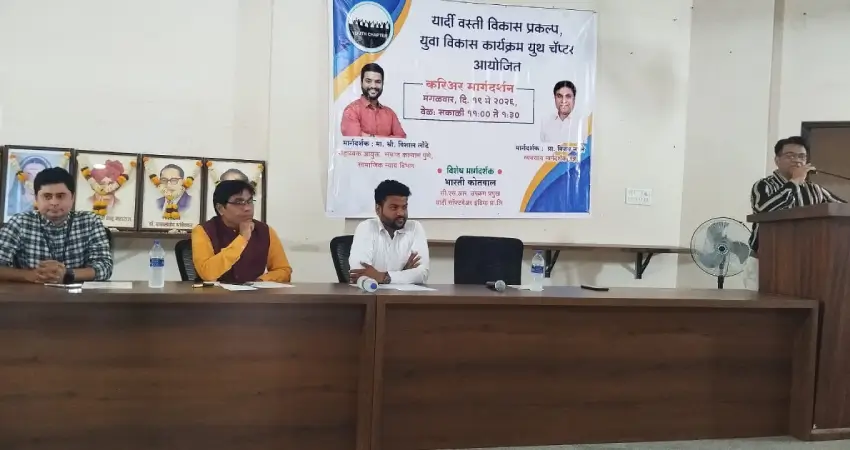
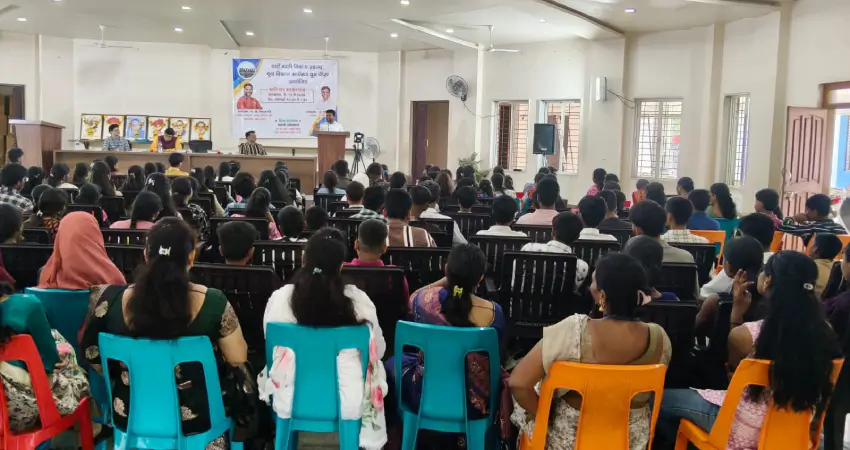
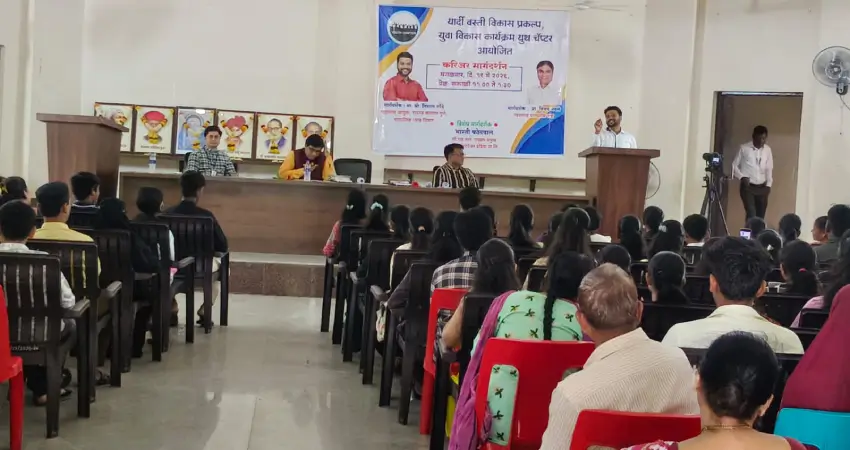
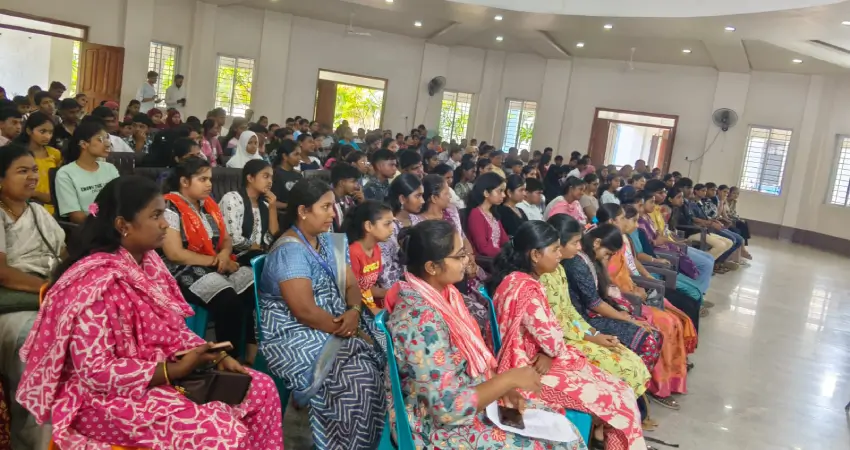
Artificial Intelligence (AI) is the buzzword everywhere — shaping conversations about careers, opportunities, and anxieties. The rapid pace at which AI models are being developed has opened doors to new possibilities, while also raising concerns about risks to employment. As the tech world debates sharply contrasting visions of how AI could reshape the future of work, this global conversation found a local stage in Pune. On 19th May 2026, more than 400 young people from vulnerable urban settlements gathered at the Samaj Kalyan Office, Visharantwadi, to explore what AI and changing job markets mean for their own futures.

A Community Initiative

The event was part of the Vasti Sahabhag Prakalp (VSP), a community-based initiative jointly implemented by YARDI and the Centre for Advocacy and Research. Through its Youth Development Program, VSP works with adolescents and youth from settlements in Yerwada, equipping them with career guidance, life skills, leadership development, and employability support. The program aims to help young people make informed decisions, build confidence, and pursue meaningful educational and livelihood pathways.

Dreams Amidst Challenges

Most participants came from families dependent on daily wage labor, informal work, domestic services, construction, or waste collection. Growing up amidst economic insecurity, overcrowded living conditions, and limited access to education, many face pressures to contribute to household income early. Field interactions often reveal that many adolescents and youth are exposed to high-risk behaviors, school discontinuation, substance use, early entry into low-paying jobs and an environment where aspirations are often constrained by circumstances.

Yet, this gathering symbolized resilience and hope — young people determined to break cycles of poverty and imagine futures beyond their circumstances. They came with a belief that education, skills, and informed decisions could help them change not only their own circumstances but also the future of their families. Many were first-generation learners navigating career choices without professional guidance at home, while some carried the expectations of entire families who saw in them the possibility of breaking cycles of poverty and insecurity.

Inspiring Journeys

Deputy Commissioner Vishal Londhe, Social Development Department, Pune, opened the conversation by sharing his own journey. Rather than speaking from the position of a senior government official, he spoke as someone who had once faced many of the same challenges the young participants are facing today. Recalling his early struggles of living in a small room with limited resources while pursuing his education, he reflected: “Success does not depend on where you come from, but on your determination to keep moving forward despite difficulties. I faced many struggles, but I never gave up on my dream of serving society.”

His story resonated deeply with the audience, mirroring their own realities of limited resources, financial pressures, and the challenge of pursuing education. The officer emphasized perseverance, discipline and consistent effort, urging young people to stay focused on their studies and goals. He further explained how smart work and determination enabled him to clear competitive examinations and eventually serve as the Deputy Commissioner.

AI and the Future of Careers

The discussion then shifted to the future of careers, led by renowned career counsellor Mr. Vijay Navlay. Encouraging an open exchange, he invited participants to share their ambitions and concerns. As young people spoke about their career interests, the session evolved into a vibrant conversation about opportunities, emerging job markets, and the skills needed to thrive in a changing world.

One of the most engaging moments came when participants raised questions about AI and its impact on employment. Reflecting a common concern whether technology would replace jobs and limit opportunities, Mr. Navlay offered a reassuring perspective. He said, “Artificial Intelligence will certainly change the nature of many jobs, but it will also create new opportunities. Instead of fearing technology, we must learn it, understand it, and use it effectively. Those who continuously upgrade their skills and become familiar with AI tools will remain relevant and competitive in the job market.”

From Apprehension to Optimism

His message transformed apprehension into optimism. By encouraging participants to embrace learning, adaptability, and innovation, he helped them see technological change not as a barrier, but as an opportunity to grow and succeed.

The event concluded with an interactive Q&A session, where participants sought guidance on higher education pathways, competitive examinations, career planning, and skill development. The enthusiasm and engagement throughout reflected the eagerness of young people to prepare themselves for the future.

Beyond Careers: A Conversation About Hope

For many, it was not merely about choosing a career. It was about imagining a future beyond the limitations they encounter daily. It offered reassurance that their aspirations are valid, that their circumstances do not define their potential, and that success remains possible despite the odds.

More than a career counselling session, the interaction became a conversation about possibilities, resilience, and hope. By addressing their concerns and equipping participants with practical insights, the session encouraged young people to face the future with confidence—reinforcing the belief that while the world of work may be changing, opportunities will continue to exist for those willing to learn, adapt, and persevere. It further reinforces that with the right guidance and openness to learning, youth from vulnerable communities can not only navigate but thrive in a world reshaped by AI.

Building Community–Local Bodies Synergy

The dialogue highlighted the synergy between community initiatives and local body leadership in shaping pathways for youth centric development. The presence of Deputy Commissioner Vishal Londhe sharing his perspective alongside the VSP team, illustrated how urban local bodies and grassroots organizations can jointly steward development in vulnerable urban settlements. What began as a discussion on careers and technology, evolved into a collective conversation about hope, resilience, and opportunity, reinforcing that the future of work in an AI-driven world must be guided by inclusive, youth-centered strategies and local governance frameworks that prioritize the empowerment of marginalized youth.


A Piece of Paper, A Life Saved: Hirabai’s Journey to Critical Care

For years, 51-year-old Hirabai Nathu Gaikwad began her mornings before sunrise, carrying baskets of fresh fish to the roadside near Aundh Jakat Naka in Pune. Alongside her two sons and two daughters-in-law, she worked tirelessly every day, selling fish to keep her family afloat.

Home was a cramped one-room house shared with her son, daughter-in-law, and a grandchild. Despite working hard, the family lived in constant financial insecurity — income from fish vending barely covered food, medicines, and daily needs. Accessing government services and welfare schemes was another struggle with documents and procedures often confusing and out of reach.

A Medical Emergency

Six months ago, Hirabai underwent bypass surgery after a serious heart condition. The treatment was made possible through benefits under the Mahatma Phule Jan Arogya Yojana, facilitated by a team of Community Facilitators belonging to a community forum that manages the local Single Window service. The family believed the worst was behind them. But just a month later, her health deteriorated again. Doctors informed the family that she needed open heart surgery, costing nearly ₹4.5 lakhs. “We were shattered,” recalls her son Mayur. “We had no idea how we could save my mother.”

Barriers Beyond Money

Though the family knew that government healthcare schemes could help, they soon faced another obstacle: Hirabai’s ration card had become inactive. Without it, linking services such as the Ayushman card was impossible. “With every passing day, we were becoming more scared,” recalls Rohini, Hirabai’s daughter-in-law. “The surgery was urgent, but we felt stuck.”

However, timely guidance from the SWF enabled the family to reactivate the ration card within 24 hours, unlocking access to Ayushman Bharat and Mahatma Phule Jan Arogya benefits. “We did not know where to go or what documents were needed but everything was explained to us by the SWF member,” said Mayur.

A Surgery That Saved a Life

Thanks to this intervention, Hirabai successfully underwent open heart surgery free of cost and is now recovering at home. “Without this support, we would never have managed such expensive treatment,” says Rohini.

While financial struggles continue, the family now feels far more confident about navigating government services and healthcare support in the future. “Sometimes we struggle because we simply do not know the process. When someone guides us properly, it changes everything,” said Hirabai.

For Hirabai’s family, the support extended far beyond healthcare — it meant crossing barriers of documentation, digital systems, and government procedure at one of the hardest moments of their lives. Her story shows how a single reactivated document, paired with the right guidance at the right time, can be the difference between crisis and survival for families like hers.


I Never Thought a University Like APU Was Meant for Someone Like Me

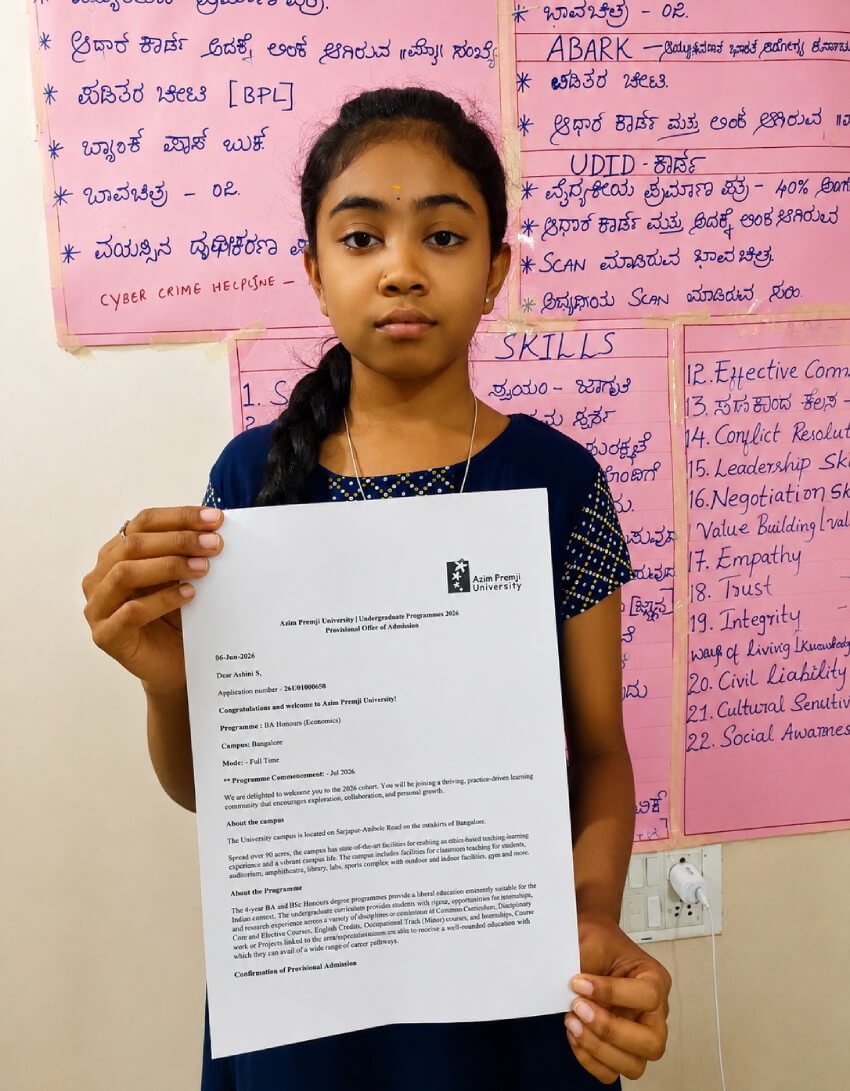
“Until a year ago, I thought my higher education journey would end in a Government Degree College near my home. Studying in a university like Azim Premji University was something I had only heard about. I never imagined that one day I would receive an admission offer from there.”

I am 17 years old and live in Ramachandrapura in Bengaluru’s Majestic Cluster. I come from a not-so-well-off family. My mother is a single parent and works as a tailor. Growing up, I saw how hard she worked every day to take care of our family. Because of her, I always believed that education was important, and I tried my best to do well in school.

I scored 75% in my SSLC examinations and later joined the Commerce stream in a BBMP Government PU College, where I scored 82% in my PUC. I enjoyed studying and wanted to continue my education, but I never thought too much beyond what seemed possible for someone like me.

As I was finishing my PUC, I had already decided that I would join a Government Degree College and pursue a BCA course. It felt like the safest option. To be honest, I did not know much about universities outside Bengaluru or the opportunities available after PUC. Looking back, I feel many students like me do not lack ability. We simply do not know what opportunities exist or how to reach them.

That changed when I heard about Azim Premji University through the youth program. At first, I was excited, but I was also nervous. The admission process involved online classes, preparation sessions, and interviews. At home, I did not always have the internet access or space needed to attend classes regularly and prepare properly. There were times when I wondered whether I would be able to prepare properly at all.

That was when the Community Learning Centre became an important part of my journey

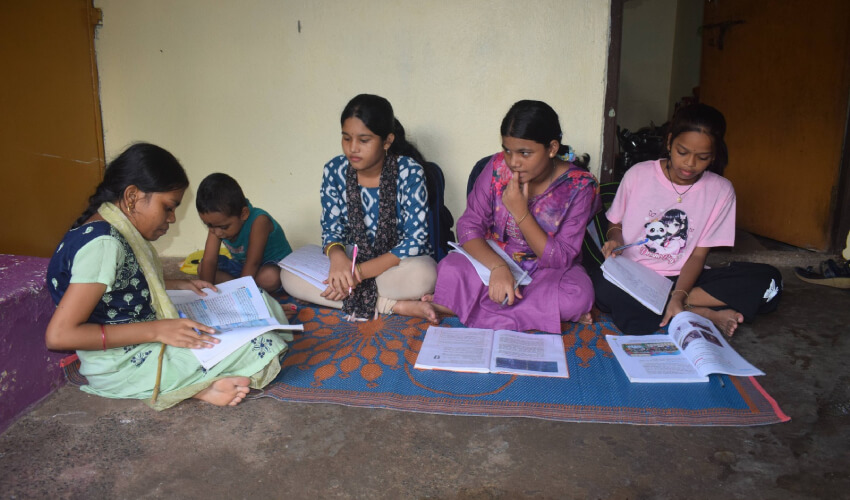
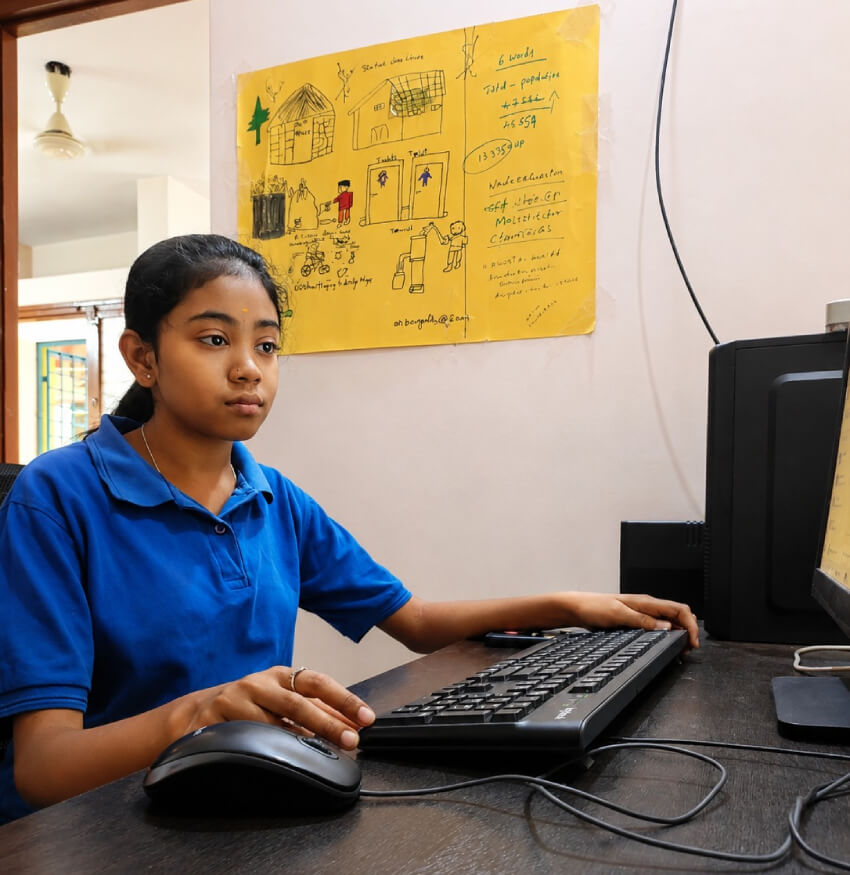
For several months, I attended online preparatory classes from the Community Learning Centre almost every day. Many days, I stayed there until late evening attending sessions, completing assignments, and preparing for the entrance examination. It became a place where I could concentrate on my studies without distractions and access the internet whenever I needed it.

The people associated with the program also encouraged me throughout the process. They helped me understand the admission process, prepare for interviews, and complete different requirements. More importantly, they kept reminding me to believe in myself when I started doubting whether I could actually make it.

The journey was not always easy. Some of my friends asked me why I wanted to move away from Bengaluru. Others told me that staying in a hostel and adjusting to university life would be difficult. At home, my mother was worried about what would happen if I did not get selected. To be safe, she got me admitted to a Government College as a backup option.

Even then, I felt I had done my best, so I decided to wait and hope for the best.

A few weeks later, I received a call that changed everything

I was informed that I had cleared the admission process and that an offer letter had been issued to me. I still remember the excitement I felt that day. For a few moments, I could hardly believe it. Something I had never imagined for myself had suddenly become real.

Today, I am preparing to begin a new chapter of my life at Azim Premji University. For me, this is not only about joining a university. It is about proving to myself that where we come from does not decide how far we can go.

I am also happy that I am not the only one. This year, 2 students from the communities supported through the program secured admission to Azim Premji University. Along with me from the Majestic Cluster, Preetham K from the Nagarabhavi Cluster was also selected.

This experience has changed the way my family thinks about education. My younger brother is currently studying in SSLC, and I keep telling him that he should also explore opportunities like this when he completes his studies. I want him to believe that he can dream bigger than what seems possible today.

When I think about my journey, I realise there are many young people in communities like mine who are talented and capable. Sometimes what they need is not more talent, but information, guidance, a place to learn, and someone who encourages them to try.

My story is not just about getting admission to a university. It is about what can happen when someone gets an opportunity they never thought was possible. It is also a reminder that a student’s future should not be limited by their family’s income or where they live.

– Ashini

Beyond One Student’s Success

Ashini’s journey reflects the experiences of many young people living in Bengaluru’s informal settlements. While they often have the ability and determination to pursue higher education, many are unaware of the opportunities available to them or lack the support needed to navigate admission processes.

Through Community Learning Centres—set up as part of the Azim Premji Foundation’s urban poor project and implemented by CFAR—the program is helping create pathways that connect talented first-generation learners to quality higher education opportunities via youth engagement initiatives at the settlement level, structured guidance, online learning support, mentoring, and sustained accompaniment. This year, 2 students from program-supported communities, Ashini from the Majestic Cluster and Preetham K from the Nagarabhavi Cluster, secured admission to Azim Premji University.

Their journeys show that when young people receive timely information, guidance, encouragement, and access to learning spaces, they are able to pursue opportunities that may otherwise seem beyond their reach. Their stories are not only personal achievements but also reminders of the potential that exists within communities when young people are given the chance to explore, aspire, and succeed.

Finding a Way Together: A Story of Care in Ajmer

Denied for 3 Years. Now Helping Others Access Their Rights

In the winding lanes of Khanpura, Ajmer, Shanno’s home stood as a place of contrasts—two stories unfolding under one roof.

To an outsider, the building looked “large”—big enough to disqualify her from receiving basic food rations. But inside, the reality was stark: six families, including Shanno and her two sons, were crammed into a single structure.

For three long years, this gap between perception and reality kept a widowed domestic worker struggling to feed her children.

“I felt like I was shouting into a void,” Shanno says. “I would go to the offices, fill forms, and wait. But nothing happened. I started to feel that people like me are meant to be forgotten.”


Turning Point

The change came not through another application, but through connection.

That connection began at a social security camp organized by CFAR’s Single Window team, a community-based platform that helps people access government entitlements and resolve service gaps, at a local madrasa. At the camp, Shanno found people willing to listen and help. The team not only processed her case but also bridged the gap between her lived reality and the system’s assumptions. They verified her situation, advocated on her behalf, and ensured her voice was finally heard.

Sultana, a Single Window member, vividly recalls her first meeting with Shanno:
“When I met Shanno, I saw a woman exhausted but still holding on. On paper, it was a ‘large house.’ But when we visited, we saw six families sharing one space. My role wasn’t just to file a report; it was to make sure her reality reached the right people. When she finally received her first ration after three years, it wasn’t just a delivery—it was a moment that reaffirmed why this work matters.”


A New Future for the Family

The support didn’t stop at food. Once the door was open, the team helped Shanno access the Palanhar scheme—a program specifically designed to support the education and care of children who have lost a parent. With this steady support, Shanno’s two sons are now enrolled in school, trading a life of uncertainty for a seat in a classroom.


From Seeking Help to Becoming a Champion

But the story doesn’t end there. Shanno didn’t just reclaim her entitlements, she transformed her experience into purpose.

Knowing that many others face the same barriers, she became a “Champion” at the neighbourhood help desk. Each afternoon, she now supports multiple women in her neighbourhood—helping them navigate digital platforms, understand government processes, and organise their documents.


The Ripple Effect

Shanno’s impact is now felt across the heart of her settlement. In Khanpura, a neighbourhood of 150 vulnerable households, she has become a vital anchor for her neighbours. Since becoming a Champion, she has already personally supported 25 families on their journey toward social inclusion—ensuring that others in her community can access their rights and essential support within weeks, rather than the three years of silence she once endured.

One of the many people she has supported is Suwa Bai, her neighbour, who was struggling to access her widow’s pension.

“I was afraid of offices and complicated processes,” Suwa Bai says. “But Shanno sat with me at my doorstep and said, ‘If I can do it, so can you.’ She didn’t just share information; she gave me confidence. Because of her, my children now have what they need.”


Shanno’s journey shows what a “caring neighbourhood” truly means. It goes beyond schemes and systems—it lives in everyday acts of solidarity. In neighbours who step forward, who listen, and who refuse to let others remain unseen.

As Shanno says, with a quiet smile:
“I used to feel invisible. Now, when someone stops me on the street to ask for help with a form, I feel like I finally belong.”

Stories like Shanno’s reflect CFAR’s belief that when communities lead and systems respond, dignity becomes possible. Strengthening such community-led platforms is at the heart of building more caring and inclusive neighbourhoods.

Driving Towards Self-Reliance: Lakshmi’s Journey under the Pink E-Rickshaw Scheme

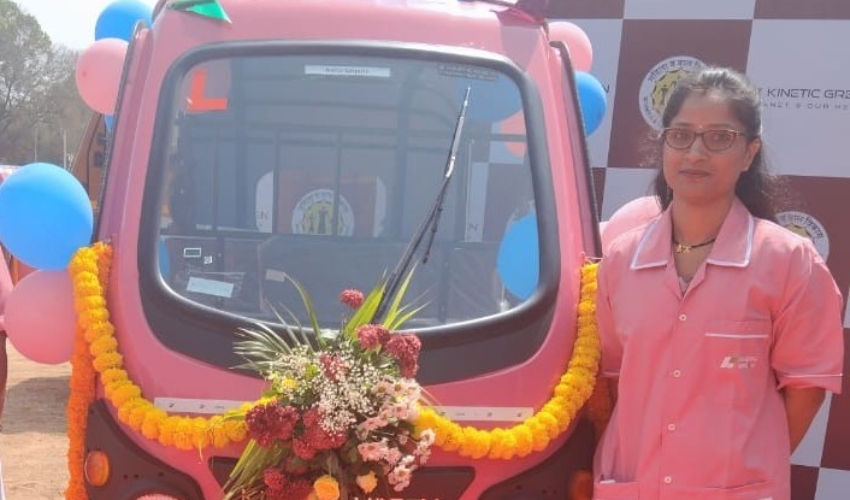
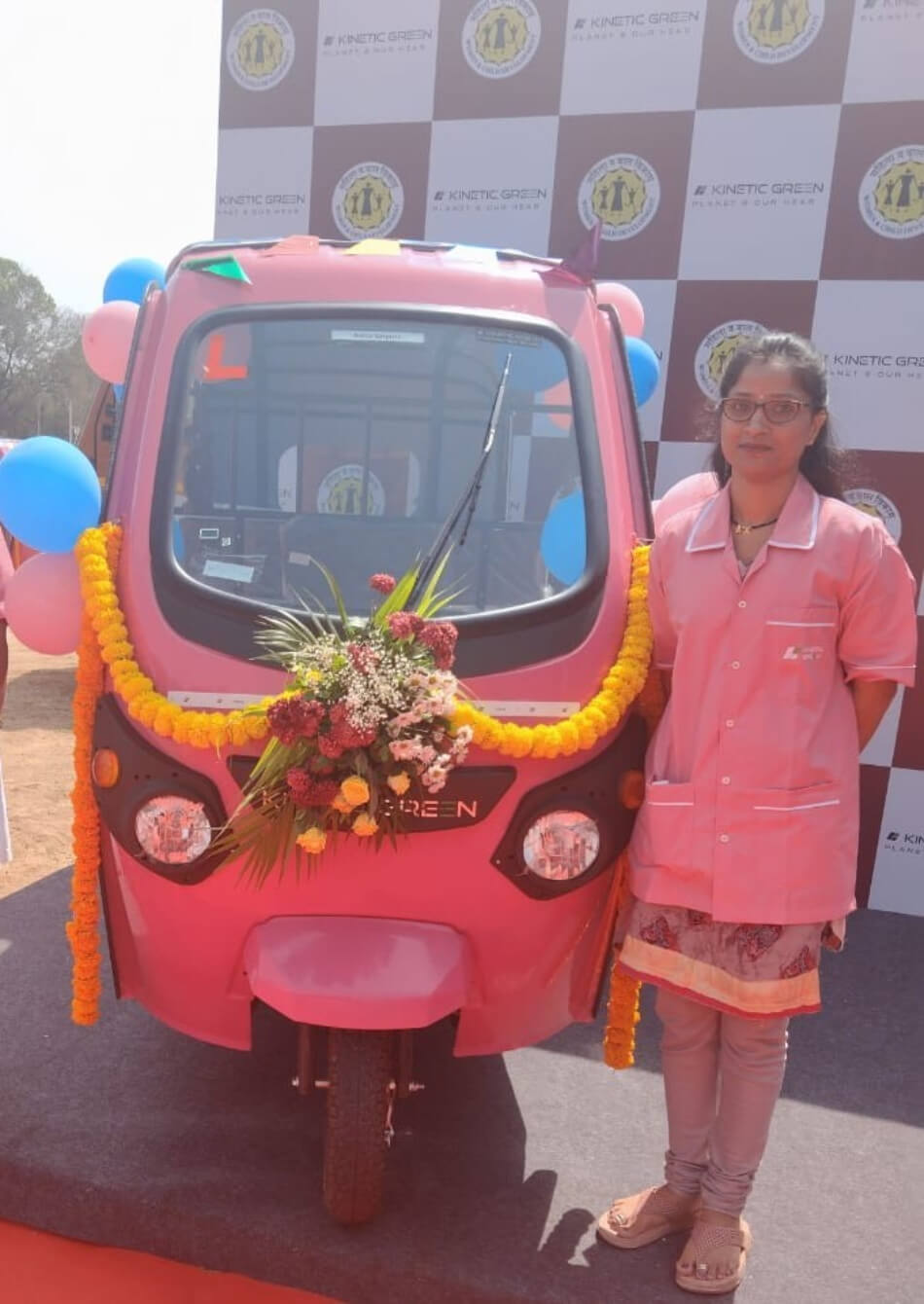
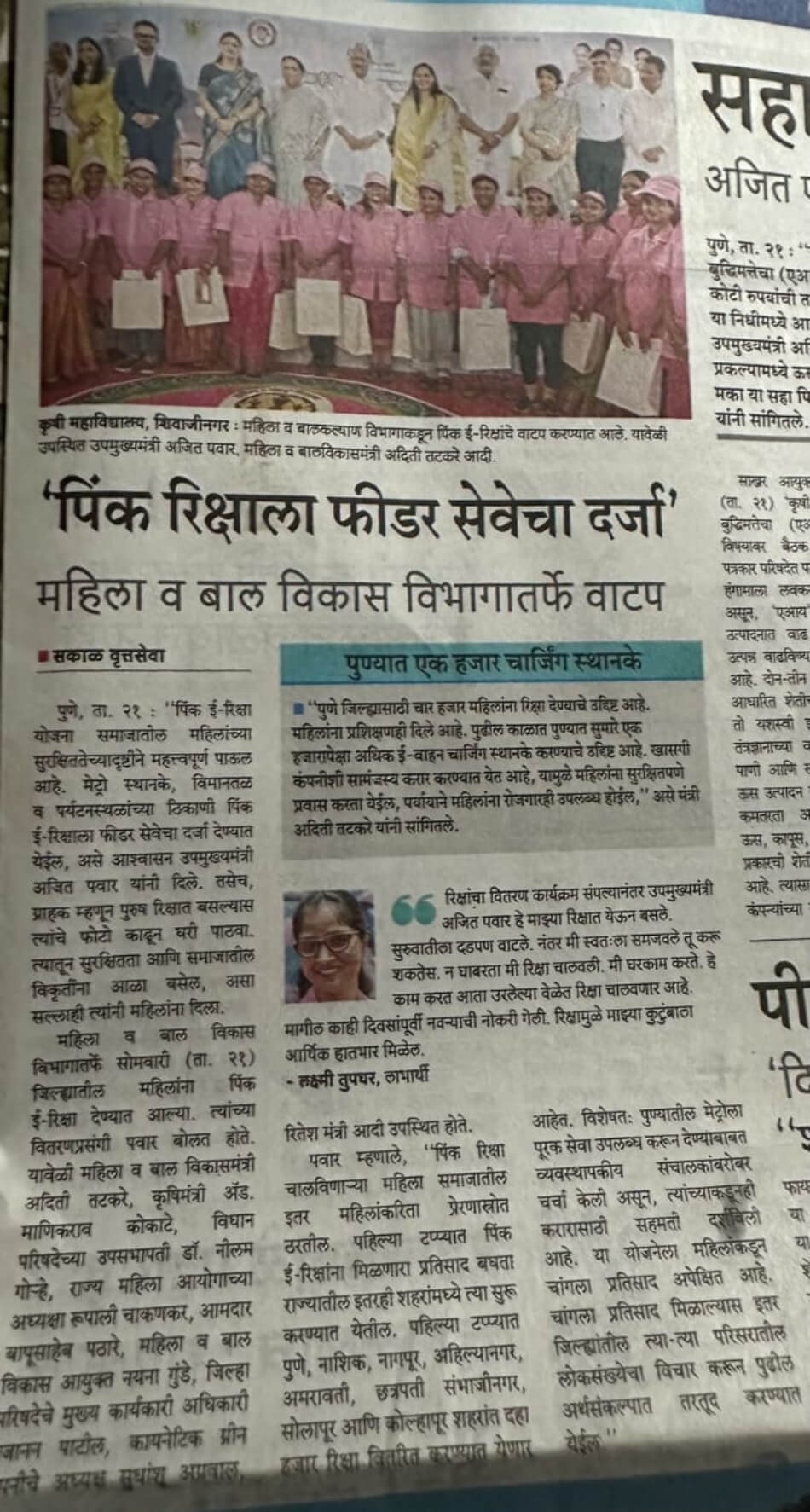
Every morning at 6 am, Lakshmi Digambar Tupdhar sets out in her bright pink e-rickshaw, navigating the bustling streets of Pune. For this 36-year-old mother from the Tadiwala Road slum, the daily drive is more than a routine—it symbolizes courage, independence, and transformation.

Breaking Barriers

Life in a marginalized community meant constant financial strain. Living with her husband and two daughters in one of Pune’s marginalized communities, she struggled to make ends meet. Their daily income barely covered basic needs, leaving little for education or healthcare. “I would lie awake at night, worried. My elder daughter needed tuition, and my younger one new shoes. But how could we afford that?,“ she recalls.

Turning Point

Her turning point came during a community meeting where officials from Maharashtra’s Women and Child Development Department introduced the Pink E-Rickshaw Scheme. The initiative offered women a pathway to ownership through a cost-sharing model: 10% personal contribution, 70% bank loan, and 20% government subsidy.

Initially hesitant due to social stigma, Lakshmi feared ridicule. But with consistent encouragement from Shilpa Kegale from the Pune Municipal Corporation and Vanita Gaikwad and Nisha Naidu of the Single Window Forum Members, set up by Centre for Advocacy and Research-to facilitate community to secure entitled schemes and services—she began to see the opportunity not just as a livelihood, but as a legacy for her daughters.  “They told me don’t think about what people will say, think about what you want for your daughters,” she said.

A New Beginning

On August 12, 2024, Lakshmi received her e-rickshaw from Deputy Chief Minister Ajit Pawar. Holding the keys, she felt the weight of possibility. “When I held those keys, I started crying. It wasn’t just a vehicle, it was my chance to change everything,” she recalls.

The early days were challenging. Pune’s chaotic traffic tested her nerves, but support from passengers—especially women—boosted her confidence. Over time, she became a familiar and trusted presence on the roads, with many commuters preferring her rickshaw for the safety and dignity it offered.

From Fear to Freedom

Lakshmi’s income has improved but the real transformation is within. She no longer sees herself solely as a wife or mother, but as a woman who stands on her own feet. Her story has inspired three other women from Tadiwala Road to apply for the scheme, proving that visibility spurs possibility, as seeing is believing.

Young girls in her neighbourhood now look up to her. “When I drive through my neighbourhood, young girls watch me.  I want them to know that women can also do anything if they have courage,” she said. Her elder daughter, dreaming of becoming an engineer, sees her mother’s journey as proof that ambition and resilience can rewrite destinies.

A Vehicle of Dignity

For Lakshmi, the Pink E-Rickshaw Scheme is more than a livelihood—it represents dignity, empowerment, and hope. Each ride she completes is a step toward a better future, not just for herself, but for the next generation. “I don’t want my daughters to live the kind of life I did. I dream of giving them a better future, and to fulfil that dream, I drive my rickshaw with pride every day,” says Lakshmi.

Worker Solidarity Enabling Service

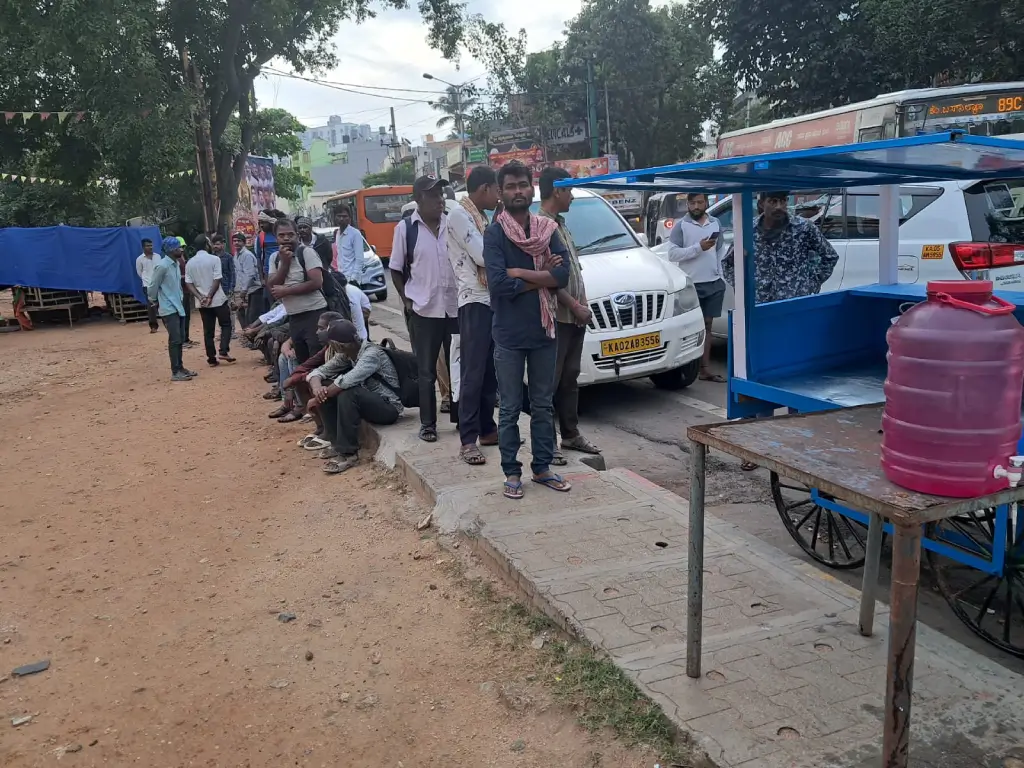
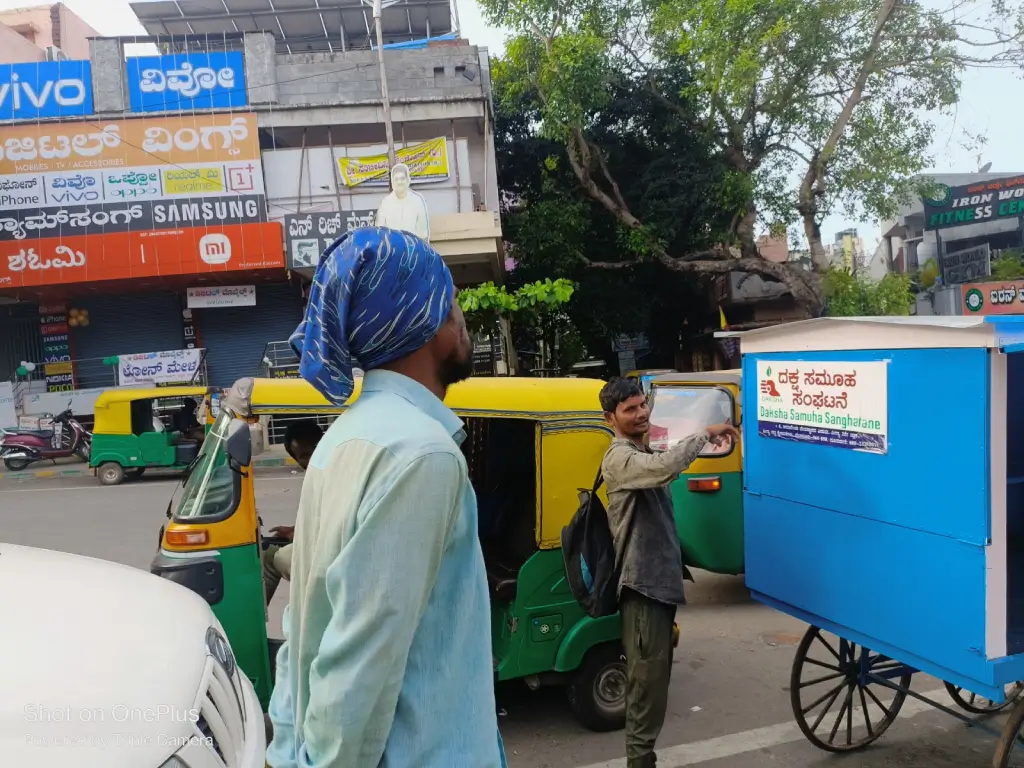
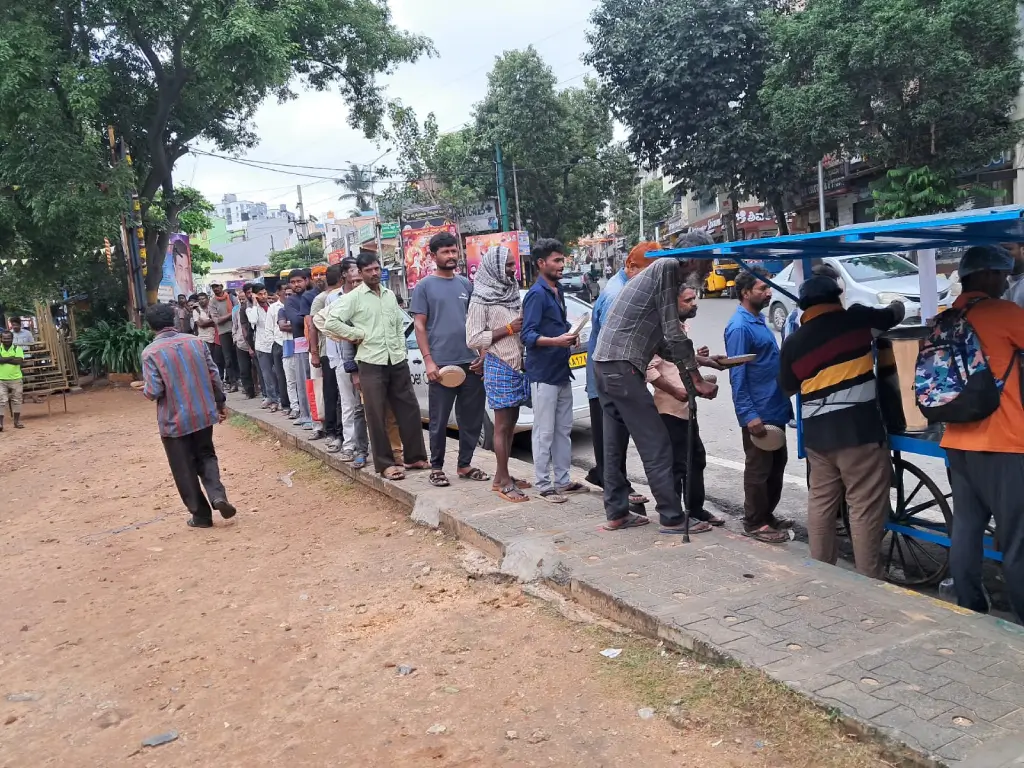
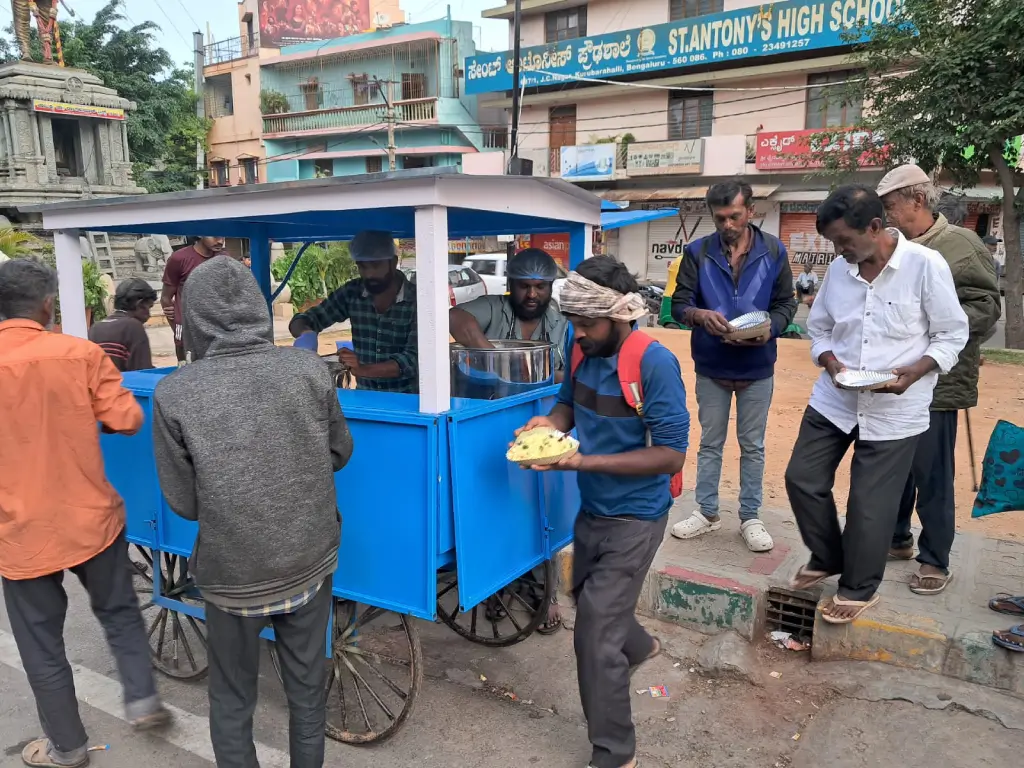
What began as a modest effort at the APMC Yard gate in Bengaluru has now grown into a city-wide movement. In August, Daksha Samuha Sanghatane, a community-based organization and Centre for Advocacy and Research (CFAR), launched a second breakfast cart at Kurubarahalli Circle, building on the success of its first cart introduced in July. The goal: to ensure no worker starts their day hungry.

A Morning Ritual Rooted in Care

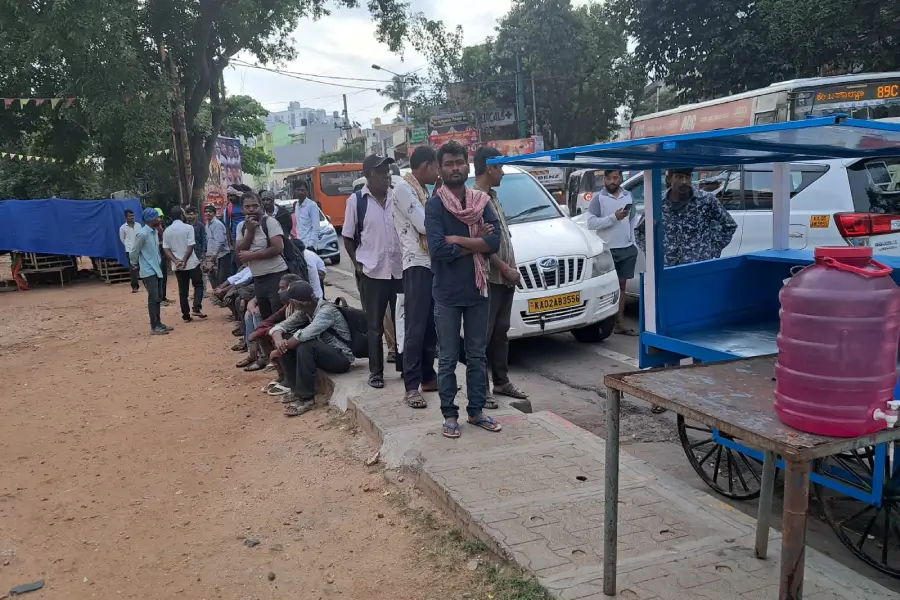
By 6:30 AM each day as the city begins to stir, Kurubarahalli Circle buzzes with activity. Construction workers, garment workers, pourakarmikas (PKs), and others gather in search of work. Their day begins with long hours of physical labour—lifting, carrying, sweeping, and stitching—yet most of them start on an empty stomach. Some leave home at dawn with no time to prepare food, while others cannot afford to eat until much later. Without food, they face hours of intense physical labor, often resorting to spending ₹40–₹50 at roadside eateries later in the day.

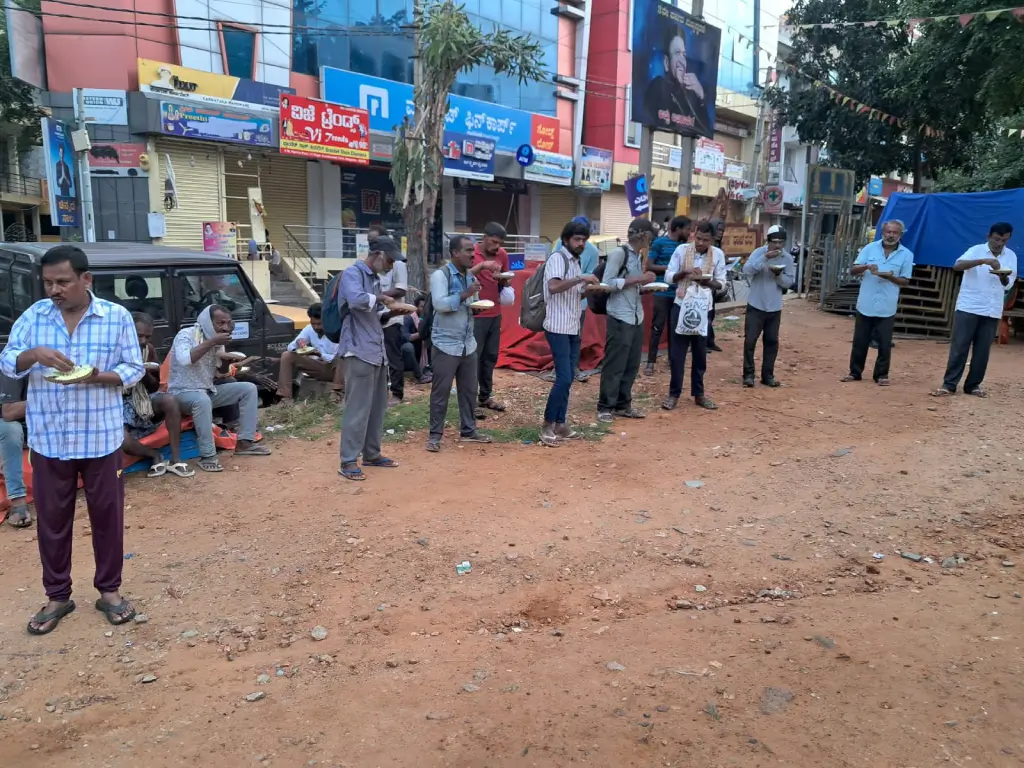
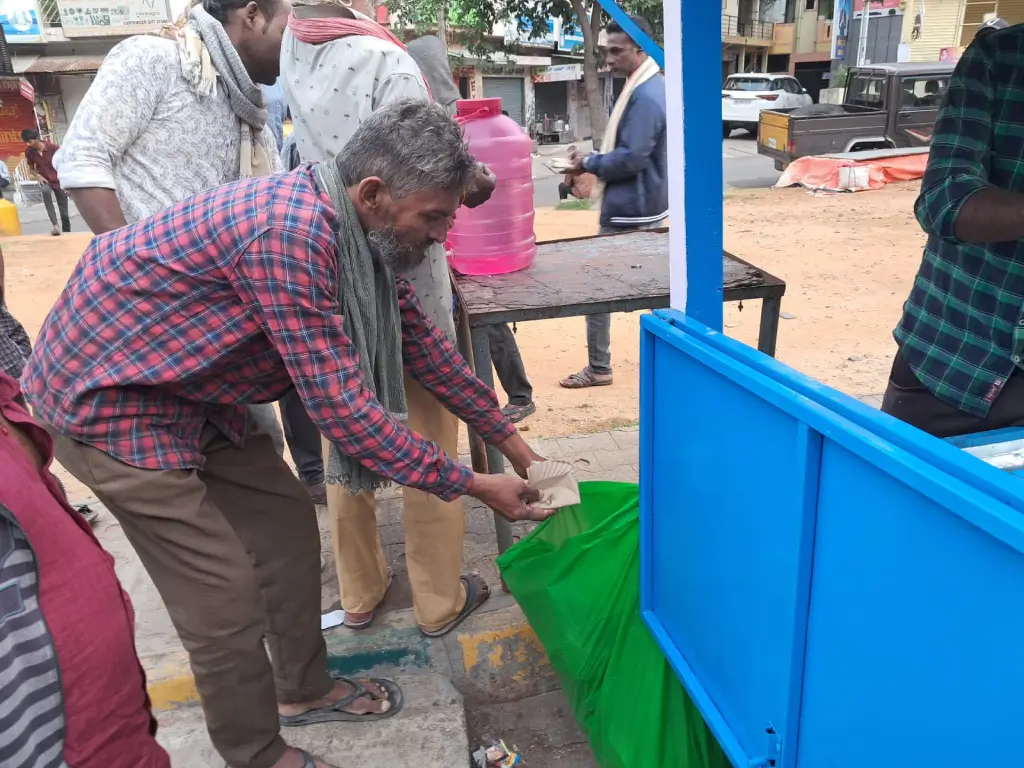
The breakfast cart changes that. Serving over 150 workers each morning, it offers fresh, hot, hygienically prepared meals. More than just food, it affirms dignity—workers receive nourishment as a rightful start to their day.

Overwhelming Response from Workers

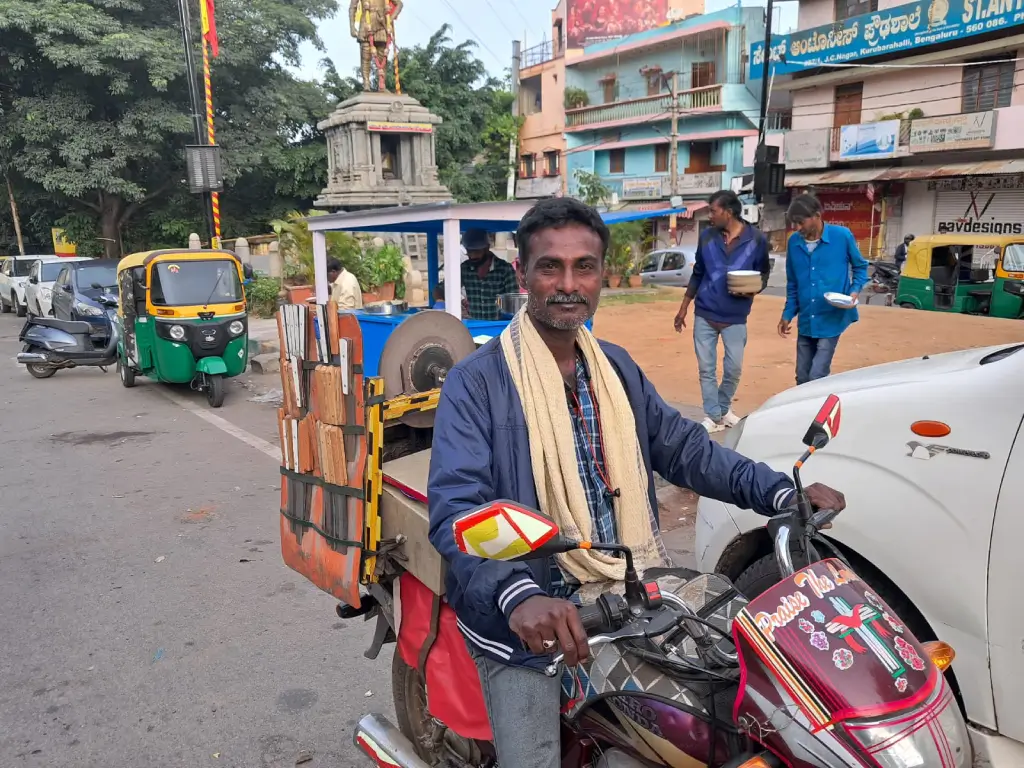
The first cart at APMC Yard proved the power of community-led action, serving hundreds daily and inspiring expansion to Kurubarahalli Circle—home to some of Bengaluru’s most marginalized communities. The response has been overwhelming, with growing support from workers and local residents.

“Earlier, I would come here at 6:30 AM and work till 9 without food. By then, I was already tired because none of the hotels would be open at that time. Spending Rs. 50 on breakfast every day was a burden,” says Kavitha, 34, a garments worker. “Now, I can eat properly in the morning and also save money. At the end of the month, it makes a big difference.” For workers like her, saving Rs. 1,200 a month means paying school fees, buying household groceries, or managing medical expenses.

For Narasimha, a construction worker who has spent over a decade at this junction, the initiative is not just about saving money—it’s about empowerment being able to priortize the essential needs.  “This food helps me save at least Rs. 40 a day. That money goes towards my children’s school books. For us, even a small saving matters,” he says with quiet pride.

The rotating weekly menu includes vegetable palav, chitranna, rava idli, bisi bele bath, dosa, and on Saturdays, 300 idlis with 150 vadas. Every item is cooked fresh, served hot, and completely free.

Driven by Volunteerism

Anand Raj, who manages the breakfast cart, arrives by 6:15 AM every day to get things ready. “By the time I open the vessels, there is already a crowd waiting,” he says. “Most of them come regularly now. They know we will not miss a single day.” Supporting him is Babu Rao, a long-time volunteer who helps maintain order and ensures everyone is served. Rao eats only after all others have been fed, a quiet reminder that this initiative belongs to the community.

Cleanliness and hygiene are strictly maintained. “We clean the cart and vessels thoroughly before serving. We also request workers to keep the space clean,” says Anand Raj. “Over time, they’ve started taking care of it themselves. This is their space too.” This shared responsibility shows that when people take ownership, dignity and discipline naturally follow.

A Model Solidarity

What makes this effort unique is its community-driven model. It is founded on solidarity. Community members participate in running the cart, helping workers save ₹40–₹50 daily while building a culture of collectivization. It is about ownership, not dependence; claiming rights, not receiving favors.

The Kurubarahalli cart is part of CFAR’s broader mission to strengthen Bengaluru’s urban poor settlements—from healthcare access to social security—through community-created solutions grounded in dignity and rights.

For the workers, this cart is the long overdue relief from hunger, strength to work without exhaustion, and the comfort of knowing that someone has seen their struggle and acted upon it. Lakshmamma, 52, a pourakarmika who sweeps nearby roads, puts it simply: “We feel respected.”

Since its launch, the cart has served thousands of meals. Demand is growing, and plans are underway to expand capacity and variety. The vision remains clear: no worker at Kurubarahalli Circle should begin their day hungry.

Each plate served is more than a meal—it’s a quiet act of justice. It reminds us that meaningful change doesn’t always require grand gestures; it simply needs to listen, respond, and endure. At Kurubarahalli Circle, the breakfast cart stands as a powerful symbol of community-led care, proving that when people come together, no one has to be left behind.

Swachhata Hi Seva 2025: Pune’s Campaign for a Cleaner, Sustainable Future

From September 17 to October 2, 2025, Pune came alive with Swachhotsav, a vibrant celebration of Swachhata Hi Seva 2025 under the Swachh Bharat Mission (SBM) 2.0. More than a symbolic campaign, this initiative marked a strategic leap toward building a robust, multi-layered cleanliness ecosystem—anchored in governance, regulation, service delivery, and citizen participation.

Targeted interventions

Between September 25 and October 1, the Center for Advocacy & Research (CFAR), in collaboration with the Solid Waste Management (SWM) Department and the District Legal Services Authority (DLSA), spearheaded a series of targeted interventions to reinforce Pune’s sanitation framework. These efforts were designed to strengthen the city’s multi-layered sanitation ecosystem, addressing gaps in governance and citizen engagement that have historically limited Pune’s potential, despite its reputation for an effective waste management system.

A key highlight of the campaign was a capacity-building workshop for 104 officials, including Deputy Sanitary Inspectors (DSIs) and Sanitary Inspectors (SIs) from Zones 2, 3, and 5. The session focused on operational excellence, covering critical aspects such as strengthening citizen accountability in waste management, enforcing regulations and penalties for non-compliance, and leveraging digital tools like PMC Care for streamlined service delivery.

Legal experts from DLSA provided insights into the regulatory landscape, emphasizing enforcement mechanisms and offered practical guidance on record-keeping and operational efficiency. These efforts aimed to empower frontline officials with the tools and knowledge to drive systemic change.

Community Engagement

Parallel to institutional efforts, CFAR led a community awareness drive at Kashewadi settlement in Bhavani Peth Ward. Through a compelling street play, residents were educated on the importance of segregating dry and wet waste. This initiative reinforced the idea that community ownership is not just complementary but essential to the success of any sanitation strategy.

Celebrating Achievements

On October 2, 2025, during Gandhi Jayanti celebrations, the Pune Municipal Corporation honored the collective achievements of Swachhata Hi Seva 2025. The felicitation ceremony, attended by Minister of State for Civil Aviation, Government of India, Mr. Murlidhar Mohol, spotlighted the synergy between civic bodies, legal authorities, service teams, and citizens. Mr. Mohol commended civil society organizations for their unwavering support and active participation in SBM 2.0.

Swachhata Hi Seva 2025 transformed Pune’s cleanliness drive into a movement of change. By addressing the governance gaps, strengthening laws, improving services, and uniting communities, Pune has not just cleaned its streets but laid the groundwork to emerge as a model city for cleanliness and sustainability. As the city moves forward, these integrated efforts promise not only a cleaner Pune but a more resilient and participatory urban future.

Optimizing enrollment of out-of-school children became a mission for the community in Pune

This year’s school admission drive in Pune’s DP Road, Nagar Road, and Yerwada wards became a powerful initiative focused on enrolling out-of-school children. From April to June, Community Mobilisers (CMs), supported by the community conducted door-to-door outreach to identify and enroll vulnerable children, spurred by the shared conviction that education is a pathway to dignity and opportunity.

Unlike previous years, the campaign prioritized group meetings in community halls to engage parents, fostering wider participation and peer exchanges, which enhanced awareness of enrollment and the documentation required for it. The team also committed to strengthening school retention through consistent family and school follow-ups. These efforts targeted areas populated by daily wage earners and migrant families facing limited access to resources and faced huge challenges in furnishing all the documents required for enrolment.

CMs identified 333 children across the three wards who were dropouts, had never attended school, or were left behind due to migration or poverty (87 in DP Road, 37 in Nagar Road, and 209 in Yerwada). These children were primarily served by Pune Municipal Corporation (PMC) schools offering free or subsidized education in Marathi, English, and Urdu.

A major obstacle was the stringent documentation requirements (birth certificate and Aadhaar card) for PMC school enrollment, which many families, particularly migrants, lacked. Consequently, 240 children could not be immediately enrolled. CMs provided guidance on obtaining these documents and educated families on it and provided personalized support throughout the process.

For the parents of 93 children who got enrolled, they found the CMs’ assistance invaluable. One parent recounted how CMs helped correct discrepancies between their daughter’s birth certificate and Aadhaar card, enabling her admission to Genaba Moje School. Another shared how CMs facilitated their child’s admission to Balance Urdu School.

Parents found the experience deeply rewarding. With CMs guiding them through government procedures, referring them to local PMC schools, and providing clear, step-by-step advice, parents secured necessary documents and gained confidence in navigating the system.

Another parent recounted being guided to Vandana Madam at a nearby school, resulting in Amina’s successful admission to Senior KG.

Family counseling proved critical. CMs addressed the common misconception among daily wage laborers that early childhood education was not a priority. Through one-on-one sessions, they emphasized the developmental, cognitive, and social benefits of schooling, reinforcing education as a necessity.

One community mobilizer shared an experience about successfully enrolling a young girl, who was six years old and had never been enrolled in any pre-school or even in the anganwadi program, into Dhole Patil English Medium School. The primary document used for her enrollment was her birth certificate. However, just having the birth certificate did not make matters easy as the details mentioned on her birth certificate did not match those on her Aadhaar card. Furthermore, the child’s family did not possess a bank passbook, which is required for certain formalities. Undeterred, the community mobilizer extended assistance to resolve these issues.


Subscribe To Newsletter

Pleace enter your email and get news updete for donation company.