• Welcome to CFAR

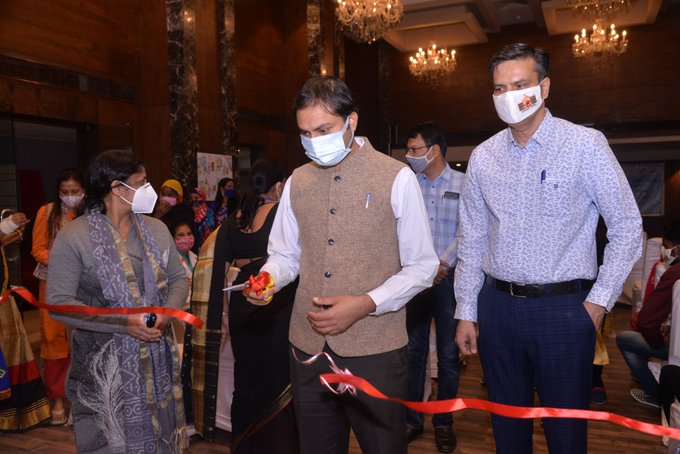
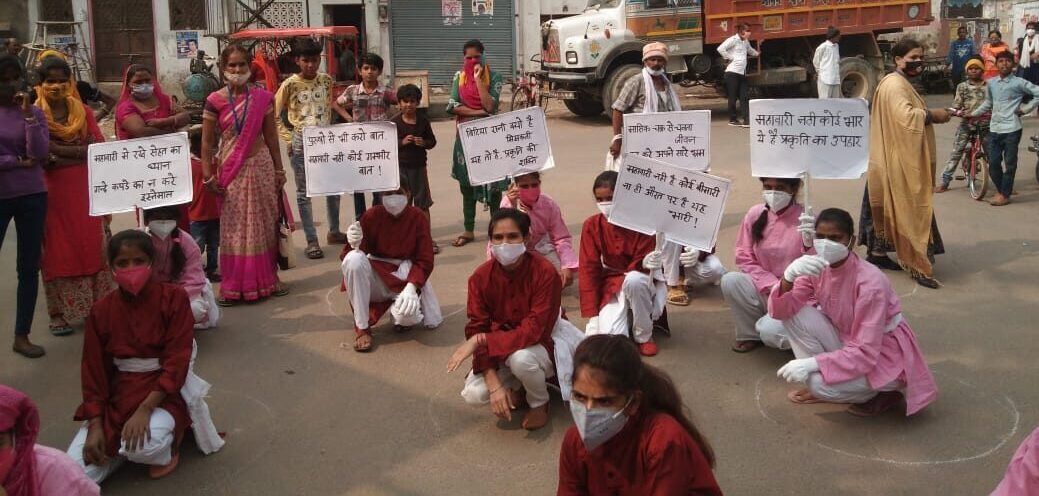
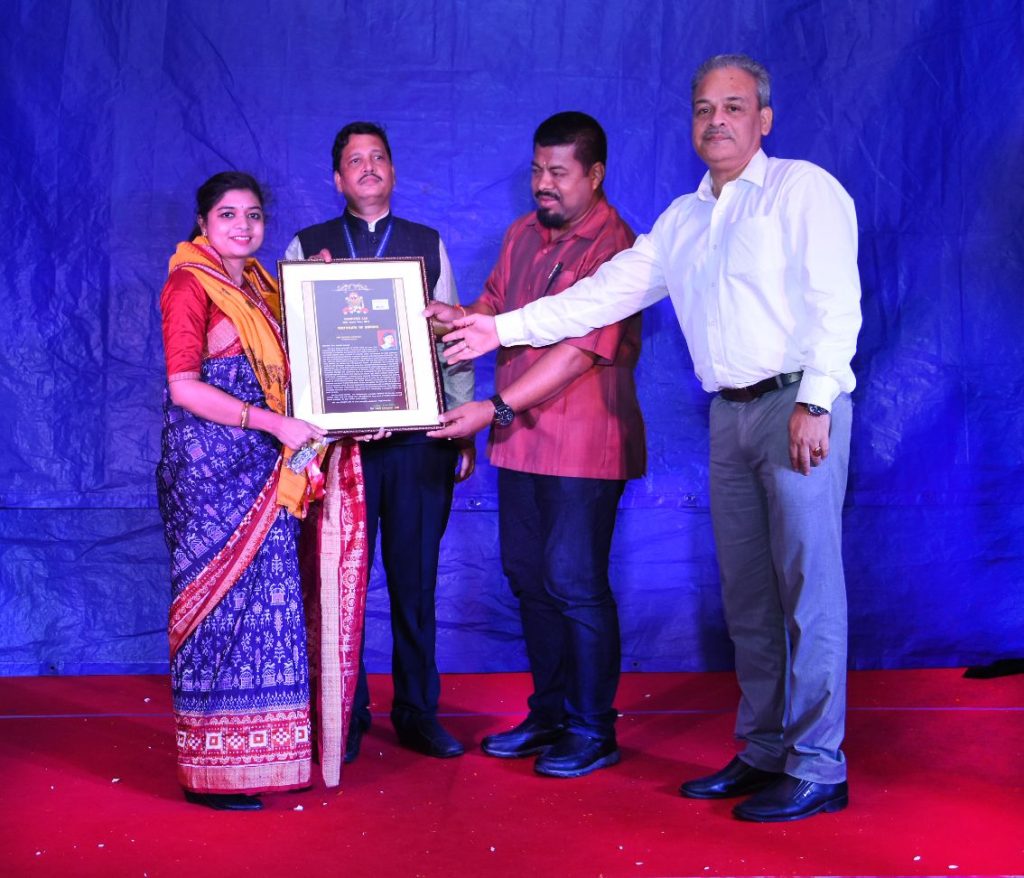
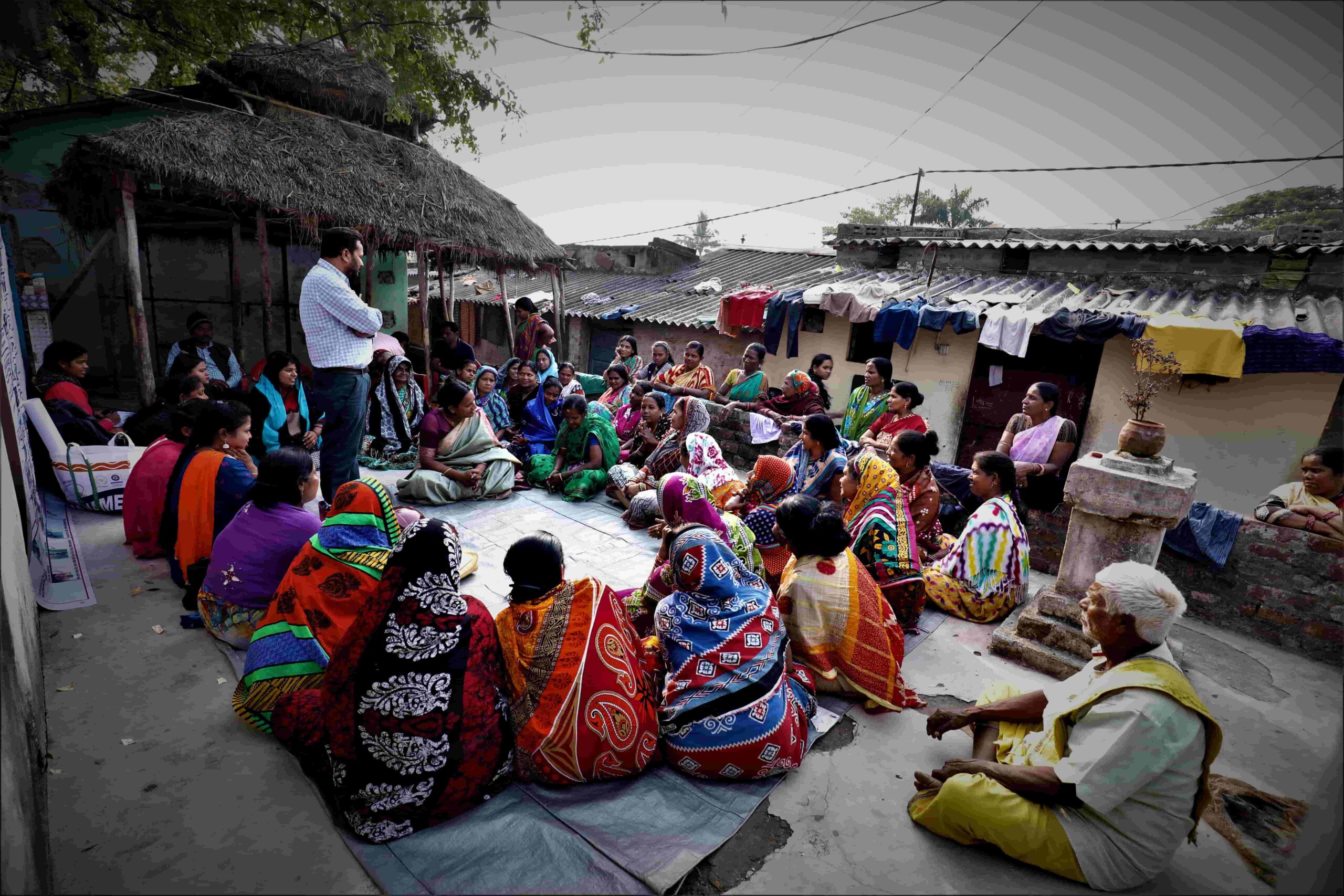
The District Magistrate (South, Delhi) felicitated CFAR for establishing six Self Help Groups for domestic workers and registering them under the National Urban Livelihood Mission. Proud moment as our Helpdesk & Single Window Forum members received certificate of appreciation from the Women and Child Development Department at the Khishori Mela. CFAR was recognized as the best NGO partner for empowering urban poor communities with health & nutrition services. On the occasion of the 14th National Voters' Day, the District Collector of Ajmer, in collaboration with the District Election Office Ajmer, felicitated CFAR. CFAR received recognition in the "Best NGO" category for its commendable efforts in motivating and facilitating diverse community groups to register themselves as voters of the nation.

VOICE FOR THE VOICELESS

Communities support governments by setting up low-cost handwash stations to help people stay safe in the time of pandemic in Bhubaneswar and Jaipur

Bhubaneswar/Jaipur: This unique handwashing station is helping people stay safe and healthy during the pandemic. It costs little, made entirely of locally available material, and serves the needs of community members of slums in Bhubaneswar and Jaipur. The design for affordable and self-assembled handwash stations was developed in Barabhuja basti in Bhubaneswar’s ward 63, and has, since, served as a model for other community-led innovations.

The need for a foot-operated handwashing station was felt due to the knowledge that the COVID-19 virus can get transmitted when one touches contaminated surfaces. Since community taps are touched frequently, this was seen to increase the risk of transmission. In April 15, the CFAR team visited Barabhuja and shared the guidelines designed for densely populated areas, issued by the Government of India, with the Community Management Committee (CMC) and Single Window Forum (SWF) members. The advice included designing and building low-cost foot-operated handwash Stations. A Barabhuja resident, Rankanidhi Nayak (52), who is a carpenter and mason by profession, agreed to build the foot-operated handwash station.

Rankanidhi tried to make the model in the manner prescribed in the guidelines, but soon realized that without a proper wall or pillar it was difficult to set it up inside the house. “I attended the meeting with CMC and SWF members and CFAR, where the design and the ways of making it were discussed. I was also shown a video on how to do it. I tried to do it in that way with some small changes,” he said.

Rankanidhi said the handwash station could be made “at a very nominal cost”. “People can easily assemble it themselves and identify a place for it such as under the stairs or outside the house, etc. Ensure that this is near a drain so that the used water can flow into it,” he said.

Mamata Subudhi, a CMC and Mahila Arogya Samithi (MAS) member, said, “Such a handwash station should cost about Rs. 450 to Rs 500 so that we can afford it. If it is for one person, it should not exceed Rs. 100 to 150. We need to experiment with many sizes and bring the cost down to the maximum extent.”

Jaipur model

Meanwhile, in the water-scarce city of Jaipur, handwashing stations using pipes and taps have been designed and installed by communities. The first was installed by a group of five community representatives in ward 10 of Kishanbagh Harijan Basti, a 35-year-old settlement in the Vidyadhar Nagar Zone of Jaipur. It came about in response to the pressing needs of the community.

Poonam, a sanitary worker from the basti said, “We are in the field for over 12 hours, collecting and segregating waste, cleaning manholes and choked drain and sewer lines. There are no facilities for washing hands for us. We can only wash and bathe when we return home. This increases the risk of infections not only for us but also for our children and other family members.”

The residents of the area are mostly frontline contractual sanitary and health workers involved in road-sweeping, rag-picking, desilting drains and manholes and desludging clogged sewer lines. It is ironical that although they provide sanitation services to others, a large proportion of their own households do not have sanitary toilets or piped water connections.

Why a handwashing station?

In a communication training on COVID prevention in August, the Community Management Committee, an empowered community forum instituted by CFAR in urban slums as part of its community engagement strategy, where female sanitary workers spoke of the high risk they were exposed to. They said that they did not have protective gear provided either by the urban local bodies or by the contractors.

A CFAR team member shared a video on the Bamboo Tippy Tap station set up by a community in Africa which made handwashing easy and fun for everyone. It was made using a hollow bamboo. However, since bamboo was not available locally, the CMC members suggested that they could use a PVC or a cement pipe and affix a tap to it, install it at the entrance of the settlement.

First handwashing station

Immediately after this, Subhash, Lakhan, Vishal, Radhe Shyam – members of the Male Forum –and Poonam, a Single Window Forum member, decided to set up the handwashing station in their settlement. It was decided that the station would be installed near the temple in an open ground which was at the entrance of the basti to make it easily accessible to residents. “We felt this spot will be ideal and many people will use the facility,” said Poonam.

The five-member team found a spare seven feet long cement pipe lying unused in the settlement. Two members dug a pit in the ground to place the pipe, and a small hole was made in the cement pipe and a tap was attached to it. The pipe was fixed firmly in the pit, using a paste of sand and cement. Once this was done, water was filled from the top with the help of a bucket. A soap bar was placed on a soap dish fixed on the pipe with the help of a rope. The Male Forum members volunteered to look after the station and also ensure that it was filled with water at all times. The members of the Community Management Committee took charge of providing soap and persuading people to use the facility.

Many more stations

Since then, handwashing stations have been set up in five more localities, including Transport Nagar, where is in front of the community toilet directly and benefits 55 households. In Swami Basti which has many persons with disability and children, the station has been installed in the school premises directly benefitting 45 households and four persons with disability. In Sundar Nagar, the station has been placed at the entrance of the basti benefitting 60 households. This station was made by Rafeek, a carpenter and a master trainer, who was supported by Aslam, a Male Forum member. Handwashing stations have been installed in Barabhuja, Bapu Basti and Rajeev Nagar too, where they are serving a large number of people, helping them stay safer and healthier during the pandemic. In all the locations, they are being managed and maintained by community members.

The handwashing stations have become a hit with the people, and are used by children, women, disabled persons, the elderly and others. “This is innovative, affordable and easily accessible for children and persons with disability,” said one of the users.
Jaipur Municipal Corporation, NULM and Self-Help Groups resolve to contain the pandemic

Launch NO Masks NO Entry Campaign in Jawahar Nagar

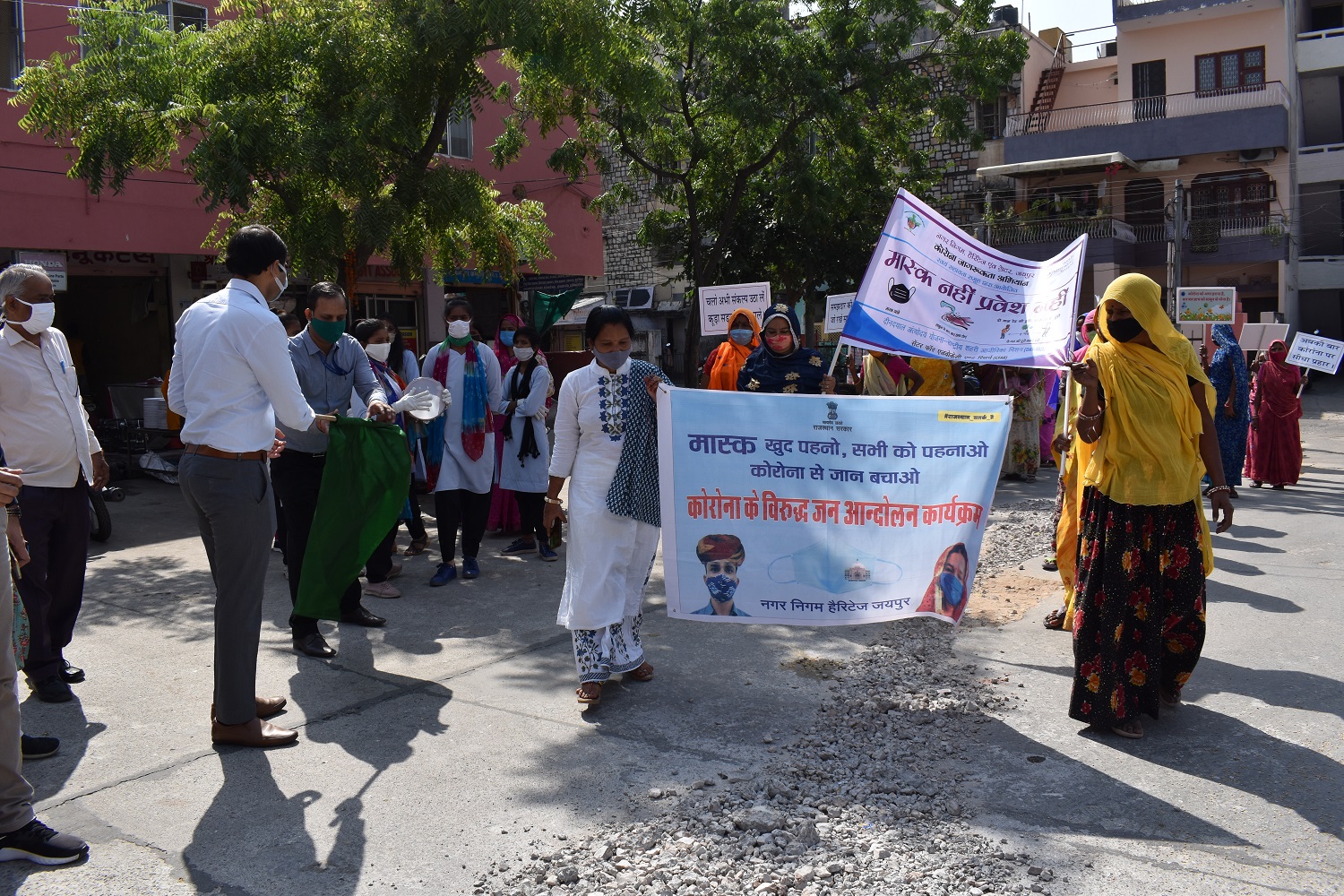
Jaipur, October 28: The Centre for Advocacy and Research in partnership with Jaipur Municipal Corporation and NULM launched No Masks, No Entry awareness cum free mask distribution campaign in Jaipur. The objective of the campaign is to encourage citizens to adopt safe personal hygiene practices including wearing masks, washing hands using the correct technique and proper toilet usage. The campaign is a part of CFAR’s ongoing work on strengthening access to water sanitation and hygiene in 6p urban slums of Jaipur supported by Water for Women Fund, Department of Foreign Affairs and Trade, Government of Australia.

This campaign began with a nukkad natak in the JMC Adarsh Nagar Zonal office by youth forums from Sitaram Nagar and Patel Nagar kutchi basti. The young people highlighted the importance of mearing masks, and urged the audience to take care of persons with co-morbidities and come together to break the chain of the pandemic.

This was followed by a rally led by women from Shiv and Parvati Self Help Groups which began from Adarsh Nagar, covered several settlements including Jawahar Nagar Tila 4, 5 and 6, which were among the most densely populated slum clusters in the area. Other activities included distribution of free masks to sanitary workers, shopkeepers, and pedestrians, IEC on handwashing and  display of posters in prominent location, walls and autorickshaws.

In his inaugural speech Mr. Lok Bandhu, Commissioner JMC Heritage stressed on the importance of positive behaviour in flattening the curve and combating the rising cases of infections during unlock down. “The government and people have to work together to make this campaign successful. The city administration cannot contain the pandemic without the support and ownership of people. When everyone adopts the practices of wearing masks, using toilets properly and maintaining social distancing, cases will not only reduce but we will also be able to drive away the disease from the country,” he appealed.

Mr. R K Meena Deputy Commissioner, Adarsh Nagar Zone shared, “We understand that wearing masks and washing hands is one of the easiest steps towards prevention. But this has to become a part of our daily life. The Corporation is seeking support from civil society organisations to distribute free masks with the support of our SHG groups to those who cannot afford them. We aim to reach out to every lane and person in the area and encourage them to support the campaign by adopting safe practices”.

Resonating the resolve, Anita Mittal, Deputy Commissioner, NULM shared that the campaign seeks to involve active participation from citizens. “It is encouraging to see the support received from women’s SHG groups. They have already distributed over 500 masks and are leading from the front chanting slogans, “Mask nahi, pravesh nahi, Haathon ko dhona zaruri hai, Corona se banani jo doori hai.”

Roshni, President of Parvati Self Help group shared that residents living in slums and densely populated areas are more prone to infections. “The diseases affect elderly, persons with disability and those with chronic ailments and through this campaign we are reaching out to every needy person in these kutcha bastis and urging them to wear masks”. Sugna, President of Shiv Self Help group added “We are also educating people on nine steps of hand washing and proper of toilets and urinals.”

Delhi State Legal Services Authority observed 9th November, National Legal Services Day, by awarding Shashi Kaur as the best Paralegal Volunteer (East) for the Year

New Delhi, November 9: On the occasion of National Legal Services Day, paralegal volunteers working across 11 districts of Delhi under the aegis of the District Legal Services Authority were felicitated as COVID Warriors by Delhi State Legal Services Authority (DSLSA). There were two nominations from each of the 11 districts in Delhi and 11 were finally chosen for the award. One of them was CFAR’s Senior Field Coordinator Shashi Kaur.

Shashi, a paralegal volunteer linked to DLSA East, a grassroot worker was recognised for her exemplary work in the JJ clusters of East District. In the course of her work, Shashi was involved in enumerating vulnerable households for dry ration, social entitlement and humanitarian relief, linking children and pregnant women to nearest hospitals, facilitating testing and quarantine services to infected persons and registering survivors of domestic violence for free legal aid services. Under the guidance of Mr Pawan Kumar, Secretary DLSA East, she was also involved in the registration of 180 construction workers for renewal of Labour Cards.

In his opening remarks at the event, Shri Kanwal Jeet Singh Arora, Member Secretary DSLSA, shared that it was not possible for a 14-member team of judicial officers to reach every individual in need of support across 11 districts of Delhi. “We were able to reach the communities during the pandemic because each one of you made the mission your own and extended unconditional support to DLSA and DSLSA,” he said.

This sentiment was echoed by Mr Gautam Manan, Special Secretary, DSLSA, who highlighted that November 9 was especially chosen by the DSLSA to thank each one of the COVID warriors as it marked the anniversary of the Legal Services Authorities Act, which was promulgated to provide free and competent legal services to citizens facing economic and other social vulnerabilities. “We thank each one of you who acted as our eyes, ears and hands to reach out to most poor communities through dry rations, medicines, counselling and legal aid services in Delhi,” he stated.

Shashi expressed her gratitude to the Legal Services Authority and said she was happy that as a CFAR staff member she got an opportunity to work for people on the margins. CFAR makes an effort to reach the most marginal and hidden key population groups who live on the margins.

Shashi said that during the pandemic, these were the most severely affected as they lost their livelihoods and had no money to buy food or pay rent. “We sought support from relief agencies and raised funds through donations to support these communities with milk, cooked food, dry ration and sanitary pads and also linked them to ration through public distribution system (PDS) the e-coupon scheme of the Delhi government and nutrition supplements through Delhi Commission for Protection of Child Rights across 72 settlements in six districts of Delhi,” she said.

The ceremony was hosted at Patiala House Courts and attended by about 50 invitees including DLSA Secretaries, Judicial Officers, leaders from civil society organisations and other senior officials from the Legal Services Authority.

Sustainable Sanitation and Climate Change- World Toilet Day 2020

“Inclusion in Sanitation is a collective effort. Jaipur Municipal Corporation (JMC) is looking for community platforms like the Single Window Forum and Community Management Committee to work with us to reach all the vulnerable communities, says Shri Harshit Verma, Deputy Commissioner, Health, Jaipur Municipal Corporation on World Toilet Day

Big achievements

  • Commissioner, Jaipur Heritage to organise a city level campaign in Jaipur to provide toilets to marginal groupsAdditional Commissioner, Jaipur Greater commits to make all public and community toilets gender friendly by installing transgender signage by end November in a planned manner
  • Deputy Commissioner, JMC, to achieve 100% desludging of single and twin pit toilets in Jaipur in partnership with Single Window Forum
  • Deputy Commissioner, Health resolves to achieve sustainable sanitation in partnership with Single Window Forum and Community Management Committees in Jaipur
  • Deputy Commissioner, Kutcchi Basti (Unauthorized Slum) and National Urban Livelihood Mission (NULM) pledges to achieve the goal of a toilet for every household by 2021 with community support

Jaipur: November 19, 2020: The World Toilet Day celebrates for those having access to safely managed toilets and raises awareness of the 4.2 billion people living without access to it. The World Toilet Day 2020, on the theme Sustainable Sanitation and Climate Change was observed with great fervor by communities, civil society and government officials in Jaipur. The event was organised by Centre for Advocacy and Research, as part of its ongoing work on strengthening access to water sanitation and hygiene across 69 urban slums of Jaipur supported by Water for Women Fund, Department of Foreign Affairs and Trade, Government of Australia.

Akhila Sivadas, Executive Director, CFAR in her opening remarks said, “In the context of an unprecedented health disaster such as COVID-19, we need to recognize the need for sustainable sanitation system that cannot only withstand extreme weather events, but also help mitigate climate change. Without strengthening the sanitation system and making it responsive to the many millions who are deprived of basic and safely managed sanitation the cities will be neither inclusive nor sustainable.”

In his inaugural address, Shri Harshit Verma, Deputy Commissioner, Health, Jaipur Municipal Corporation, said, “Inclusion in Sanitation is a collective effort. JMC is looking for community platforms like the Single Window Forum and Community Management Committee to work with us to reach all the vulnerable communities. We will ensue that we sustain basic right to sanitation to everyone and that too with community engagement. As the first step, on World Toilet Day, we commit to install the transgender signage in all public and community toilets in Jaipur in a planned manner to be completed by the end of this month.”

Shri Lokbandu, IAS Commissioner, Jaipur Heritage, stated, “keeping the pandemic in sight we need to give utmost importance to hygiene and toilets. There are many unresolved issues which JMC needs to address in a campaign mode. We will organise a city level campaign in Jaipur aimed to provide toilets to all marginal groups to shrink the curve through sustainable sanitation methods”.

Shri Atul Sharma, Deputy Commissioner, Motor Garage, Jaipur Municipal Corporation, spoke of the Municipal Corporation’s efforts for sustaining ODF. JMC is working with communities to plan sustainability of ODF and moving consistently towards ODF + and ODF ++. “We aim to achieve 100% desludging at affordable costs which the community can pay in all kutchi bastis where there are single and twin pit toilets. In partnership with the Single Window Forum, we will reach every household in the city and this process will be anchored by Jaipur Municipal Corporation,” he said.

Expressing concern about Transgender persons, Shri Arun Garg, RAS Additional Commissioner, Jaipur Greater said, “The transgender signage has to be driven ahead now. We resolve to speed up this process by next week and ensure that it takes actionable shape.”

Urging the officials to translate their policies Pushpa Mai, Founder, Nai Bhor, urged the officials to translate their policies into concrete action. “The access to public and community toilets for transgender both in slums and in public places is a much-needed service. We are ready to support and lead these efforts with the government at all levels”.

Ms. Anita Mittal, Deputy Commissioner, Kutchi Basti and NULM, Jaipur speaking about toilets in slums said, “Sanitation in slums is the responsibility of JMC and community plays a major role in making it sustainable. To achieve this goal, we seek the support of the community in conducting a survey to highlight where access to toilets needs to be enhanced and how and we as JMC will ensure that toilets are installed or constructed in those locations. Together we resolve to make this happen by World Toilet day 2021.”

Shiv, a disabled master trainer highlighted the plight of disabled persons. “If the basic design of the toilet is not made in consultation with us how will the government ensure that we use it?” he questioned.

Several other activities were part of the day. These included – release of statement of intent for making sanitation for all a practice by stakeholders and community, felicitation of community leadership across wards for facilitating equitable sanitation services for marginal households, Aao Bhagidari Badhayein, a kathputli performance by men and boys and a signature campaign in two kutchi bastis, Jawahar Nagar and Kishan Bagh.

The three events were attended by over 170 government officials, service providers, sanitary workers, CSOs and community representatives.

Let us Make Menstrual Hygiene Management (MHM) Everyone’s Business

Community and frontline workers campaign for girls and women’s right to menstruate with dignity

As part of the Government of Rajasthan’s led Maasik Dharm Swachhta Evam Prabandhan Yojana or Menstrual Hygiene Management Programme and on the occasion of the launch of 16 Days of Activism against Violence against Women and Girls, November 25, 2020 in Jaipur,  the Community Management Committee (CMC) members, frontline workers such as ASHAs, ANMs, Anganwadi workers and representatives of health and sanitation programmes such as Mahila Arogya Samiti of Nagtalai, Transport Nagar, Amagadh, Shakti Colony, Lakshminarayan Puri, Parvat Colony of Ward 67, are launching a campaign to make all stakeholders – women, girls, men, community leaders, shopkeepers, youth, local service-providers, teachers, sanitary workers to name a few – realize that Menstrual Hygiene Management is Everyone’s Business.

Periods do not stop during the pandemic

The pandemic and the nationwide lockdown that followed in March 2020 revealed the extreme distress that urban poor women and girls were subjected to. All services – schools, ICDS, PHCs, counselling centres –were closed down. Along with the halting of free distribution of sanitary pads, the prices of these articles in the open market shot up, making these unaffordable for most, especially for women and girls from poor families living in informal settlements. Not only their access to sanitary pads became very difficult, they also found it hard to use public taps and public toilets while they were also severely compromised on hygiene practices, including safe disposal of used menstrual absorbents. It was devastating, emotionally and psychologically, many of them told us. Worse, there was an absence of policy response to this common and pressing problem. In the initial phase of the lockdown, sanitary napkin was not listed as an essential item. It was only after the government realized the omission that this was set right.

In the light of this very traumatic experience of abject neglect and complete disruption of the minimum support and services, the campaign title, “Make MHM Everyone’s Business”, suggests raising awareness and securing everyone’s commitment to do their bit as policy-makers, decision-makers, family members of women and girls, citizens, neighbours, partners, colleagues and friends to make MHM truly safe for all women and girls. This campaign stresses the need to recognize that we can no longer just be bystanders and observers and exhorts us to act together to make MHM safe for women and girls.

Campaign Thrust

  • Together, overcome the shame, guilt, silence, stigma and neglect that surrounds the issue of MHM
  • Affirm commitments on ensuring ‘Safe MHM for All’ in Ward 63
  • Together find ways to improve access to information, absorbents, WASH services and safe disposal and ‘Leaving NO One Behind’
  • Integrate MHM in Urban Health and Nutrition Day (UHND), Mothers meetings, MAS and ASHA training and across key programmes for women’s empowerment and girls’ development
  • Involve boys/men as allies and supporters of the right of girls and women to safe MHM
  • Recognize MHM as an issue linked to sexual and reproductive health, education, adolescent development and women’s empowerment

The campaign will be taken forward at many levels in collaboration with the key stakeholders – from the government to the academia, experts, civil society organizations and the private sector. Different formats such as facilitating dialogue, holding gender sensitization workshops, conducting awareness campaigns by organising street plays, community discussions, talks by experts, undertaking focused micro-planning by all concerned to decide on how best to engage with the issue in every way will be used to reach a wider set of people.

A voice for the marginalised creates accessible handwashing for the community – including all

In Swami Basti, Jaipur, India, Ramesh is proud to show off the newly installed, accessible handwashing station that he, his family and entire community can benefit from every day to maintain their hand hygiene – important for their health always, but particularly with the threat of COVID-19 never far from their minds.

Swami Basti is a poor community in Jaipur, home to many vulnerable people and households who have suffered disproportionately due to the COVID-19 pandemic. 22 per cent of the world’s poorest people have a disability. Disability and poverty are often linked as people living in poverty have a higher chance of acquiring a disability due to lack of medical care, poor nutrition, violence, unsafe housing, and getting injured at work.

Ramesh, who lives with a disability will not only benefit from this accessible foot operated handwashing station, he also played an important role in its creation!

Through the Water for Women Fund project, supported by the Australian Government, Centre for Advocacy and Research (CFAR) in collaboration with the Municipal Corporation or Urban Local Body, play a role in addressing the diverse WASH needs of the community (there are community forums  called community management committee in each slum federated into a Single Window Forum at the Ward level and each of these committees and forum are managed and run by representatives of marginalised groups such as single women, persons with disability or from the transgender or sexual and gender minority groups). Ramesh is an active master trainer who educates community members on techniques of handwashing, which he learnt at a communication workshop conducted in August.

Ramesh and other members from the Single Window Forum set up the facility after the training, which now benefits 45 households including the disabled.

Ramesh and his wife Saroj are disabled. With two children to take care of and access to water being a challenge, this handwashing station has been an important addition for the family and the community as a whole.

It is more than an enterprise for Delhi’s “padwomen”

The self-help group run by women is making Sakhi sanitary napkins with use of eco-friendly material

New Delhi: They are already being hailed by India’s national media as Delhi’s padwomen. The women of Mazdoor Kalyan Camp, a modest locality in New Delhi, are a determined lot. They sit in their ‘unit’ on one of the coldest days the city has experienced in over a century, cutting, pasting and folding– the essential steps needed for making sanitary napkins. One of them, Jyoti, even has her infant as she follows the steps required in making a napkin. She has the company of seven other women who sit with her, each engrossed in their task. “This is the most important thing we have done in many years to make ourselves and our families financially secure,” says Jyoti.

The journey of these women towards self-empowerment began two years ago when the Centre for Advocacy and Research (CFAR) began an initiative in their area, an unauthorized settlement crammed with tiny houses, with a high density of population and several shared services like toilets and water. The services were far from satisfactory – the community toilets were dirty; taps were few while the area was littered with waste and the drains were choked. “It was nothing like what you see now,” says Vidya, another member of the SHG.

The Community Management Centre (CMC) set up by CFAR comprised women from the locality who learned to identify their problems, mobilise community opinion, and approach the civic department responsible for managing it. In due course, the women CMC members became knowledgeable on the subject of managing water and sanitation issues in communities, including solid and faecal waste management and drains. “We – realised that menstrual waste was a major concern in the settlement as most napkins were non-biodegradable. The use of napkins available in the market made of silicon and plastic sheets was a major cause for reproductive tract infection (RTI) and inflammation,” said Pista.

The CMC-empowered women had been looking for livelihood opportunities and were introduced to an initiative in which they would manufacture sanitary napkins, using easy-to-use machines. The CMC thus transformed into a self-help group and the Baba Sahib Sakhi Sanitary Napkin Unit was born. Seven women-Vidya, Kamlesh, Jyoti, Sunita, Pista, Seema and Mukesh decided to form it. They visited an operational unit located at Khurrampur in Haryana to understand the process.

Prior to the start of the unit the group had to deal with two major challenges. The first was finding the space for the unit while the second was the absorbent capacity of the pad.

“We devised an improved version which lasts longer and is more absorbent and this is what we are producing in this unit. Vidya and her family supported us by giving us the space in their house without any rent,” said Kamlesh.

CFAR had a partnership with Vatsalya Foundation from Vadodara, Gujarat, which has developed the model of small low-cost units which can produce sanitary napkins using bio-degradable material. The napkin has been approved and certified by Micro Small and Medium Enterprise (MSME) and the Department of North Eastern Region – DONER, Government of India. The machines used in the unit are manual except one which is used for sanitising the product though a UV filter. The group underwent a three day-training in which they learnt how to produce and market napkins. “The napkin produced in this unit would be 100% organic and made of banana fibre and can be burnt, leaving behind a non-toxic ash which can be mixed with soil,” said Juhi Jain, Senior Programme Manager with CFAR.

Carrying the brand name of Sakhi, the sanitary napkins are being marketed by the group proudly in adjoining neighbourhoods and bustling markets. National media has recently written about their initiative, which has brought them appreciation from people who had not heard about them. Even as boxes fill up with sanitary pads, the women from the Baba Sahib Sakhi Sanitary Napkin Unit are now focusing on another important aspect – marketing. “We are better than the competition (big brands promoted by multinational companies) because we are safe and hygienic and are also using eco-friendly material,” says Vidya.

The success of this initiative will pave the way for many more similar enterprises. “We hope this will soon become a success story so that we can support more women in becoming agents of change,” says CFAR’s Executive Director Akhila Sivadas.

The Milk Story-Delhi

In partnership with Delhi Commission for Protection of Child Rights (DCPCR), CFAR is facilitating children in the age group 0-6 years to get half litre toned milk every alternate day.

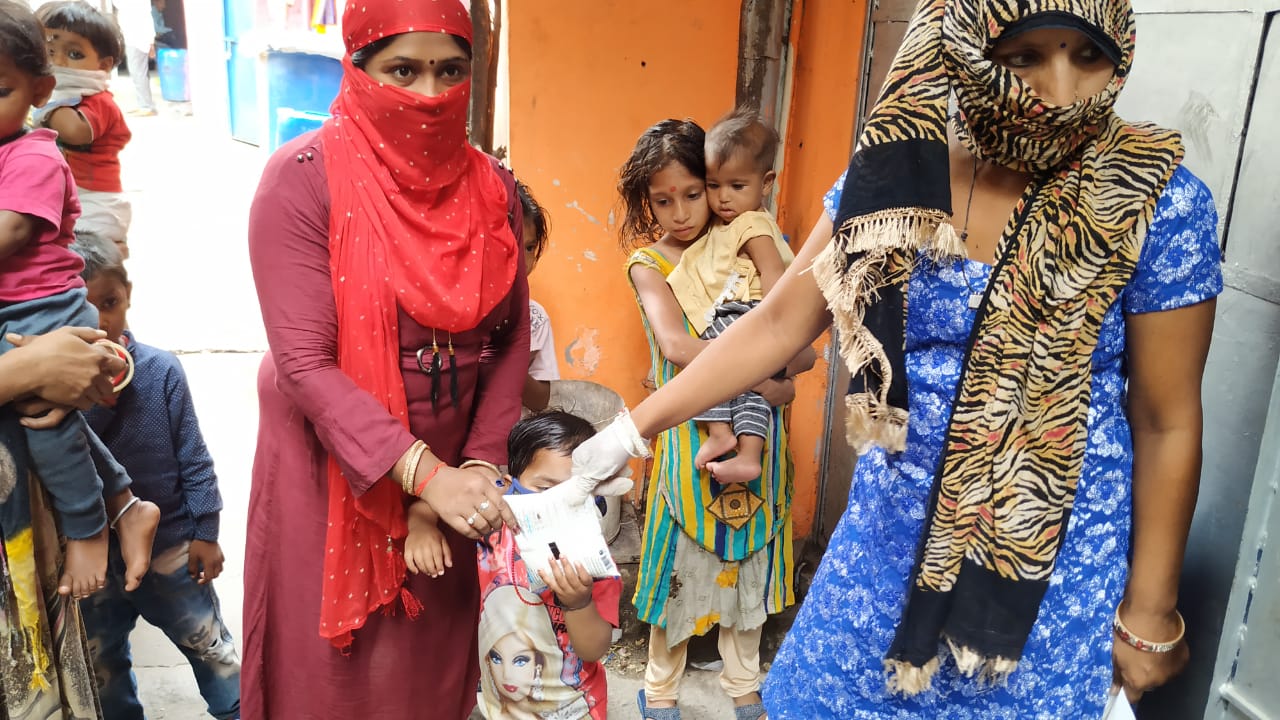
When CFAR began relief operations in the most vulnerable settlements of Delhi immediately after the lockdown, we started getting requests for milk and biscuits for children in the age group 0-6 years. With parents having lost their livelihood due to the pandemic were left with little cash in hand. This was impacting the purchasing power of households directly, forcing them to compromise on items such as milk and biscuits. As one mother, Jyoti told us: “My husband is a daily wage worker and I do domestic work. We have both lost our jobs and have limited cash to take care our daily needs. The government and other relief agencies are providing dry ration kits but no milk powder or any other nutritional supplement for our children. We, therefore, have to feed our children with rice and dal water.”

Given the urgency, CFAR appealed to the Advisory Task Force of the Delhi government for providing some measure of support to families with children in the age group 0-6 years.

In keeping with this, DPCPR began a campaign partnering with CSOs to provide half litre milk every alternate day for children across Delhi settlements. The money for the milk was raised by partners with support of DCPCR.

CFAR supported DCPCR by enlisting children, identifying vendors, facilitating meetings between DCPCR Rapid Action team and point persons (who introduced the families) and ensuring distribution of packets to enlisted HHs.

On April 19, 2020, as many as 231 children were given milk packets. These were from six settlements- JJ Camp Anand Vihar, Khichdipur, Mazdoor Kalyan Camp I, B 45 Sanjay Camp, Gautampuri, and Indra Kalyan Vihar.

The distribution was facilitated by Community Management Committee (CMC) members, many of whom are ASHA, ICDS workers, SHG members and Swachha Grahi working in partnership with the Delhi government for over two years, with CFAR.

In JJ Camp Anand Vihar, Heera and Surekha reached out to 22 children. Heera, is a Swachhagrahi, ASHA worker and a PLV under DLSA, East.

Heera told us, “I have no children of my own, but all these are my children and I am happy that the government is thinking of our children”. Surekha, also an ASHA worker added:” This is double benefit for me, I can help households with children and also give information on handwashing and social distancing as part of my work.”

In Khichdipur, Priya and Madhu, both members of CMC and SHG delivered milk packets to 27 families. Priya said: “I felt very happy and relieved. Children need nutrition and to keep them healthy milk is necessary.” Madhu, also said: “The lockdown has affected households where income is low and children are the most affected as families have to curtail expenditure and milk is one of the first items they have stopped buying.”

Priyanka, who is a member of the adolescent forum and SHG in Indra Kalyan Vihar wants to make her settlement an ideal one and started training women in making handicrafts and selling them. “This is a welcome initiative; Parents feel helpless as they do not have money as all work has stopped. Getting some relief for the children is welcome.”

Munni, CMC member, added: “Children need nutrition to remain healthy. Parents blessed us and thanked us for helping them. I feel grateful for this opportunity to help 12 households in my basti”.

In B-45 Sanjay Camp, Anita and Pushpa had a big responsibility of reaching 80 households. Anita is a Swachhagrahi and a Master trainer. She told us: “In this time of crisis, all of us have to help each other. My children are grown up and I am happy to work with mothers to run errands and deliver milk at home.” Pushpa, CMC member is an Anganwadi helper. She said: “This campaign must be taken to all settlements and across the city. Even after the lockdown this initiative should be made a part of the Anganwadi services so that children in the age group 0-6 years can get adequate nutrition”.

Members from the Baba Sahib Sakhi Sanitary Napkin unit in Mazdoor Kalyan Camp, have now opened the door of their unit for relief. Vidhya, Swachhagrahi, SHG and unit member, said: “Our unit is not functioning so we are supporting CFAR in distributing dry rations. Today, we distributed milk and everyone around told us it was a good effort.”

Jyoti, also a member of the CMC and the unit added, “One good deed begets another, we went door to door giving milk, immediately after we received a call from another NGO asking for packets of sanitary napkins to distribute in other slums. We have been rewarded.”

Last but not the least, three Mahila Panchayat Group members Sarita, Jyoti, Shabnur, linked 63 children to the milk campaign in Gautampuri. Sarita, is an active legal help desk member who said: “A few days back I was taking cases to Mahila Panchayat office, now I taking milk. It is all the same-helping those in need.” Shabnur said: “I was very surprised when I received a call from Vartika that we can supply milk to HHs in Gautampuri. I thought someone was joking with me but when all three of us received the packets we were eager to help,” Jyoti, shared similar sentiments: “Elders in the family blessed us. A mother blessed my children. It is an opportunity to serve my own community and in this time we all have to work together.”

Ms Ranjana Prasad, Member, DCPCR has offered to support CFAR in raising funds for providing milk to children across settlements.

In her message to CFAR, in response the first day delivery and photographs she shared: “Amazing…Its a moment for me…”

To take this campaign to other settlements, we are enlisting, many more children from most hidden and excluded population including children affected by HIV.

Jaipur Municipal Corporation launches ‘No Mask No Entry’ Campaign for COVID-19 awareness with the community representatives of Transport Nagar

Jaipur, November 2, 2020: “No Mask No Entry” – An awareness-cum-free mask distribution Campaign has been organized by the Centre for Advocacy and Research, an NGO in partnership with Jaipur Municipal Corporation (JMC) and National Urban Livelihood Mission (NULM).

The objective of the campaign is to encourage citizens to adopt safe personal hygiene practices including wearing masks, washing hands using the correct technique and proper toilet usage.

This campaign began with a nukkad natak in Transport Nagar Kutchi Basti by youth forums from Sitaram Nagar and Patel Nagar kutchi basti. The young people highlighted the importance of wearing masks, and urged the audience to take care of persons with co-morbidities and come together to break the chain of the pandemic.

This was followed by a rally led by women from Manisha and Shanti Self-Help Groups which began from Transport Nagar kutchi Basti and covered the area of Parvat Colony and Nagtalai Basti, which were among the most densely populated slum clusters in the area. Other activities included distribution of free masks to sanitary workers, shopkeepers, and pedestrians, IEC on handwashing and pasting of posters in prominent locations, walls and auto-rickshaws. The group raised slogans like Mask nahi, pravesh nahi, Haathon ko dhona zaruri hai, Corona se banani jo doori hai.

Mr. R K Meena Deputy Commissioner, Adarsh Nagar Zone flagged the rally and distributed the masks among the community, and urged everyone to wear masks and encourage others to do the same. “We need the support of civil societies and reach out every lane and person in the area and encourage them to support the campaign by adopting safe practices.”

Anita Mittal, Deputy Commissioner, NULM shared “The campaign seeks to involve active participation from citizens. The government and people have to work together to make this campaign successful.”

Shanti, a community member was excited to see the awareness programme organized for the people of the basti. She said, “I am very happy that such an event is happening in our settlement, I hope this will help people to understand how important wearing a mask is during this pandemic.”

Another community member Meena Devi asserted, “I got this mask from the department, and I promise that I will use it regularly”.

Om Prakash, a small shopkeeper in the basti said, “Using these hand washing steps in the pamphlet I will teach my children all the nine steps of hand washing as children learn by seeing pictures.”

CFAR has been working in 68 urban slums of Jaipur strengthening access to water, sanitation and hygiene supported by the Water for Women Fund, Department of Foreign Affairs and Trade, Government of Australia.

Mrs. Anita Mittal, Deputy Commissioner, NULM approached CFAR, to organize the campaign and incorporate creative and innovative methods to generate awareness on COVID-19 and involve the Self-Help Group in this activity, as she also knew that the campaign is a part of CFAR’s ongoing work on strengthening access to water sanitation and hygiene in 68 urban slums of Jaipur, and CFAR has always worked closely with NULM to strengthen the self-help groups registered under NULM.

Subscribe To Newsletter

Pleace enter your email and get news updete for donation company.