• Welcome to CFAR

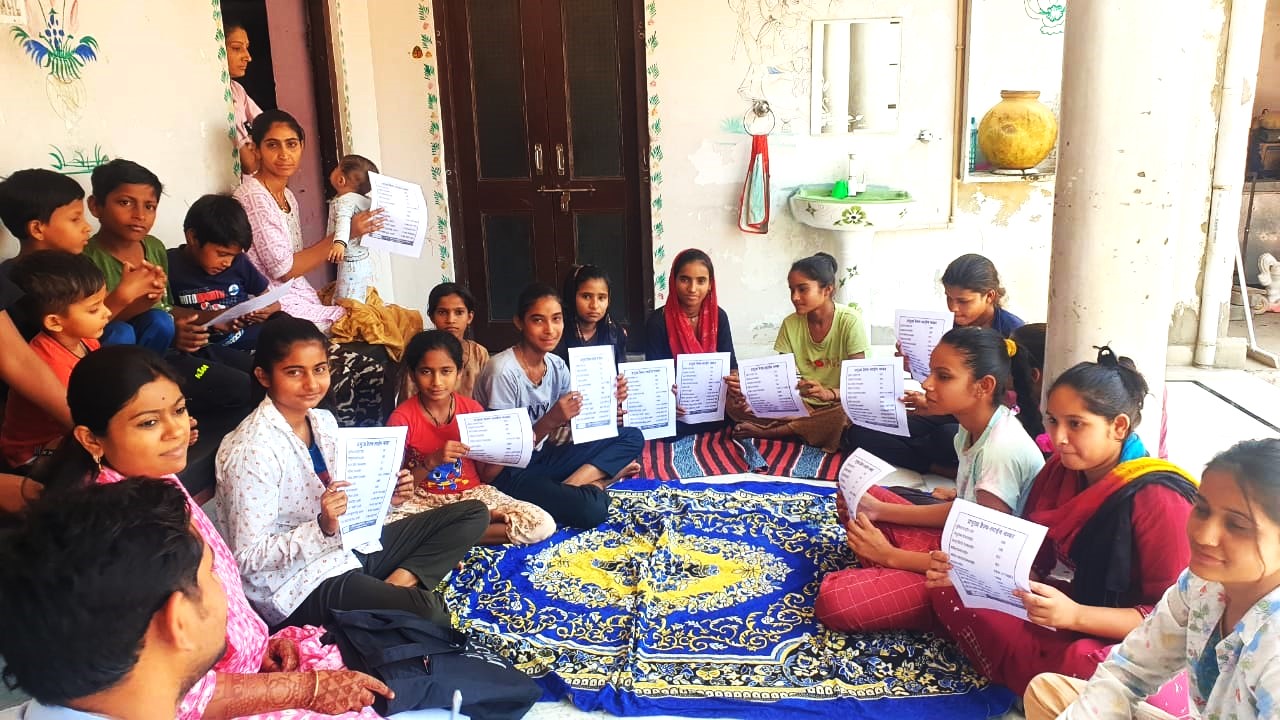
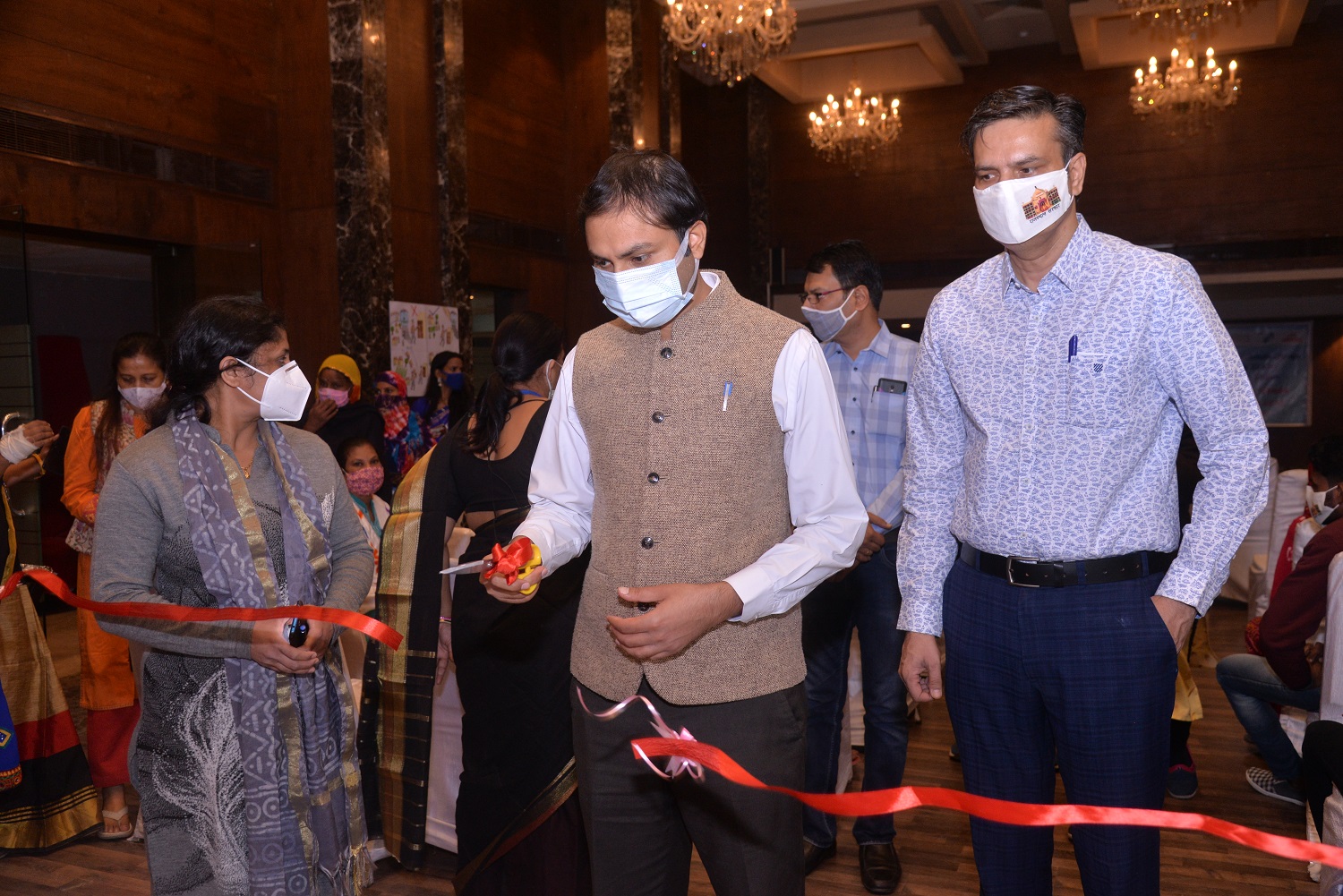
The District Magistrate (South, Delhi) felicitated CFAR for establishing six Self Help Groups for domestic workers and registering them under the National Urban Livelihood Mission. Proud moment as our Helpdesk & Single Window Forum members received certificate of appreciation from the Women and Child Development Department at the Khishori Mela. CFAR was recognized as the best NGO partner for empowering urban poor communities with health & nutrition services. On the occasion of the 14th National Voters' Day, the District Collector of Ajmer, in collaboration with the District Election Office Ajmer, felicitated CFAR. CFAR received recognition in the "Best NGO" category for its commendable efforts in motivating and facilitating diverse community groups to register themselves as voters of the nation.

VOICE FOR THE VOICELESS

CFAR’s intervention empowers Kole Basava Community, preserve tradition

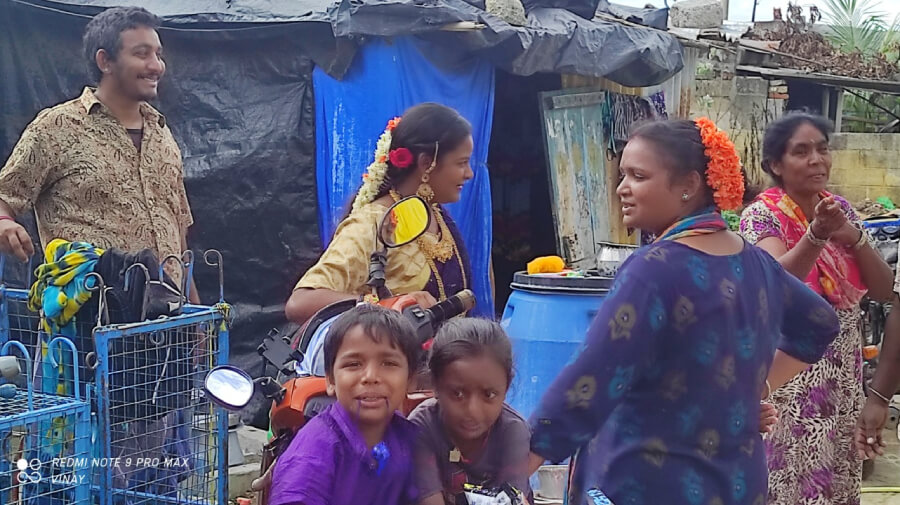
In the heart of the bustling Bangalore city, nestled amidst heavy traffic and throngs of people, the sight of members of Kole Basava community roaming with their decorated Basava(bull) is not rare. They are a familiar sight on Bengaluru streets, seeking alms as they lead their beautifully adorned bulls and cows while playing the Nadaswara, a traditional woodwind instrument. In their quest for a living, they travel in different directions each day with their bulls to entertain people with music and earn money.

However, today their traditional lifestyle is no longer sustainable, as their music often goes unnoticed. Struggling to make a living through their art, they are compelled to explore alternative opportunities while fiercely holding on to their cherished cattle. The community recall a time when they were respected and received gifts of money, clothes, and food. Devout townsfolk would seek counsel from their sacred Basava bulls, interpreting their head nods as answers. However, the tradition of folklore plays and acrobatics with the animals has deteriorated significantly.

The Kole Basava community holds a deep reverence for their cattle, considering them as family members. According to community members, they hail from Darmavara, Andhra Pradesh, and their primary occupation involves decorating cows, going door-to-door to entertain people, and sharpening knives to earn extra income.

Talking about life in the city, Basavaraju, a 55-year-old community member, said, “We earn Rs. 150–200 per day, and it is very difficult to sustain at present. However, women also go with decorated bulls and earn their livelihood. We are not getting any benefits as we do not have a local address because we often return to our native place once a year for the festival.”

Today, as the remaining Kole Basava strive to preserve their tradition, their dignity has eroded, reducing many to begging. Once well-fed, their sacred bulls now suffer from starvation as their owners struggle to afford hay and cattle feed. Despite the common belief that artistic traditions are blessings, some Kole Basava members view them as curses due to financial struggles, lack of land, and limited educational opportunities.

CFAR’s intervention

The Centre for Advocacy and Research (CFAR), as part of initiatives to empower the marginalized community, has identified approximately 65 blue-tented houses in RR Nagar, Bengaluru, home to Kole Basava families. These settlements house over 250 individuals. In convergence with the local administration, CFAR is facilitating pension and other social welfare entitlements to the community. Out of 40 children in the community, only 20 are attending school, a number that has increased due to CFAR’s intervention.

“We face many challenges because of the government requirement for a local address to access schemes. Therefore, we are focusing on health initiatives like the Thai Card, regular immunization, enrolling children in Anganwadis, and providing take-home rations. In education, we identify school dropouts and re-enroll them, and we also facilitate national schemes like the National Pension Scheme and PMMVY,” says Sri Latha, a community associate from CFAR.

CFAR is also supporting the community to preserve their traditional practice. It enabled the community to make a case before the Karnataka Janapada Academy for opportunities to present their traditional woodwind instrument at government programs, which the academy agreed. “CFAR has come forward to support the Kole Basava community in preserving their traditional practice. We will create a platform and provide opportunities for them,” said Gollahalli Shivaprasad, the president of the Academy.

CFAR’s efforts have empowered community leaders who are now actively asserting their rights. By focusing on health, education, and social entitlements, these leaders are helping the community to improve their socio-economic conditions, and paving the way for a dignified future for the Kole Basava community and their sacred cattle.

“We are now becoming aware of the services provided by the government. Going forward, we will definitely approach the departments to claim our rights, which will also help us preserve our traditions,” asserts Nagaraju, a 42-years-old leader from the Kole Basava community.

Facilitating the Women and Community of Kole Basava to Access Social Protection (Widow Pension)

There was a smile on the face of Ramakka, 55-year-old widow from the Kole Basava community, when she received her first pension payment last month. She has reason to feel relief. Thanks to the efforts of a team from the Centre for Advocacy and Research (CFAR) which facilitated the pension to Ramakka who was struggling to make ends meet. Hailing from the Kole Basava community of Andhra Pradesh, which is known for their traditional lifestyle of roaming with decorated Basava (bulls) in Bengaluru streets, Ramakka lives in the outskirts of Bengaluru city with her two children and bulls. Tragedy struck the family when she lost her husband in an accident in 2020, leaving Ramakka on her own to take care of her family. It was during a recent Janadikara survey, a CFAR team member learned about her story. The CFAR team then helped her to apply for the widow pension under the national pension scheme. However, this process required a BPL ration card from Andhra Pradesh, a document Ramakka did not possess. Sri Latha, a dedicated team member, facilitated Ramakka’s application for the BPL ration card through the Department of Consumer Affairs, Food, and Civil Supplies portal, Government of Andhra Pradesh. Unlike Karnataka, Andhra Pradesh had no restrictions against issuing the card. Within a month, Ramakka’s application was approved, and she received her ration card.

With this critical document in hand, Ramakka applied for the widow pension in September last year. The application was approved, and an order copy was issued in October. Unfortunately, due to a technical error, Ramakka did not receive her pension immediately. Neither Ramakka nor the CFAR team was willing to give up and kept pursuing the matter. Their perseverance finally paid off when in July Ramakka received her first pension payment, along with arrears amounting to Rs. 24,000 (3000 per month as per AP government).

“I was struggling to make ends meet after my husband’s death. This pension amount will help me to ease our sufferings. Without CFAR’s help, I wouldn’t have been able to secure the pension. This gives me hope that with proper support we can secure our rights,” said Ramakka. Explaining the efforts made by CFAR, Sri Latha said, “We came to know about Ramakka’s story during our Janadikara survey. Realizing the urgency, we guided her to obtain a BPL ration card from Andhra Pradesh and then applied for her widow pension. We couldn’t get them any local schemes because of the local address requirement, but seeing her now receiving the support she needed was worth every effort.”

For the Kole Basava community, their age-old customs are no longer sustainable in today’s world, leaving many families struggling to make ends meet. To compound their difficulties, government support is often out of reach due to the bureaucratic apathy, and difficulties in obtaining local address proof. Most community members possess documentation from Andhra Pradesh, while authorities in Karnataka insist on local address proof, effectively excluding them from various government schemes and services. This lack of documents and segregation from mainstream populations have led to poor access to social entitlements to the community.
To mitigate some of the hardships faced by the community, the Janadikara project in Bengaluru, which works for the urban poor, focuses on facilitating social security schemes like widow pensions and other health services. The main challenge the team encounters in aiding highly marginalized and vulnerable communities is their inability to provide documentary proof of address, age, and other details requirements that formal systems demand, often overlooking the specific context and predicaments of these communities. Realizing that on most occasions the system is not prepared to be flexible and even trusting people, the team felt that it is more opportune to find ways to comply with what is expected from them. That’s how the team worked and facilitated the pension to Ramakka. CFAR’s intervention also highlights the crucial role that advocacy and support by the organizations play in bridging the gap between marginalized communities and essential government services. By encouraging the community to take charge and creating awareness about the processes involved, CFAR has facilitated interstate applications and navigated bureaucratic challenges, providing a lifeline to individuals like Ramakka, ensuring they receive the support they are entitled to.

It also illustrates the potential for positive change when dedicated individuals and organizations work together to address systemic barriers. It is not just about receiving financial aid; it’s about restoring dignity, providing hope, and ensuring a better future for her children.

CFAR-led community action succeeds in Hakki-Pikki community gaining access to bus service

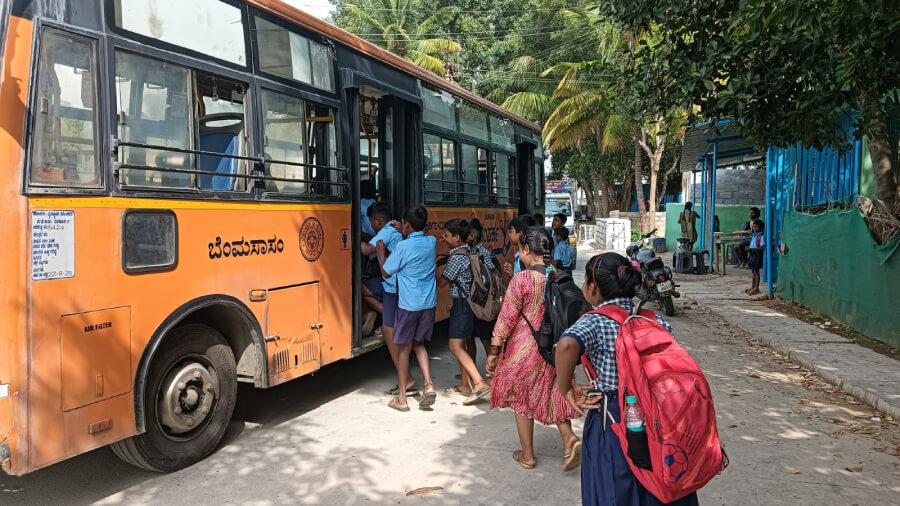
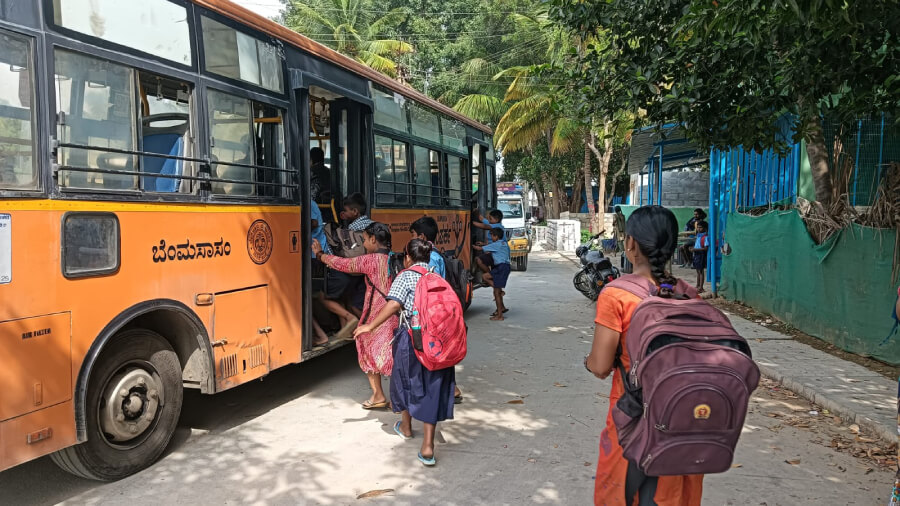
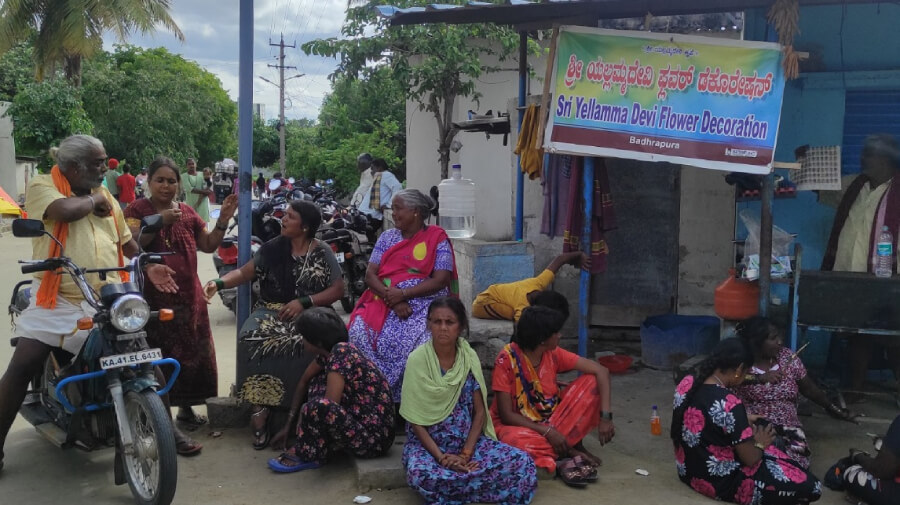
Bengaluru city, the Silicon Valley of India, has many badges to wear in —garden city, city of lakes, unicorn capital and its metro service popularly known as Namma Metro. Notwithstanding, such ebullience has not been extended to the lives of marginalised communities like the Hakki Pikkis community, living near the outskirts of the city. The Hakki Pikki community in Bhadrapura has long faced marginalization and a lack of basic facilities, including public transport services.

The Hakki Pikkis, a semi-nomadic tribe in Karnataka known for their traditional bird-catching and hunting practices, are one of the state’s major tribal communities. The lives of the community, comprising 403 households and a total population of 1,532, has been severely affected due to the absence of transportation, particularly for the children going to secondary and higher-level education. Many community members rely on small-scale businesses selling spices, flowers, Ayurvedic formulations, and herbal oils.

Without public transport, they often stay away for extended periods, making daily commutes unfeasible. Additionally, the lack of bus services has hampered access to health services, with the nearest Primary Health Centre (PHC) and schools being 6 km away. Consequently, many women undergo home deliveries.

“We all depend on public transport for our small-scale businesses, as we need to carry our goods with us. Public transport has been a long-pending demand because we were marginalized from these services. We need to travel 5 km to the state highway to access public transport, and it’s not possible to walk daily carrying our items. Therefore, we stay away for three to four days to finish all our business before returning,” says Divya, a Daksha Samuha (CBO facilitated by Centre for Advocacy and Research (CFAR) member from the Hakki Pikki community in Bhadrapura.

Despite the Karnataka government’s initiative to provide free bus access to women across the state, Hakki Pikki community women remained excluded from the services. Their repeated appeals to the local BMTC bus depot manager went unheeded until Daksha Samuha and CFAR intervened.

“We have gone to meet the manager many times to demand bus services, but they don’t even let us into the office and treat us very poorly. This has affected us in many ways and has severely impacted our children’s education,” Divya further added.

Recognizing the critical nature of the issue, Divya and Gauthami from Bhadrapura, members of Daksha Samuha, mobilized few community members and engaged with higher BMTC officials, including the Chief Traffic Manager, with support from the CFAR team. They presented a detailed letter with community signatures, which led to an immediate resumption of bus services during school hours. However, this was short-lived, as the election code of conduct caused a temporary halt in services, resulting in some students missing their exams.

In May, CFAR’s Kengeri cluster team facilitated another meeting with community representatives and the Kengeri BMTC depot manager. Highlighting the severe impact on business, youth and women, the community’s plea was heard, resulting in the reintroduction of one bus with two trips daily, aligned with the community’s schedule. BMTC officials have assured that services will be expanded based on response.

Reacting to the community demand, Chendrakala, Kengeri BMTC bus depot manager, said, “We operated a few buses a few months back, but the response was very poor, so the service was cancelled. Now, after listening to the community, we learned that most people go out of town for business and stay away for three days because they cannot return to Bhadrapura due to the lack of bus services. We are now aware of this and will operate the service regularly and increase the frequency in the future.”

Thanks to our collective resolve and never-say-die spirit and efforts and CFAR team’s support, the Hakki Pikki community now enjoys improved access to education and healthcare, marking a significant step towards their empowerment. This enhanced access is not only a victory for the Hakki Pikki community but also a testament to the power of advocacy and community action in driving meaningful change.

Celebrations to mark the World Toilet Day begin in Bhubaneswar

Launch of Campaign by Dy Mayor: 14 Nov

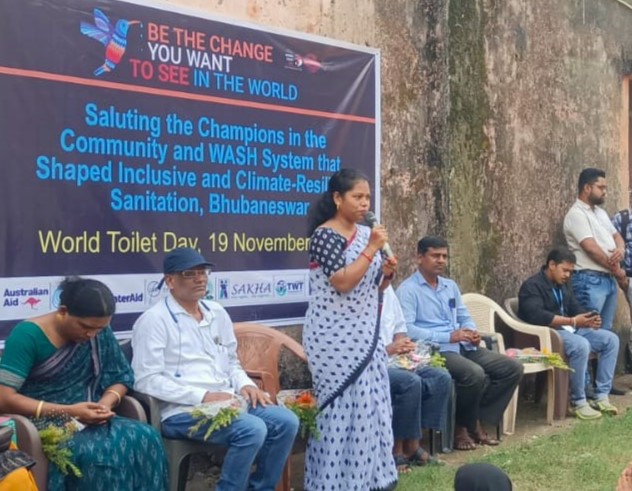
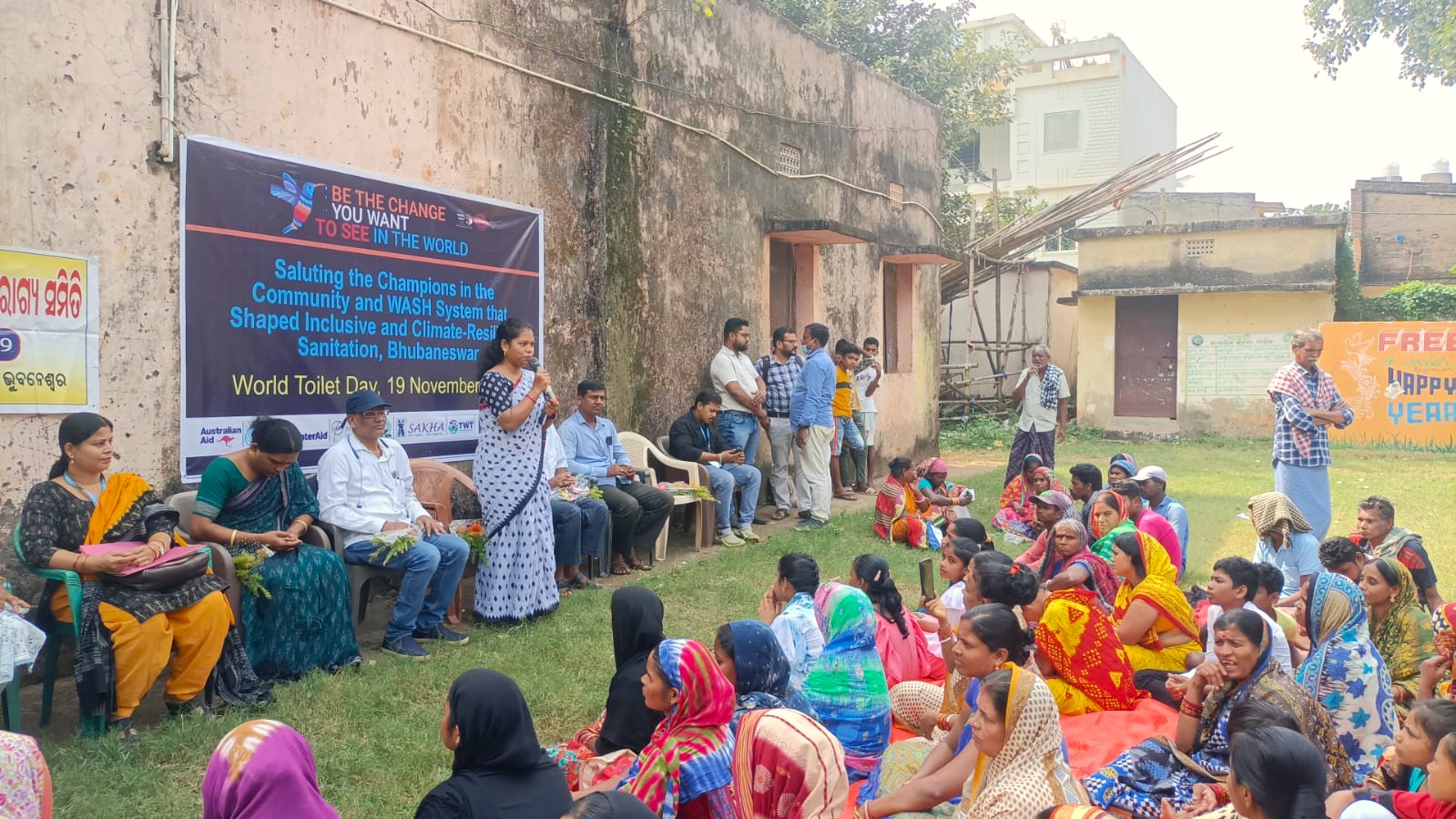
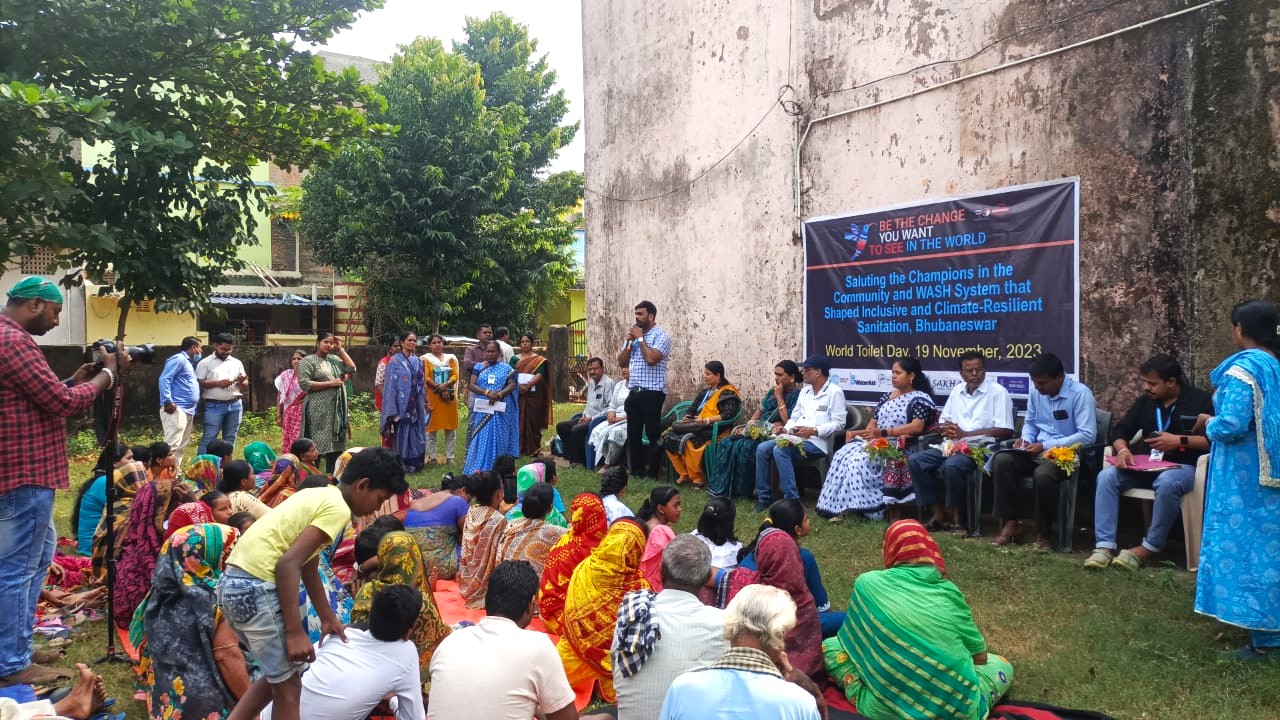
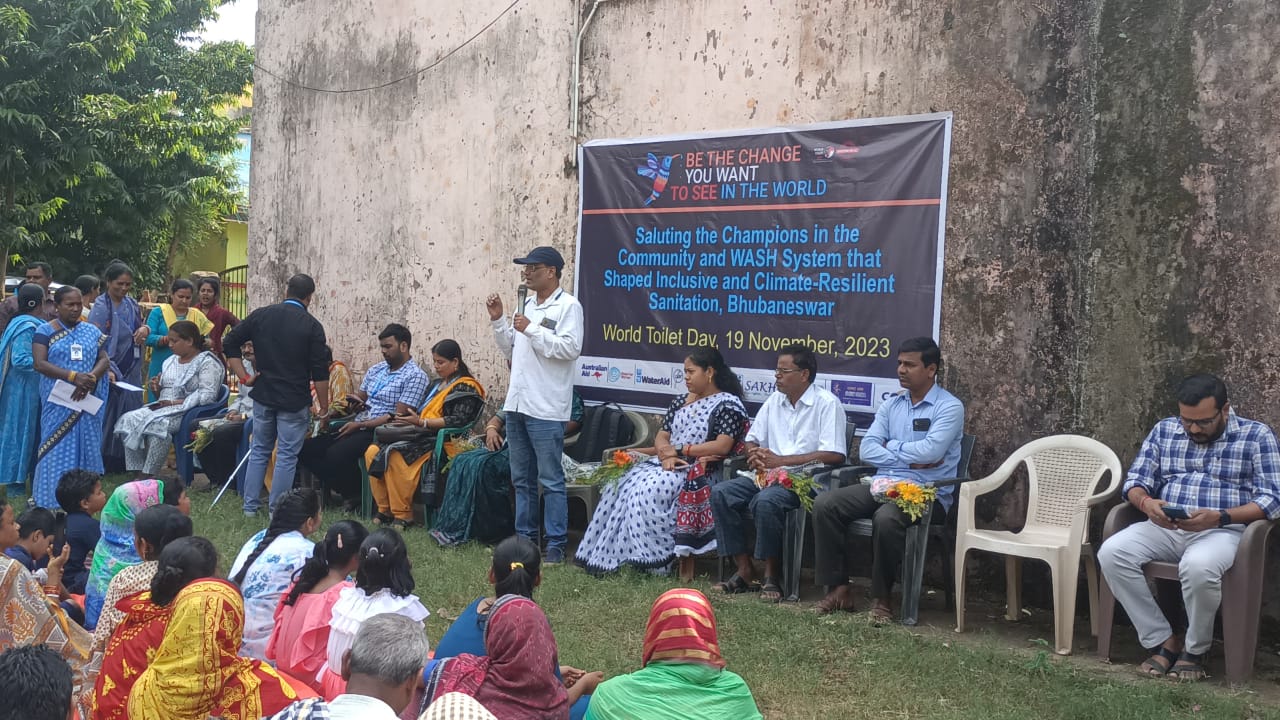
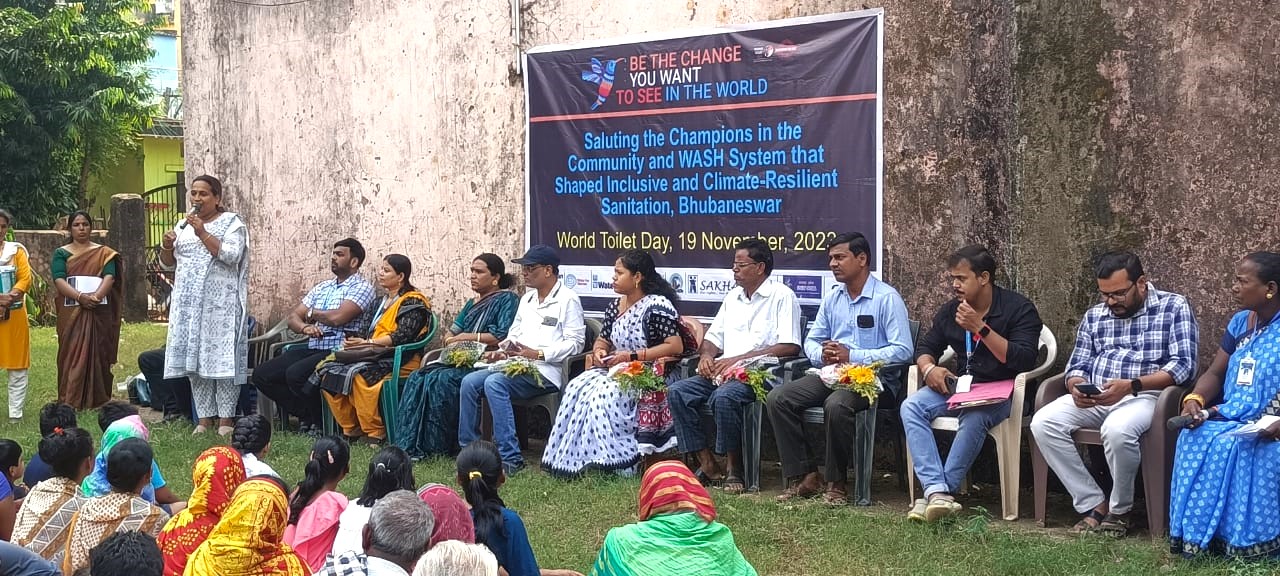
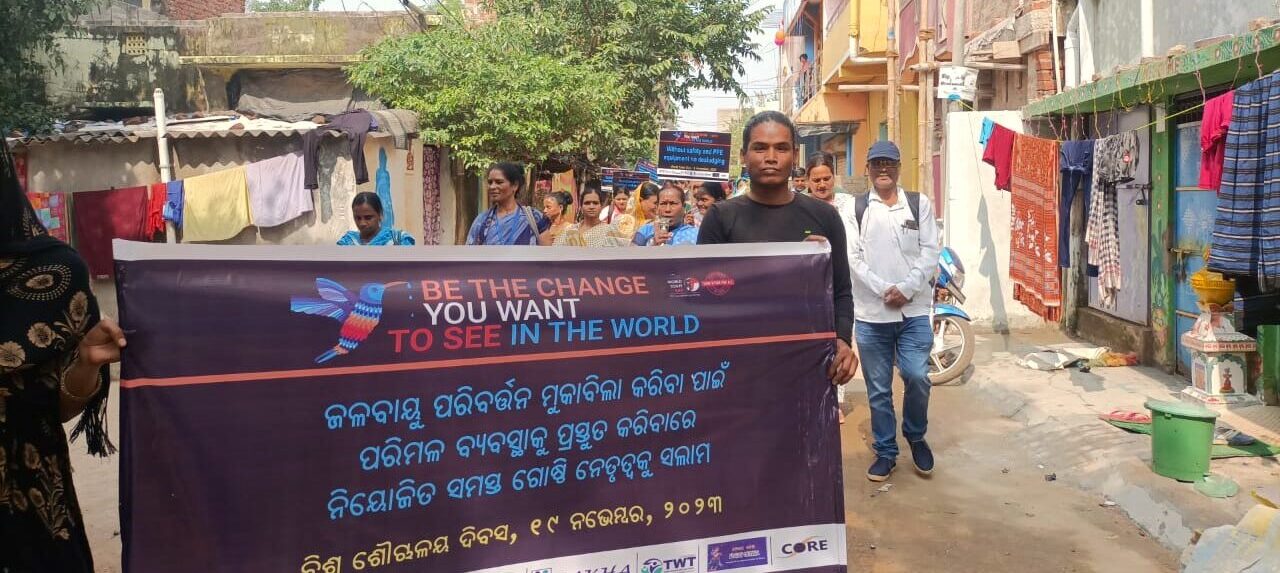
The banner “Salute the Champions in the Community and WASH system that shaped Inclusive and Climate- Resilient Sanitation, Bhubaneswar” – captured the significance of the event held on Nov 14 at Cluster 6, Ward no 22, Bhubaneswar.

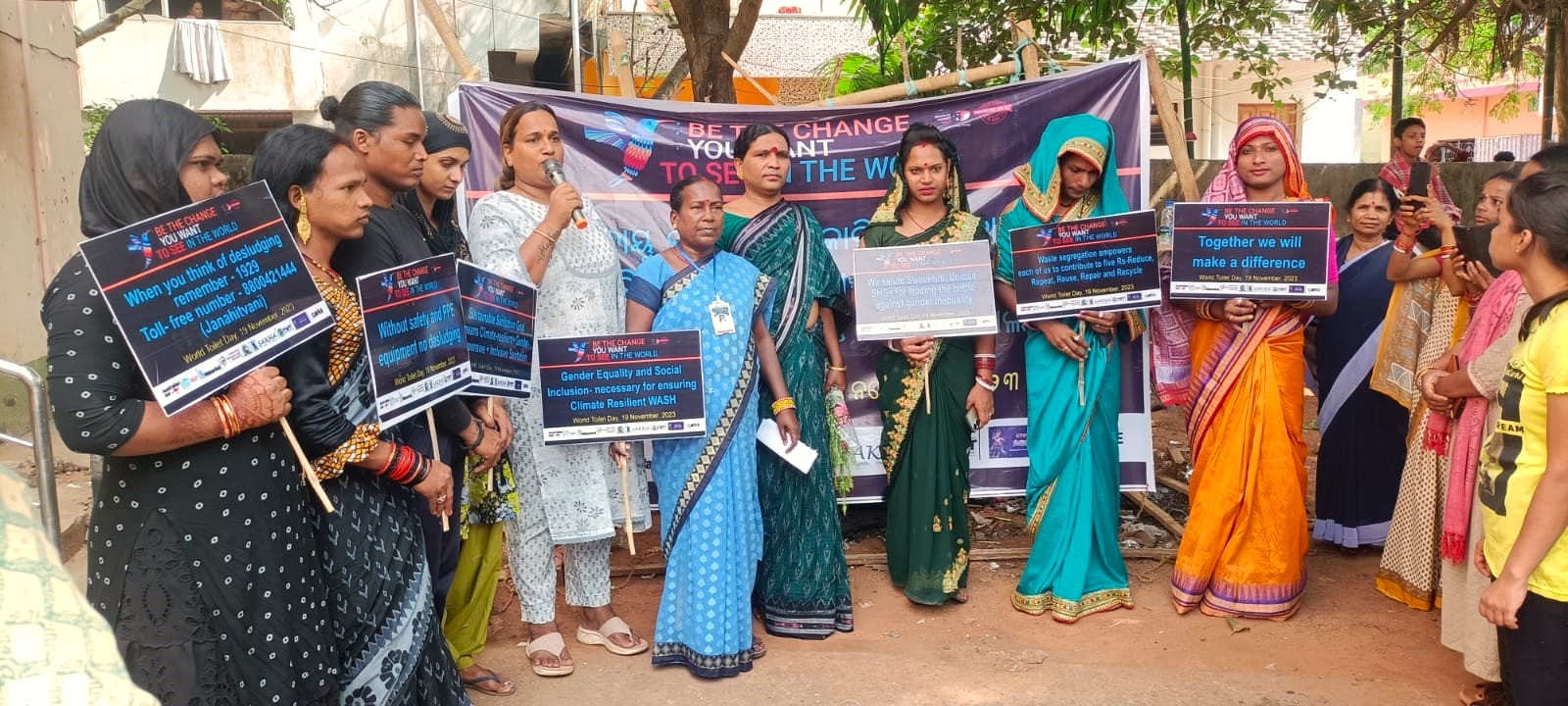
Launching the campaign for the World Toilet Day that falls on Nov 19, Manjulata Kanhara, Deputy Mayor, urged those who do not have access to household toilets to “get in touch with the Sanitary Inspector and apply for the same.” She appreciated the community outreach by Transgender SHGs that are engaged in sanitation work.

The event became a forum for diverse stakeholders in the WASH system to share their experiences and views. Noting that the event coincided with Children’s Day, Khulana Sethi, AWW Supervisor urged families to make children conscious of the use of toilets. Gagan, SDA member, stated that there is a growing involvement of women who promote toilets within their home and community. Rahas Bihari Saha, Sanitary Inspector reinforced the message “Stop Open Defecation”. He also spoke of the importance of waste segregation. Meghna Sahoo, Third Gender Welfare Trust (TWT) talked about the long-standing need for Transgender Toilet, stating that she has raised this issue with the Deputy Mayor.
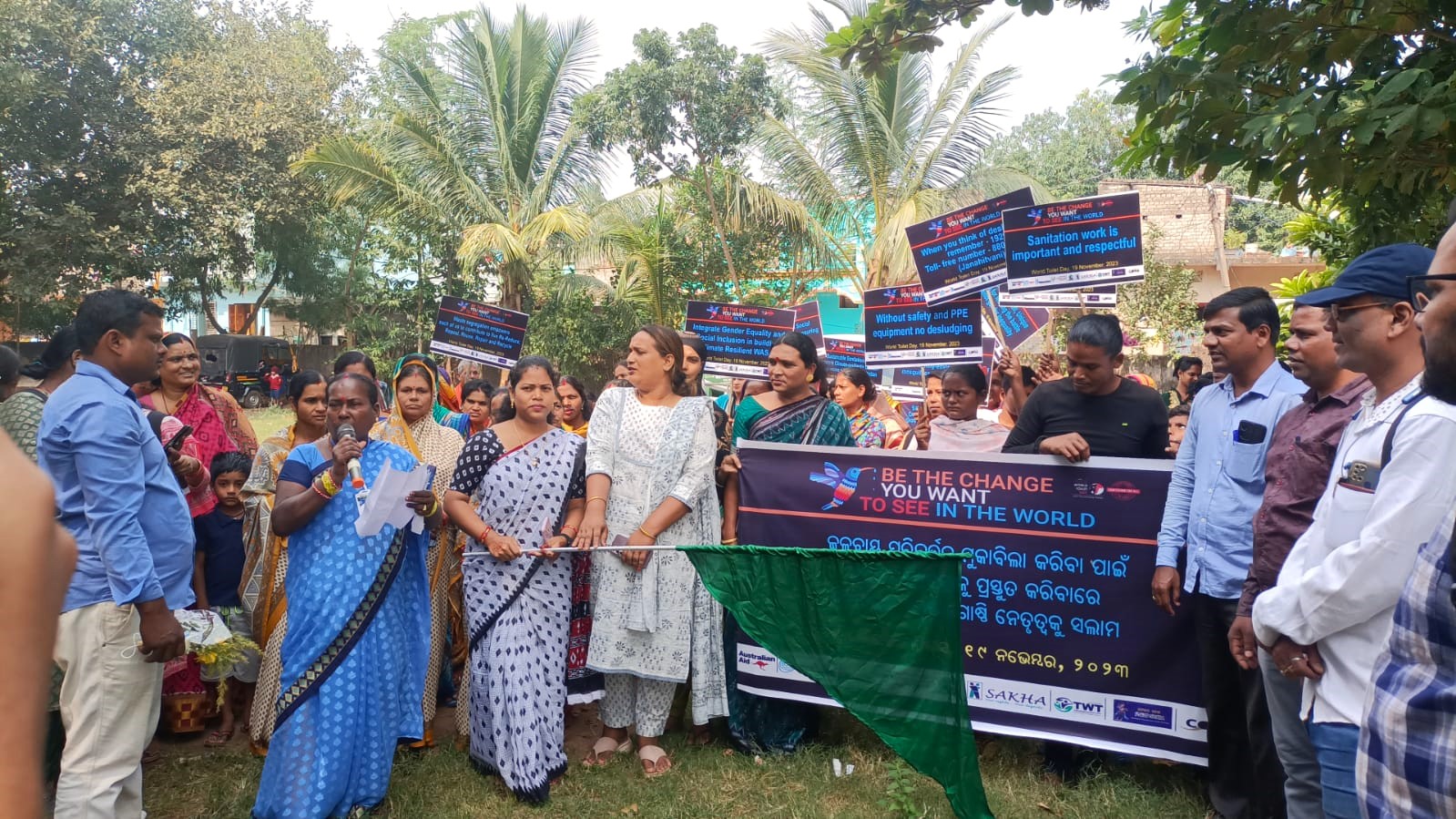
“Be the Change you want to see in the World”, the inspirational words of Mahatma Gandhi were prominent at the rally that was then carried out to spread the message of inclusive and climate-resilient WASH.

Deputy Mayor, Bhubaneswar kicks off campaign to mark the upcoming World Toilet Day, 19 November

“Those who do not have access to household toilets can get in touch with the Sanitary Inspector to apply for the same. SHG members are proactively reaching out to the community to empty the pits on time. This message should be shared with all others who are not present here in the meeting”, encouraging words by Manjulata Kanhara, Deputy Mayor, Bhubaneshwar in Cluster 6, Ward no 22 as she launched the campaign ahead of the World Toilet Day that falls on 19 November.

The launch saw wide participation – Partners, Ward Officials, Slum Development Association, Swaccha Sathi, Jal Sathi, representatives of sanitary workers and frontline workers. A number of voices raised important issues that intersect with safe toilets. Sudarshan Chottoray Climate Change Expert urged people to use toilets designed for climate related risks. Meghna Sahoo, TWT raised the need for community toilets for transgenders. Periodic de-sludging of pits and tanks with all safety provisions – was stressed upon. And a simple appeal by Rahas Bihari Saha, Sanitary Inspector to stop polluting the environment – Stop Open Defecation.

Protect from Mosquitoes to Prevent Disease: a well-received performance at IITF, Delhi

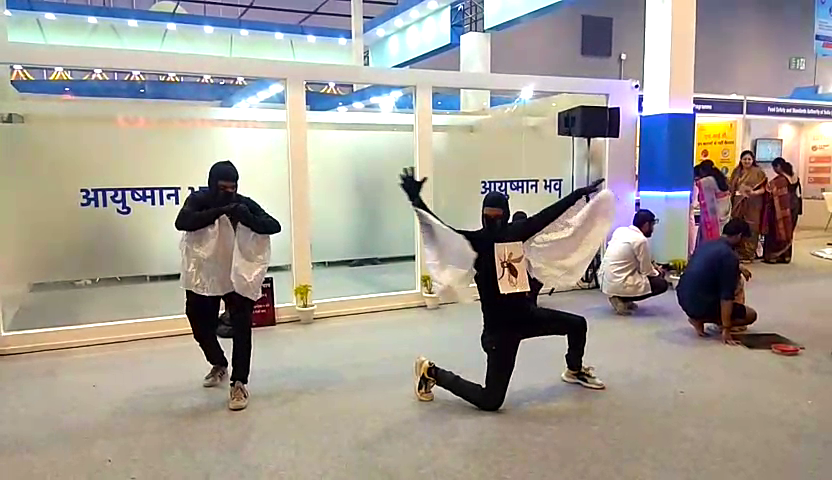
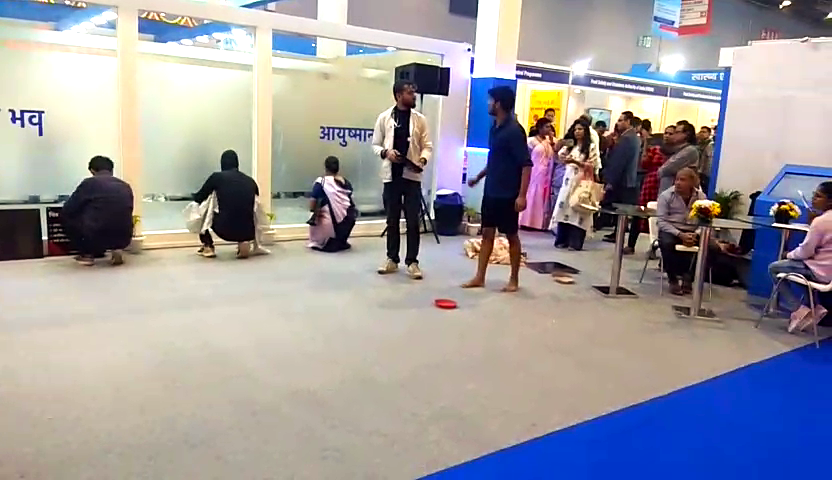
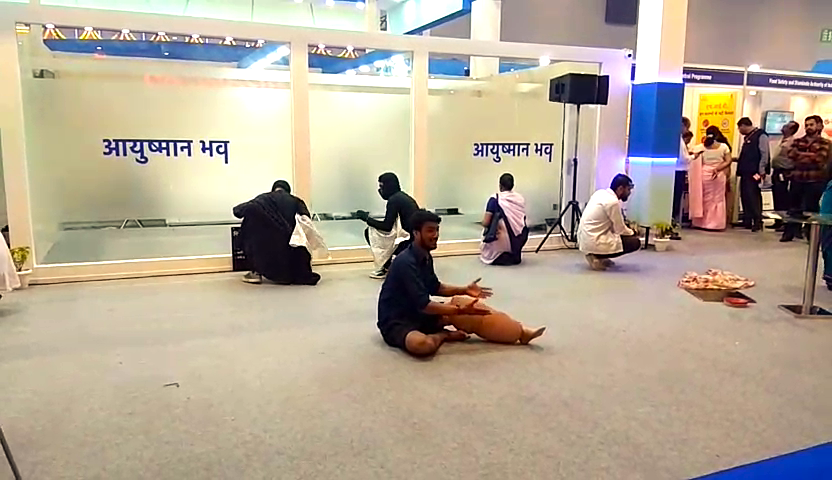
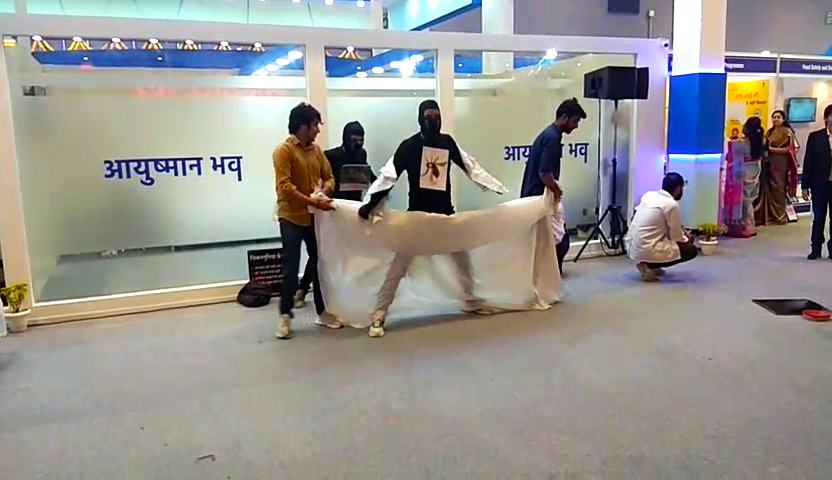
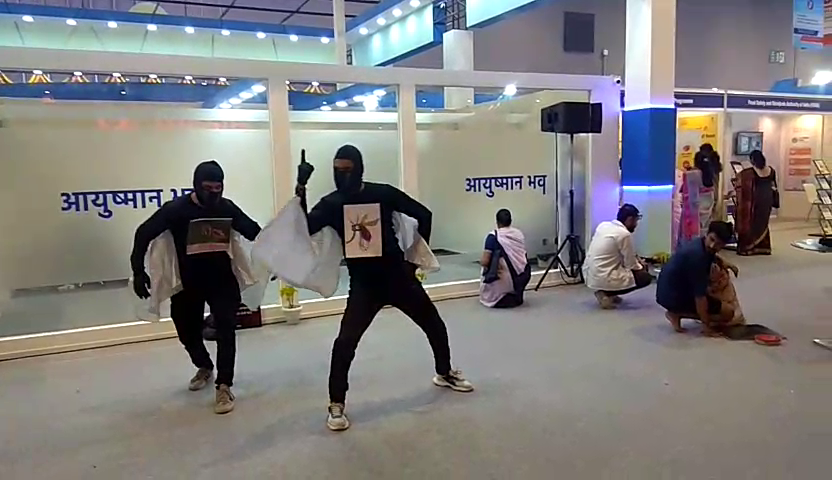
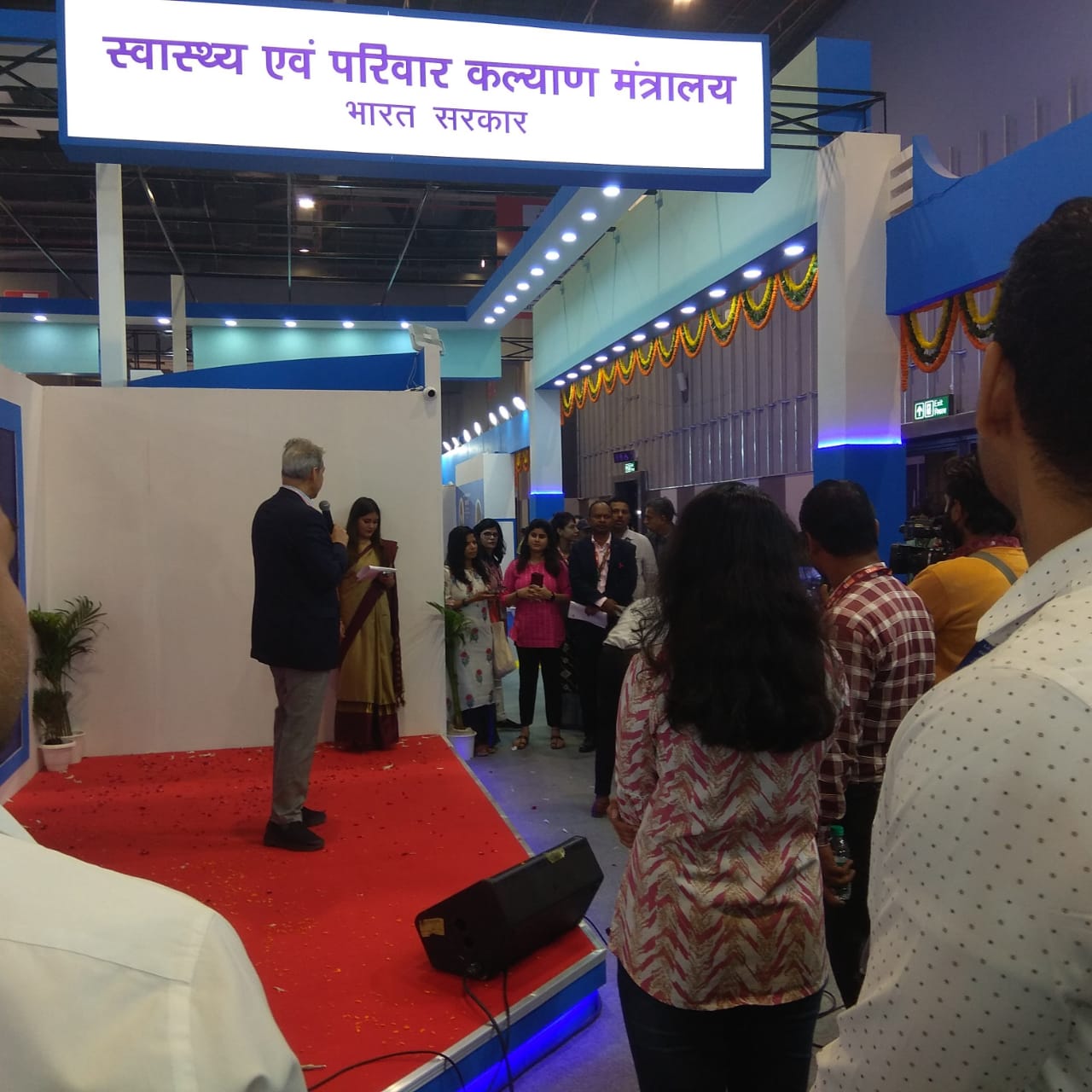
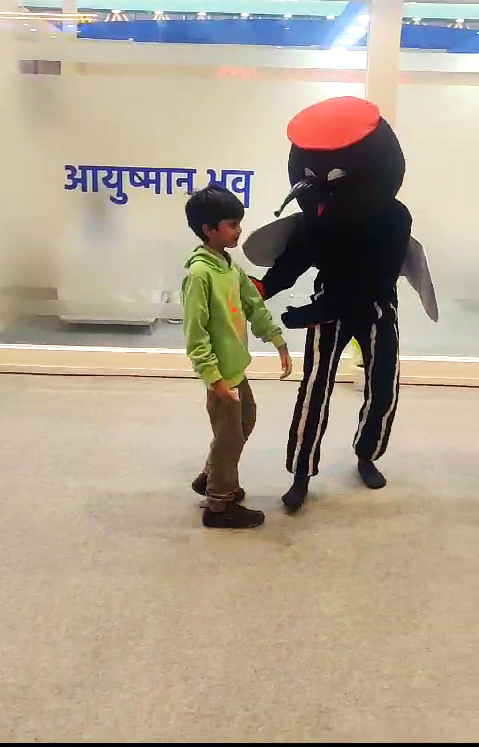
Visitors at Hall No 4, Pragati Maidan at the opening of the India International Trade Fair, Delhi watched with interest a performance based on disease-spreading mosquitoes and the ways of prevention and treatment. “Machar se Bachein, Rogon se Bachein’ performed under the aegis of National Vector Borne Disease Control Programme. had actors enacting scenes that showed patients struggling with different diseases — filariasis, malaria, dengue, chikangunia, Japanese fever and kala-azar. Each segment ended with an effective message by the medical doctor in the show on protection from mosquitoes. ‘Bittu Mosquito’- the charming Mascot flitted around – spreading the same message. Speaking randomly to people in the audience showed that the message had gone down well.


Empower women to combat violence

Lalita Panicker, HT

Gram sakhis and women’s forums in Kishangarh, Ajmer are promoting helpline numbers to deal with violence against women, covering 33 villages in the district.

Violence against women thrives where a combination of factors ranging from isolation, shame and patriarchy combine to ensure a culture of silence. Change can be effected when women come together to put up a joint front. A perfect example is the coming together of gram sakhis and women’s forums in Kishangarh, Ajmer, promoting helpline numbers to deal with violence. These agents of social change are undaunted by the patriarchal environment they live in, now covering 33 villages in the district.

In a remarkable effort, they have formed survivor support groups, trained themselves to be paralegal volunteers, and are tirelessly working to raise awareness about violence against women. Each gram sakhi is responsible for one gram panchayat with a know-how of legally and socially addressing the issue of violence, empowering those who have suffered and holding the perpetrators accountable.

Saraswati, a gram sakhi from Roopangarh, is also a suraksha sakhi (protection buddy), designated by the Roopangarh police station. She says, “I was able to gain knowledge on laws and redressal mechanisms, which gave me the confidence and motivation to spread awareness in my village. Now, I am sharing information on helplines and providing self-defence training to school-going girls.”

These women feel that despite comprehensive laws to protect women, many still face violence. One reason is the lack of knowledge of the available redressal mechanisms. “We have launched an intensified door-to-door awareness campaign to inform women about the helpline for violence against women. This helpline serves as a crucial resource for women who may be experiencing violence or abuse. By spreading the word about this valuable tool, we hope to empower women,’’ says Sakina, member of the women’s forum and a survivor of violence from Chundari village. “We were unaware of any mechanisms to lodge a complaint or reach out at the time of need or in trouble, and if we are told verbally, we forget the numbers. But now that they are pasted on the walls of our houses, it is easy to remember,” says Lali Rao, a Scheduled Caste woman from Roopangarh.

To its credit, the government has established various resource centres to provide justice to women, such as the district legal services authority, one-stop sakhi centres, women’s safety centres, and the state women’s commission. However, these can only be effective if the women are aware and have access to appropriate mechanisms.

Are the women worried about a backlash? Not at all, is their resounding answer. The women’s group was set up to create a narrative around preventing violence against women. This group has taken up the responsibility to educate every woman in the village about the legal framework and helplines established by the government. They are diligently going door-to-door and putting up posters outside each house that contain vital information regarding all available services, including helpline numbers that can be utilised in the event of any violence against women. This group hopes to empower women to seek support through the helplines in case of violence against them or their female peers. It’s a commendable effort to create a safer and more informed community.
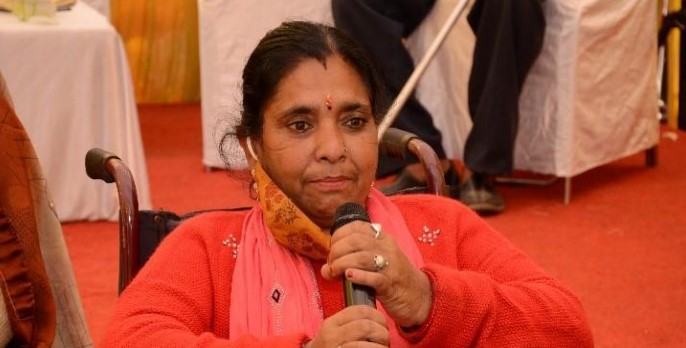
The campaign, which has been jointly mounted by the district legal services authority, department of women and child development, one-stop crisis centres, gram panchayat, and suraksha sakhi groups with support from the Centre for Advocacy and Research in Kishangarh, has reached 3,210 households. If this becomes a movement, as it should, the message will go out that there really is strength in numbers and in creating wider ownership both within the government as well as in civil society.

Monitoring of Faecal Sludge Management Services in Informal Urban Settlements in Odisha, India

KEY MESSAGES

Giving numerical value to demand, supply and existing challenges in providing safe emptying of pits persuade the urban local body and other stakeholders to take measures for expediting the safe empty of pits

Community engagement and participatory monitoring results in securing safe sanitation and ensure service inclusion of last-mile population.

Tracking slum-wise demandwithin a Wardreduced the waiting time of desludging of pits and instilled a sense of dignity in the women headed households

Sukumari Rout- Turning adversity into opportunity

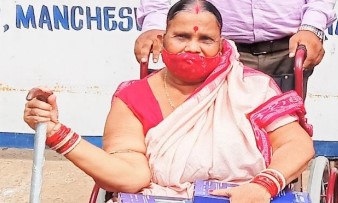
The story of Sukumari Rout, an elderly artist with disability traces her day to day predicaments as an elderly disabled woman, who faces multiple barriers of gender, age, weak financial situation and is forced to compromise her sense of personhood at various levels. Undoubtedlythe support fromWater for Women Project team and the key stakeholders has enabledher to both cope and come out of the worst. There are many like Sukumariwho are struggling everyday to deal with multiple problemsand need the unflinching support of government, private sector agencies and communities to livea life ofdignity.

Gopi Devi – I can lead a life of dignity

The story of Gopi Devi etches out clearly the challenges that disabled personsface.In this case a disabled person is a woman, who experienced four-fold barriers of gender, disability, poverty,and last but not the least low educational attainment and skill. In the context of the pandemic, these challenges became even more life threatening. However,it is at this stage that the Water for Women Project played a very important role. Not only did Gopi get the unflinching support of the Community Management Committee (CMC) and the project team but also a platform to speak up and reach out to and sensitise many key stakeholders and leverage the much-needed opportunity to ensure that the WASH system commits itself to disability inclusion in ways that has never happened before. It is in this context that this case study based on Gopi’s testimony assumes significance.

Subscribe To Newsletter

Pleace enter your email and get news updete for donation company.